
Beans: choose low growth or climbing first
Beans can fill a low row or turn a climbing frame into a green wall. Then choose your harvest: young pods, flat-podded beans or ripe seeds. This guide covers common garden beans of Phaseolus; broad beans have their own cooler growing route.
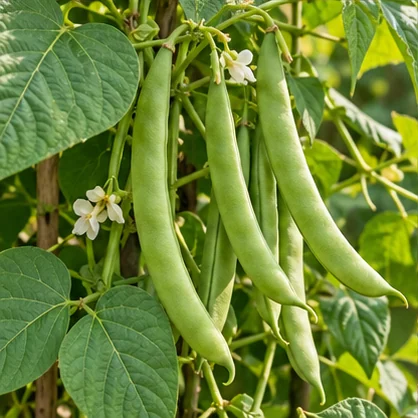
This image was created with AI from described plant characteristics and growing advice. It shows a possible situation and is not a photograph of a verified cultivar.
- Start
- After frost risk, in warm soil
- Growth
- Dwarf or climbing type
- Harvest
- Young pods or ripe seed
- Support
- Only if suited to growth habit
This growing advice helps you choose. Your variety, growth stage, weather and conditions in your space determine the actual timing.
Sowing under cover and raising seedlings
Start briefly under cover or sow directly · Bean
Late April–MayStart briefly under cover in individual pots. Ensure you can plant out into warmth after a few weeks.
- Germination and temperature
- Sow in warmth; cold, persistently wet soil increases the risk of failure.
- After emergence
- Give seedlings light immediately after emergence. A dark loft needs suitable grow lights; warmth alone is insufficient. Ventilate and keep the compost moist without saturating it.
- Pricking out and potting on
- Sow in individual pots or deep modules. Do not prick out bare-rooted; move the whole root ball before the roots become restricted.
- Hardening off and planting out
- Gradually acclimatise indoor-raised plants to sun, wind and outdoor temperatures; shelter them again on cold nights. Plant out after the last frost with the whole root ball; install supports beforehand for climbing types.
Do not start outdoor plants months too early. Beans grow quickly and do not tolerate frost.
Sources and use
RHS · bonen ↗Britse teeltrichtlijn voor een gematigd klimaat; de genoemde perioden zijn richtlijnen voor Nederland en Vlaanderen.
Guideline periods for the Netherlands and Flanders. Check the variety, available light, soil and measured temperatures. Greenhouse heating does not guarantee enough winter light.
A different flavour, a different harvest.
Choose by more than the name. Discover how these varieties and crop types taste, what you can use them for and what growing them involves.
2 of 2 choices · 2 named varieties
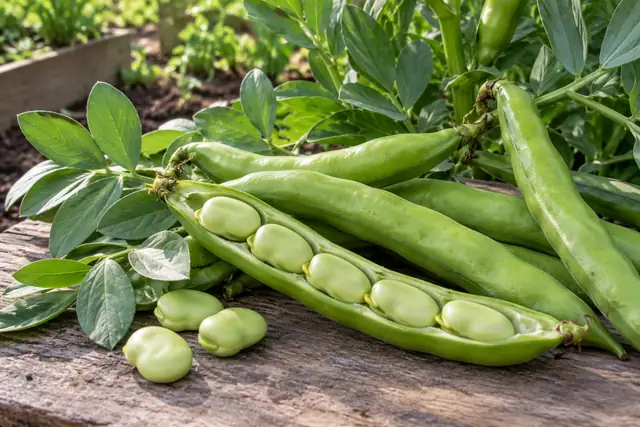
This image was created with AI from described plant characteristics and growing advice. It shows a possible situation and is not a photograph of a verified cultivar.
Express Eleonora
Broad bean with long pods for fresh shelling.
Choose Express Eleonora for a classic fresh broad bean harvest with long pods. A row of your own makes shelling for a meal visible from plant to pan.
Flavour, kitchen and growing
How does it taste?
Young broad beans have the full, slightly earthy character of broad beans. The source supports long pods and productivity, but no separate sweetness compared with other cultivars.
This flavour description applies to the crop; there is no separate tasting result for this variety.In the kitchen
Shell young, filled pods and cook the beans thoroughly. Larger beans can be skinned after cooking if you want to reduce the skin texture in a refined dish.
A space in the garden
Sow early in spring in workable soil and allow room for the plants. A low string along the row helps keep stems upright in wind.
Harvesting
Harvest once the pods are well filled while the beans are still tender. Pick gradually from the bottom upwards and do not let the entire crop become hard storage beans.
Read the source notes →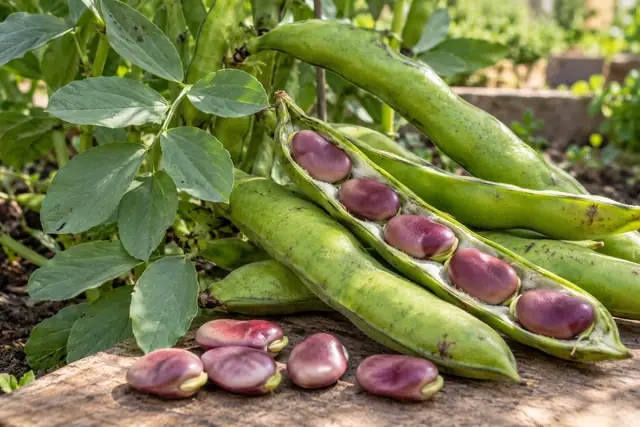
This image was created with AI from described plant characteristics and growing advice. It shows a possible situation and is not a photograph of a verified cultivar.
Red Epicure
Broad bean with purplish-red beans that lighten when cooked.
Choose Red Epicure for a striking shelled-bean harvest. A short row beside an ordinary broad bean is enough for a colour comparison without changing a whole storage bed.
Flavour, kitchen and growing
How does it taste?
Red Epicure has the character of broad beans; the red seed is the clear difference. Colour gives no proven flavour advantage over a green or pale-seeded type.
This flavour description applies to the crop; there is no separate tasting result for this variety.In the kitchen
Shell young, filled pods and cook the beans thoroughly. Show the red fresh beans on the harvest platter before cooking; they become paler afterwards.
A space in the garden
Sow early in spring in a free-draining bed. Keep the row accessible for checking and water during prolonged drought at flowering and pod filling.
Harvesting
Harvest young, filled beans for a tender texture. Do not make colour the only criterion: assess a trial pod for actual filling and tenderness.
Read the source notes →Choose your way to grow
From a garden bed to a suitable pot or support: give your plant a place that suits your garden and the care you can provide.
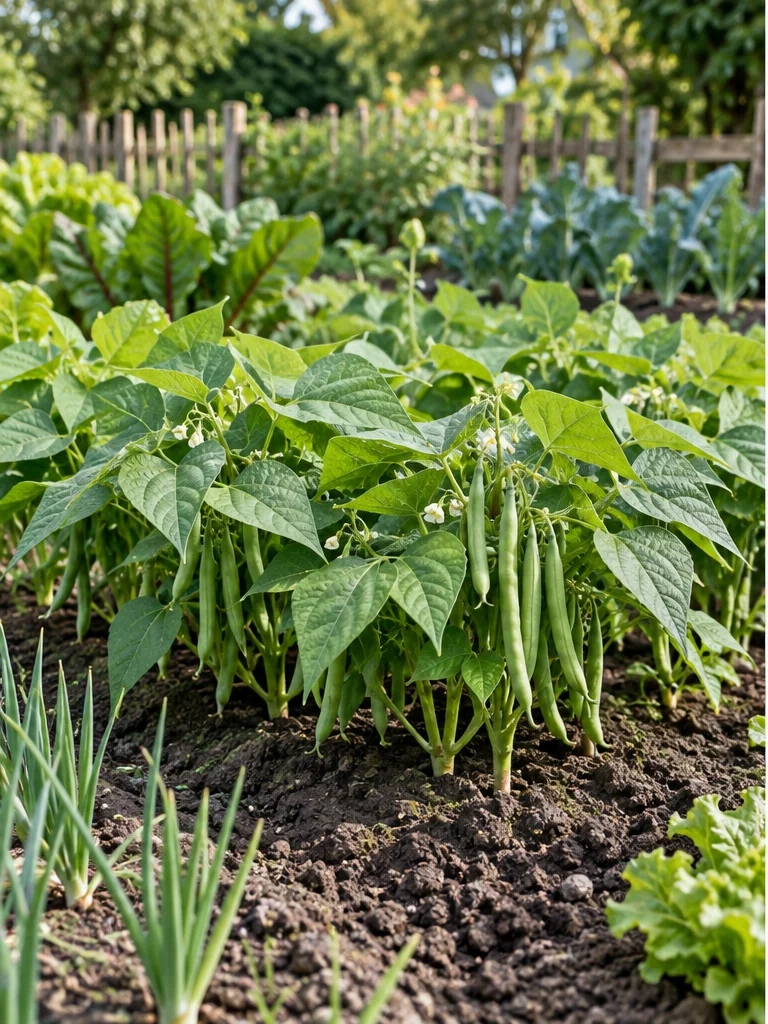
This image was created with AI from described plant characteristics and growing advice. It shows a possible situation and is not a photograph of a verified cultivar.
A low row without a tall structure
Bush beans stay low and can be sown in successive rounds.
- Sow in warm, rather than wet, soil.
- Follow row spacing and keep both sides accessible.
- Pick young pods regularly for fresh beans.
For a manageable bed and limited height.
Tick off your supplies →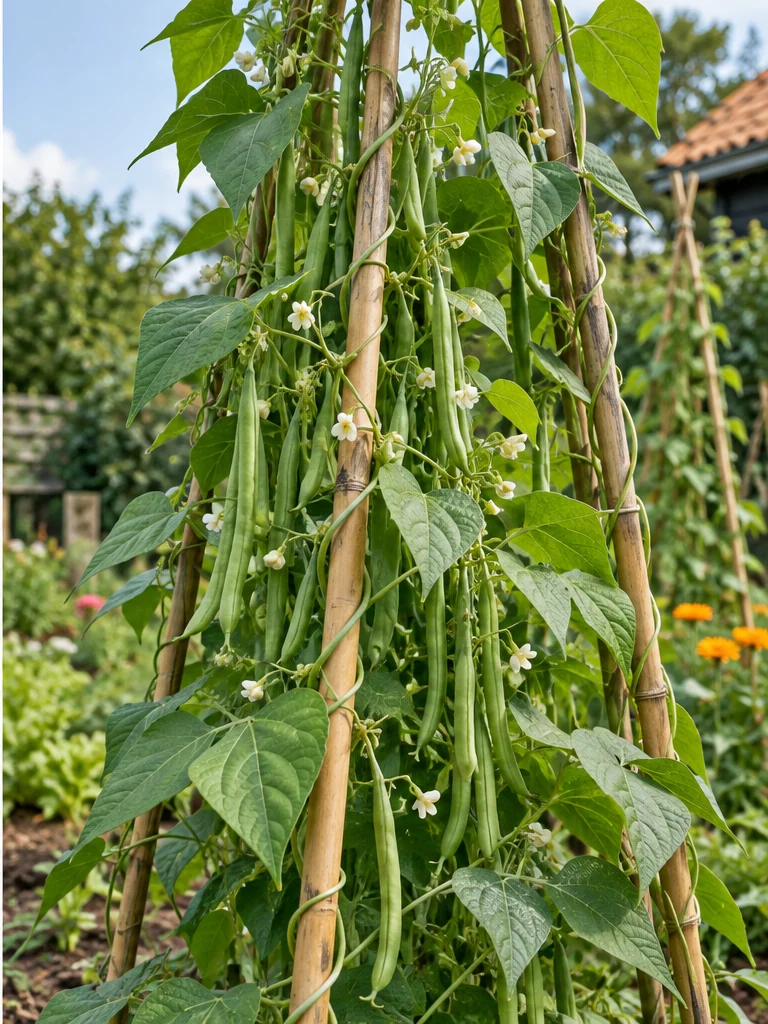
This image was created with AI from described plant characteristics and growing advice. It shows a possible situation and is not a photograph of a verified cultivar.
Beans that twine around sturdy poles
Climbing beans use height and need stable support beforehand.
- Build poles or a frame before sowing.
- Sow along the support according to variety instructions.
- Guide loose shoots gently towards the pole and pick from both sides.
For vertical space and a longer picking rhythm.
Tick off your supplies →Growth habit does not yet tell you what you eat
Dwarf beans stay low; climbing beans climb. Both include varieties for young pods or mature seeds. Choose before sowing. A dry-bean pod needs to mature to a different endpoint from a French bean picked young.
Wait for workable soil
Ordinary broad beans are frost-sensitive and seed can rot in cold, wet soil. Sow only in sufficiently warm soil with suitable forecasts. Mid-May can guide planning but guarantees no frost protection. Treat a warm sheltered bed differently from a wet open corner.
Sow with the variety and bed plan to hand
Place healthy seed at packet depth and spacing. Direct sowing is manageable; when raising, use separate root balls for careful transplanting. Keep moist without prolonged saturation. Label immediately and weed shallowly to avoid repeated young-root damage.
Install climbing supports before the first shoots
Climbing beans need sturdy poles, wigwams or frames with accessible sides. Check wind stability before foliage adds weight. Stems twine themselves; gently guide loose shoots. Dwarf beans need no tall frames but can support each other in suitable rows.
Pay attention at flowering and first pods
Check roots in dry periods, especially flowering and pods. Water soil and work shallowly. Extra nitrogen is no standard slow-bean solution: assess warmth, moisture and original soil first. Thick foliage without pods needs different observation from dry rows.
Walk along the back of the row too
Slugs damage young plants and leaf problems have varied causes. Inspect before choosing action. Avoid unnecessary work among wet leaves. Supports looking full in front may hide empty or loose rear shoots. Keep surrounding paths accessible for easier care and harvest.
Pick fresh pods before substantial seed filling
Look among leaves for usable young pods before seeds bulge strongly. Support stems without pulling whole plants. Regular picking suits fresh pods. Dwarf beans generally harvest for less time; successive sowings spread yields if enough warm season remains.
Dry beans need time to ripen
For dry beans, let pods ripen rather than removing them young. Harvest dry, healthy pods and continue airy drying in wet weather. Keep completely dry seeds cool and dry, labelled by variety. Cook broad beans with a suitable recipe; raw dried beans are no snack.
What you need
Tick what you already have. The extras depend on how you grow.
0 of 6 ticked off
Your ticks are saved in this browser.
Discover and grow more
More background, sources and image information
SeedSteps editorial team · updated on 11 October 2026. The AI images illustrate species and practical growing situations; they do not prove an exact cultivar, observations from your own garden or yield.
Britse gewasadviezen worden gecombineerd met Nederlandse en Vlaamse informatie waar beschikbaar. Amerikaanse Extension-bronnen ondersteunen plantprincipes en herkenning; hun kalenderdata, lokale plaagdruk, bestrijdingsmiddelen en mestdoseringen worden niet rechtstreeks op Nederland of Vlaanderen toegepast. Vorst, bodemwarmte, standplaats en expliciete rasinformatie blijven de lokale controle. Commerciële bronnen onderbouwen uitsluitend benoemde ras- en plantkenmerken; zij zijn geen affiliate-aanbeveling.
- World Checklist of Vascular Plants — 4 juni 2026Royal Botanic Gardens, Kew · accessed 2026-10-07
- Tuinboon Express 'Eleonora' zadenFeggies · accessed 2026-10-11
- Tuinboon ‘Red Epicure’ (Vicia faba) – biologische zadenFeggies · accessed 2026-10-11
- Bonen kiezen: groeivorm en oogstdoelDe Bolster · accessed 2026-10-08
- Stam- en stokslabonen: groei en oogstRoyal Horticultural Society · accessed 2026-10-08
- Bonen: groeivormen en verzorgingUniversity of Maryland Extension · accessed 2026-10-08
- Bonen: bodem, plukstadium en bewarenUniversity of Minnesota Extension · accessed 2026-10-08
Supporting evidence by chapter: Growth habit does not yet tell you what you eat: Royal Horticultural Society, University of Minnesota Extension, University of Maryland Extension, De Bolster. Wait for workable soil: Royal Horticultural Society, University of Minnesota Extension, University of Maryland Extension, De Bolster. Sow with the variety and bed plan to hand: Royal Horticultural Society, University of Minnesota Extension, University of Maryland Extension, De Bolster. Install climbing supports before the first shoots: Royal Horticultural Society, University of Minnesota Extension, University of Maryland Extension, De Bolster. Pay attention at flowering and first pods: Royal Horticultural Society, University of Minnesota Extension, University of Maryland Extension, De Bolster. Walk along the back of the row too: Royal Horticultural Society, University of Minnesota Extension, University of Maryland Extension, De Bolster. Pick fresh pods before substantial seed filling: Royal Horticultural Society, University of Minnesota Extension, University of Maryland Extension, De Bolster. Dry beans need time to ripen: Royal Horticultural Society, University of Minnesota Extension, University of Maryland Extension, De Bolster.