
Growing Corno di Toro Rosso: from green pointed pepper to red
Corno di Toro Rosso forms long, tapering sweet peppers ripening from green to red. Learn how to give the plant space and support and choose deliberately when to pick fruit.
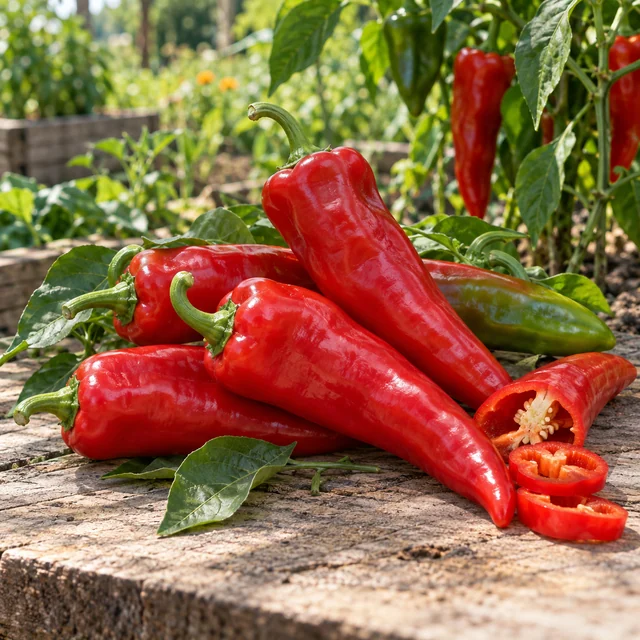
This image was created with AI from described plant characteristics and growing advice. It shows a possible situation and is not a photograph of a verified cultivar.
- Group
- Capsicum annuum; sweet and hot types
- Base
- Warm start, plenty of light and frost-free growing
- Choice
- Fruit size, season and kitchen use determine variety
This growing advice helps you choose. Your variety, growth stage, weather and conditions in your space determine the actual timing.
Sowing under cover and raising seedlings
Start under cover in warmth · Chillies & sweet peppers
Mid-February–early March for greenhouse growingStart indoors in warmth and reserve enough bright space for raising plants.
- Germination and temperature
- Germination: around 18–21 °C. After emergence: good light at about 16–18 °C.
- After emergence
- Give seedlings light immediately after emergence. A dark loft needs suitable grow lights; warmth alone is insufficient. Ventilate and keep the compost moist without saturating it.
- Pricking out and potting on
- Prick out once the first true leaves are manageable. Hold a seedling by a leaf. Pot on when the roots fill the root ball.
- Hardening off and planting out
- Gradually acclimatise indoor-raised plants to sun, wind and outdoor temperatures; shelter them again on cold nights. An unheated greenhouse generally from mid-May; outdoors often late May–June, with consistently warm nights (at least around 12 °C). A heated greenhouse can be earlier if temperature is actually maintained.
Sweet pepper needs a long season. Very early sowing without enough light gives no head start. For outdoor growing, a suitable early cultivar may be sown later; follow seed guidance.
Sources and use
RHS · paprika ↗Britse teeltrichtlijn voor een gematigd klimaat; de genoemde perioden zijn richtlijnen voor Nederland en Vlaanderen.
Guideline periods for the Netherlands and Flanders. Check the variety, available light, soil and measured temperatures. Greenhouse heating does not guarantee enough winter light.
What makes Corno di toro rosso different?
- Colour when ripe
- Green to redUnited Kingdom
- Fruit length
- Tot 25 cmUnited Kingdom
- Fruit shape
- Long and taperingUnited Kingdom
- Fruit size
- LargeUnited Kingdom
- Height
- 50–100 cmUnited Kingdom
- Main colour
- RedUnited Kingdom
- Suitable for pots
- YesUnited Kingdom · pot
- Flavour
- SweetUnited Kingdom
- Texture
- Crisp, thin skinUnited Kingdom
The source context and any limitations are in the background information at the bottom.
Compare with another varietyHow to grow chillies & sweet peppers
The options below belong to the plant. From these, choose the method that suits your variety's growth habit.
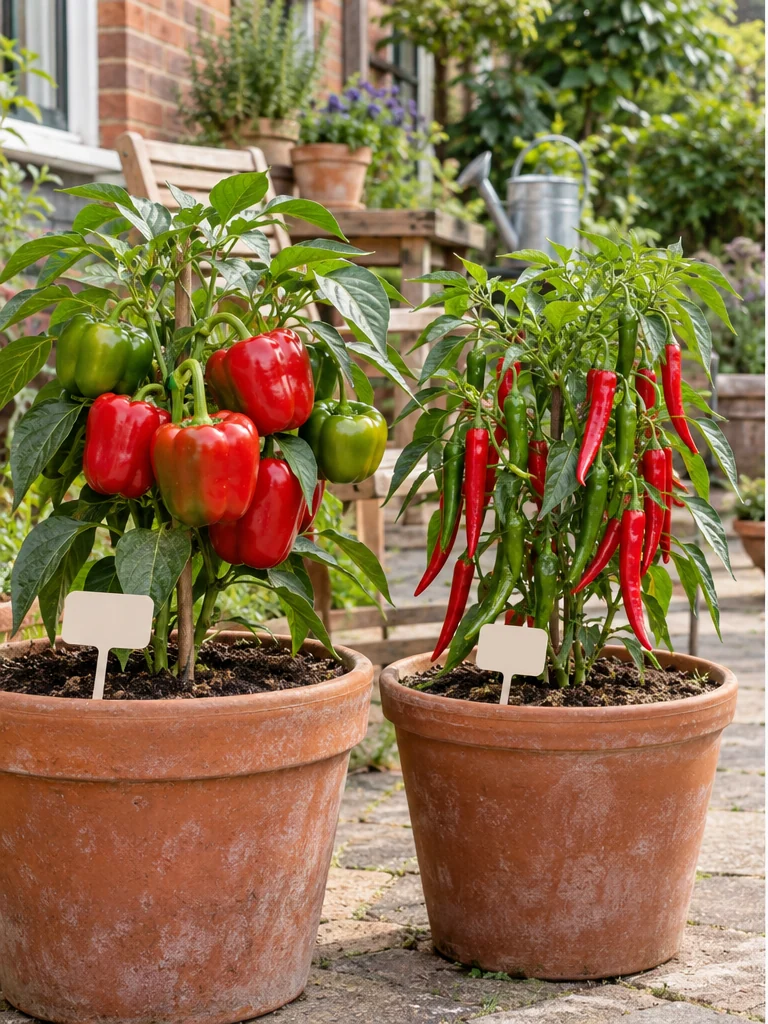
This image was created with AI from described plant characteristics and growing advice. It shows a possible situation and is not a photograph of a verified cultivar.
Two labelled pots on the patio
A sweet and a hot selection side by side make the difference visible.
- Choose two varieties with suitable growing seasons and label each pot clearly.
- Use separate, large pots with drainage and acclimatise plants to outdoor light.
- Harvest according to variety and use; record flavour, size and picking time.
For a warm, sheltered patio where both plants can receive regular care.
Tick off your supplies →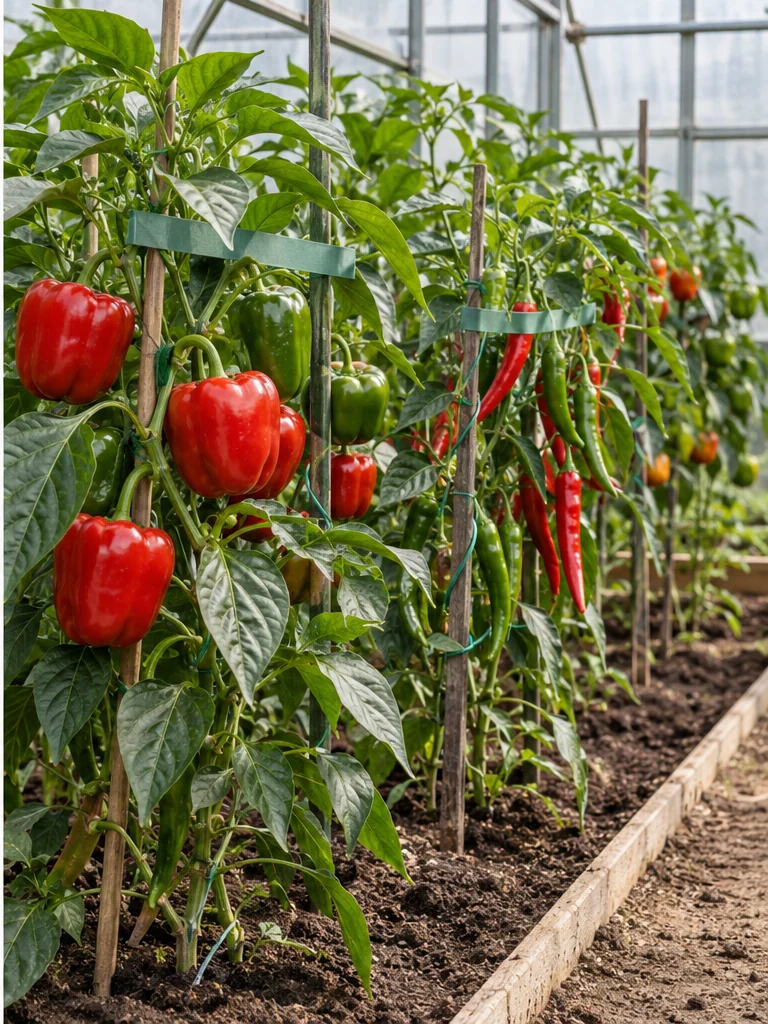
This image was created with AI from described plant characteristics and growing advice. It shows a possible situation and is not a photograph of a verified cultivar.
A mixed greenhouse row with soft support
Under glass, sweet and hot varieties can each have their own space.
- Make a planting plan with variety names and expected plant size.
- Plant at the same depth and support fruit-bearing branches with loose, soft ties.
- Ventilate in warmth and check each plant's water requirements separately.
For a hobby greenhouse; one schedule must not hide differences between large sweet peppers and small chillies.
Tick off your supplies →A long, pointed sweet pepper with thin skin
The RHS describes Corno di Toro Rosso with sweet, crisp fruit, thin skin and few seeds, tapering up to 25 centimetres. This helps kitchen choice without promising every fruit reaches that exact length.
Plan for the mature plant
The British profile gives 0.5 to 1 metre height in a sunny, sheltered position. Add support while stem access is easy, allowing later fruit growth without working among laden branches. Leave room to inspect all around.
The young plant does not move in one step
Indoor peppers need wind and direct-sun acclimatisation. Start sheltered and gradually increase outdoor time. The university source links planting to sufficiently warm nights. Apply that principle locally and check forecasts, not dates alone.
Let the growing position set the pace
The Dutch growing source recommends warmth under glass or film for sweet peppers. This also guides the variety without fixing its harvest date. Greenhouses vary in sun and shade; follow flowers and fruit where they actually grow.
Care for the branches bearing the harvest
Pepper branches may break under weight. Inspect hanging fruit and support bearing shoots as needed. Topping is not automatic and can delay fruiting. The profile mentions topping for branching; weigh against remaining time and room.
A steady water supply helps the fruit
Check root-zone moisture and prevent major fluctuations. Poor water supply can cause pepper flower loss and fruit problems. This is general growing knowledge. Consider soil, weather and stage together to adapt care to actual plant needs.
Turning red takes extra time on the plant
This variety ripens green to red. Leave fruit colouring on the plant if you want red. A green, full-sized pepper is another harvest choice, not a failed red fruit. Cut the stalk to avoid damaging its branch by pulling.
Taste the choice you have made
Pointed sweet peppers suit raw and cooked dishes. Taste a piece before using it. Note chosen ripening colour and flavour opinion with the harvest. This helps decide how many plants of the variety to grow next season.
What you need
Tick what you already have. The extras depend on how you grow.
0 of 6 ticked off
Your ticks are saved in this browser.
Discover and grow more
More background, sources and image information
SeedSteps editorial team · updated on 11 October 2026. The AI images illustrate species and practical growing situations; they do not prove an exact cultivar, observations from your own garden or yield.
Britse gewasadviezen worden gecombineerd met Nederlandse en Vlaamse informatie waar beschikbaar. Amerikaanse Extension-bronnen ondersteunen plantprincipes en herkenning; hun kalenderdata, lokale plaagdruk, bestrijdingsmiddelen en mestdoseringen worden niet rechtstreeks op Nederland of Vlaanderen toegepast. Vorst, bodemwarmte, standplaats en expliciete rasinformatie blijven de lokale controle. Commerciële bronnen onderbouwen uitsluitend benoemde ras- en plantkenmerken; zij zijn geen affiliate-aanbeveling.
- World Checklist of Vascular Plants — 4 juni 2026Royal Botanic Gardens, Kew · accessed 2026-10-07
- Common catalogue of varieties of vegetable species — 27 januari 2023Europese Commissie · accessed 2026-10-07
- Sweet pepper Corno di Toro Rosso — RHS Plant ProfileRoyal Horticultural Society · accessed 2026-10-08
- Paprikarassen kiezen — RHSRoyal Horticultural Society · accessed 2026-10-08
- Koh Chang en Koh Tao — producentvergelijkingDe Bolster · accessed 2026-10-11
- Cayorange — botanische soort en vroege oogstCulinaris · accessed 2026-10-11
- Madame Paraplü — producentbeschrijving en rijpingskleurenCulinaris · accessed 2026-10-11
- Paprika Ampuis — rasbeschrijvingFeggies · accessed 2026-10-11
- Paprika Arwen — rasbeschrijvingFeggies · accessed 2026-10-11
- Paprika Chinese Giant Sweet — rasbeschrijvingFeggies · accessed 2026-10-11
- Paprika Corno di Toro geel — rasbeschrijvingFeggies · accessed 2026-10-11
- Paprika Flynn — rasbeschrijvingFeggies · accessed 2026-10-11
- Paprika Jubilandska — rasbeschrijvingFeggies · accessed 2026-10-11
- Paprika Kyra — rasbeschrijvingFeggies · accessed 2026-10-11
- Paprika Long des Landes — rasbeschrijvingFeggies · accessed 2026-10-11
- Paprika Madame Paraplü — rasbeschrijvingFeggies · accessed 2026-10-11
- Paprika Mandarine — rasbeschrijvingFeggies · accessed 2026-10-11
- Paprika Marconi Rosso — rasbeschrijvingFeggies · accessed 2026-10-11
- Paprika Mini Bell mix — rasbeschrijvingFeggies · accessed 2026-10-11
- Paprika Mini Bell rood — rasbeschrijvingFeggies · accessed 2026-10-11
- Paprika Pantos — rasbeschrijvingFeggies · accessed 2026-10-11
- Paprika Piquillo — rasbeschrijvingFeggies · accessed 2026-10-11
- Paprika Radja — rasbeschrijvingFeggies · accessed 2026-10-11
- Paprika Red Augsburger — rasbeschrijvingFeggies · accessed 2026-10-11
- Paprika Rosso — rasbeschrijvingFeggies · accessed 2026-10-11
- Paprika Sweet Banana — rasbeschrijvingFeggies · accessed 2026-10-11
- Paprika Sweet Cherry — rasbeschrijvingFeggies · accessed 2026-10-11
- Paprika Sweet Chocolate — rasbeschrijvingFeggies · accessed 2026-10-11
- Peper Black Hungarian — rasbeschrijvingFeggies · accessed 2026-10-11
- Peper Cayenne Long Slim — rasbeschrijvingFeggies · accessed 2026-10-11
- Peper Cayorange — rasbeschrijvingFeggies · accessed 2026-10-11
- Peper Jalapeño — rasbeschrijvingFeggies · accessed 2026-10-11
- Peper Koh Chang — rasbeschrijvingFeggies · accessed 2026-10-11
- Peper Koh Tao — rasbeschrijvingFeggies · accessed 2026-10-11
- Peper Late Ancho Gigantea — rasbeschrijvingFeggies · accessed 2026-10-11
- Peper Lombardo — rasbeschrijvingFeggies · accessed 2026-10-11
- Peper Numex Twilight — rasbeschrijvingFeggies · accessed 2026-10-11
- Peper Padrón — rasbeschrijvingFeggies · accessed 2026-10-11
- Peper Pepperoncini — rasbeschrijvingFeggies · accessed 2026-10-11
- Peper Purple — rasbeschrijvingFeggies · accessed 2026-10-11
- Peper Spaanse peper uit Cayenne — rasbeschrijvingFeggies · accessed 2026-10-11
- Peper Variegata — rasbeschrijvingFeggies · accessed 2026-10-11
- Peper Westlandse Lange Rode — rasbeschrijvingFeggies · accessed 2026-10-11
- Cayenne Long Slim — botanische soortFerry-Morse · accessed 2026-10-11
- Ancho Gigantea — botanische soort en rijpheidKokopelli · accessed 2026-10-11
- Black Hungarian — botanische soortKokopelli · accessed 2026-10-11
- Padrón — botanische soort en variabele scherpteKokopelli · accessed 2026-10-11
- Pepperoncini — botanische soortKokopelli · accessed 2026-10-11
- Trifetti / Variegato — botanische determinatie van eigen teeltPepperfriends · accessed 2026-10-11
- Jalapeño — botanische soortSemailles · accessed 2026-10-11
- Paprika kweken en zaaien — De BolsterDe Bolster · accessed 2026-10-08
- Growing Peppers in a Home GardenUniversity of Maryland Extension · accessed 2026-10-08
- Growing peppers in home gardensUniversity of Minnesota Extension · accessed 2026-10-08
- Paprika — VeltVelt · accessed 2026-10-08
- Peperrassen kiezen — RHSRoyal Horticultural Society · accessed 2026-10-08
Supporting evidence by chapter: A long, pointed sweet pepper with thin skin: Royal Horticultural Society. Plan for the mature plant: Royal Horticultural Society. The young plant does not move in one step: University of Minnesota Extension. Let the growing position set the pace: De Bolster. Care for the branches bearing the harvest: Royal Horticultural Society, Royal Horticultural Society. A steady water supply helps the fruit: University of Minnesota Extension. Turning red takes extra time on the plant: University of Maryland Extension, Royal Horticultural Society. Taste the choice you have made: Velt.
Colour when ripe: Green to red Brits rasprofiel; referentiewaarde, geen garantie voor jouw plant. Royal Horticultural Society
Fruit length: Tot 25 cm Brits rasprofiel; referentiewaarde, geen garantie voor jouw plant. Royal Horticultural Society
Fruit shape: Long and tapering Rasspecifieke beschrijving in de Britse tuinbron; teeltomstandigheden kunnen lokaal verschillen. Royal Horticultural Society
Fruit size: Large Rasspecifieke beschrijving in de Britse tuinbron; teeltomstandigheden kunnen lokaal verschillen. Royal Horticultural Society
Height: 50–100 cm Brits rasprofiel; referentiewaarde, geen garantie voor jouw plant. Royal Horticultural Society
Main colour: Red Brits rasprofiel; referentiewaarde, geen garantie voor jouw plant. Royal Horticultural Society
Suitable for pots: Yes RHS noemt patio- en potteelt; voldoende groeiruimte en warmte blijven nodig. Royal Horticultural Society
Flavour: Sweet Rasspecifieke beschrijving in de Britse tuinbron; teeltomstandigheden kunnen lokaal verschillen. Royal Horticultural Society
Texture: Crisp, thin skin Rasspecifieke beschrijving in de Britse tuinbron; teeltomstandigheden kunnen lokaal verschillen. Royal Horticultural Society