
Gomenzer: discover its flavour and how to grow it
Gomenzer quickly produces leaves and young shoots. Its green to purplish-green foliage also makes this cabbage attractive in a mixed bed. Choose Gomenzer for a quick leaf crop rather than waiting months for a closed cabbage head.
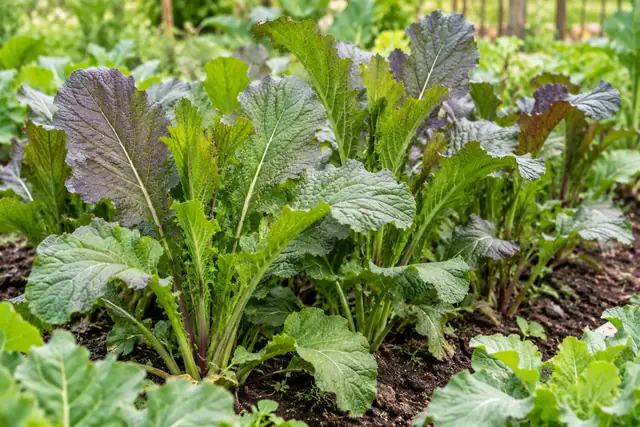
This image was created with AI from described plant characteristics and growing advice. It shows a possible situation and is not a photograph of a verified cultivar.
- Botanical name
- Brassica carinata
- Botanical group
- Cabbage family; Brassica carinata
- Growing aim
- Young leaves and shoots
- Winter
- Gomenzer is described as not winter-hardy
This growing advice helps you choose. Your variety, growth stage, weather and conditions in your space determine the actual timing.
Sowing under cover and raising seedlings
Sow according to species · Ethiopian kale
March–September for GomenzerSow directly for young cutting leaves; sowing density depends on the harvest aim.
- Germination and temperature
- Use the germination requirements for the species and seed offered; there is no shared temperature for this group.
- After emergence
- Keep the seed row identifiable, moist and weed-free. Give any tray-grown seedlings enough light after emergence.
- Pricking out and potting on
- Thin a direct sowing according to the growing aim. For raising in pots, follow the supplier’s instructions and keep the root ball intact.
- Hardening off and planting out
- Direct-sown plants stay in place. If the packet says to start in pots, acclimatise them gradually before planting out.
This indicative period applies to Gomenzer. This type is not winter-hardy; treat another cultivar according to its own instructions.
Sources and use
Magic Garden Seeds · Abessijnse kool (Brassica carinata) ↗Nederlandse producent of teeltbron; de rasinstructie blijft leidend.
Feggies · Abessijnse kool Gomenzer (Ethiopische mosterd) biologische zaden ↗Nederlandse producent of teeltbron; de rasinstructie blijft leidend.
Guideline periods for the Netherlands and Flanders. Check the variety, available light, soil and measured temperatures. Greenhouse heating does not guarantee enough winter light.
What makes Gomenzer different?
- Main colour
- Green to green-purple leaves
- Flavour
- The producer describes a nutty cabbage flavour and compares steamed shoots with broccoli. That distinction is more specific than simply 'tasty'.
The source context and any limitations are in the background information at the bottom.
Compare with another varietyFlavour and kitchen
The producer describes a nutty cabbage flavour and compares steamed shoots with broccoli. That distinction is more specific than simply 'tasty'.
Briefly steam the young shoots or add finely chopped leaves to a hot meal. Young leaves can also be used raw.
Why choose it? Choose Gomenzer for a quick leaf crop rather than waiting months for a closed cabbage head.
How to grow ethiopian kale
The options below belong to the plant. From these, choose the method that suits your variety's growth habit.
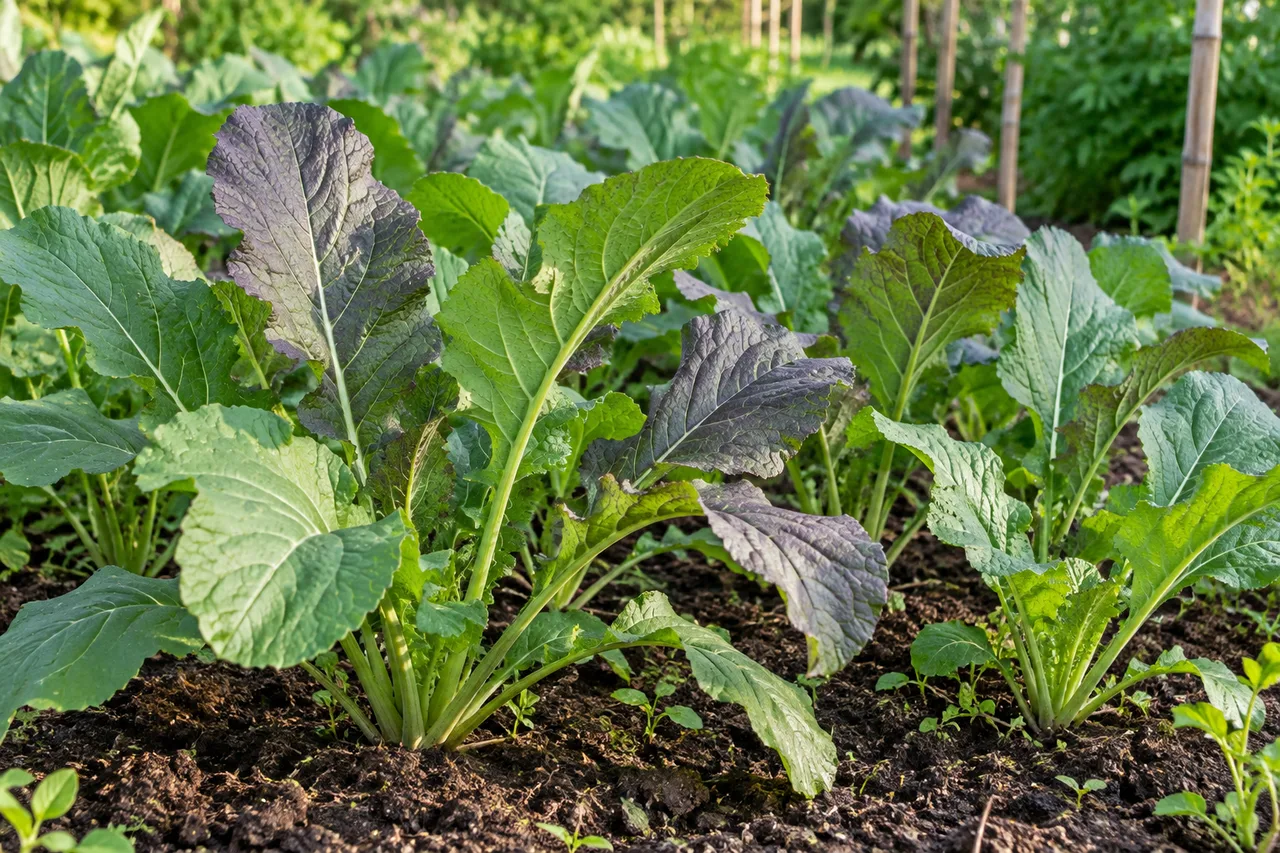
This image was created with AI from described plant characteristics and growing advice. It shows a possible situation and is not a photograph of a verified cultivar.
Young shoots in a leaf crop bed
Sow Gomenzer thinly; keep soil consistently moist; cut young shoots before strong stem formation.
- Sow Gomenzer thinly.
- Keep the soil evenly moist.
- Cut young shoots before strong stem formation.
For a short row of young cutting greens, with room for the next sowing.
Tick off your supplies →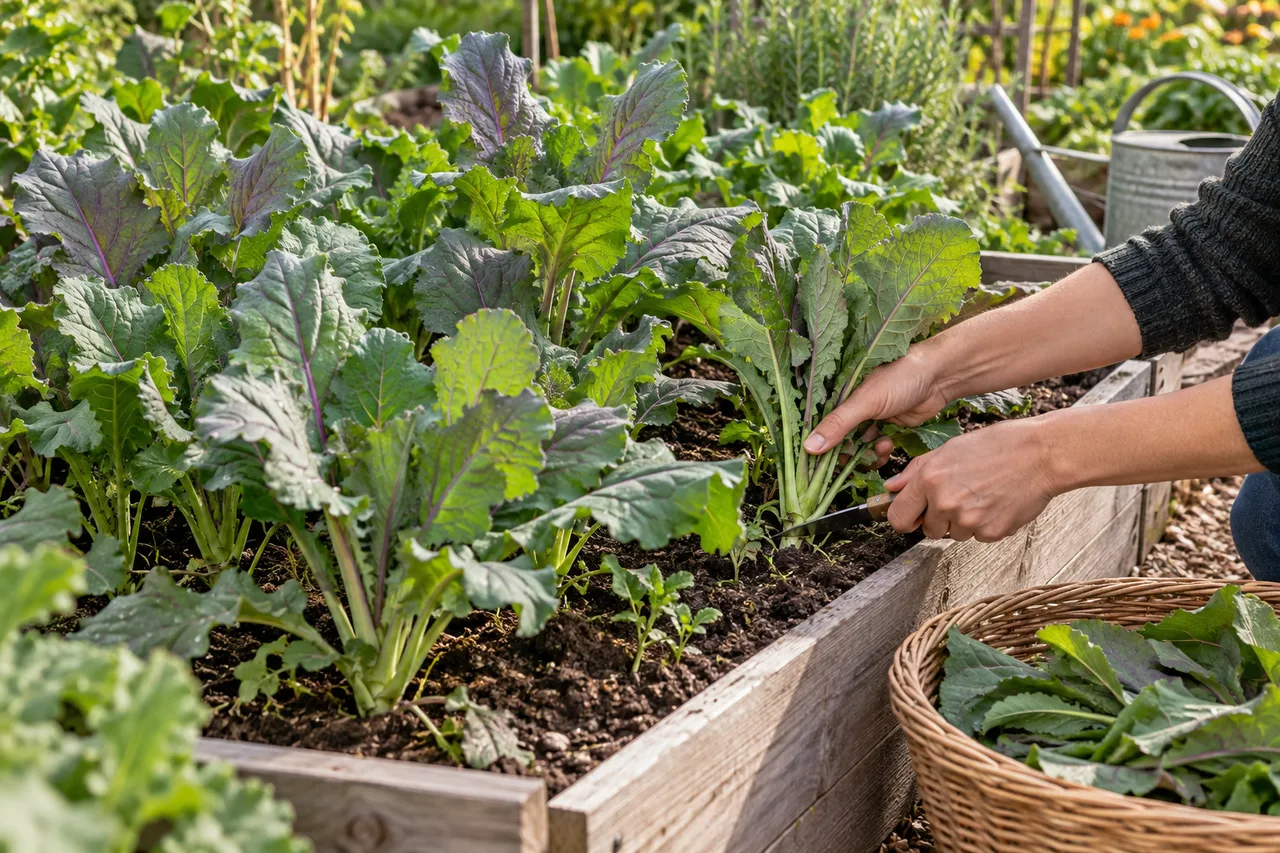
This image was created with AI from described plant characteristics and growing advice. It shows a possible situation and is not a photograph of a verified cultivar.
Small portions from a large container
Fill a container with free-draining compost; sow or plant with spacing; pick young leaves in small rounds.
- Fill a container with free-draining compost.
- Sow or plant with spacing.
- Pick young leaves in small rounds.
For small pickings of Gomenzer in an accessible position.
Tick off your supplies →Why grow Gomenzer?
Gomenzer quickly produces leaves and young shoots. Its green to purplish-green foliage also makes this cabbage attractive in a mixed bed.
Choose Gomenzer for a quick leaf crop rather than waiting months for a closed cabbage head.
How this choice tastes
The producer describes a nutty cabbage flavour and compares steamed shoots with broccoli. That distinction is more specific than simply 'tasty'.
From harvest to kitchen
Briefly steam the young shoots or add finely chopped leaves to a hot meal. Young leaves can also be used raw.
What needs attention when growing
Sow in small batches, keep the root zone moist and combine outdoor growing with a spacious container. The crop is not a hardy cabbage.
Pick young leaves or cut tender shoots before strong woodiness develops. Regular harvesting keeps attention on tenderness.
Cabbage for a young leaf harvest
Ethiopian kale is Brassica carinata, a cabbage-family leaf crop. Gomenzer has green and purple leaves. Expect loose leaves and shoots, not closed heads. Small repeated harvests let you use it before it dominates a large bed.
Light and shelter
Give light, drainage and shelter from strong wind. Culinaris describes Gomenzer as non-hardy. Plan fresh crops rather than treating cold automatically as storage. Near-home containers ease brief daily observation of emergence, water and leaves.
Sow thinly for cutting greens
The breeder recommends about one-centimetre depth. Young cutting rows may stand about twenty-five centimetres apart, closer within rows than mature plants. Start one small sowing, let it emerge and judge density before filling the whole bed identically.
A well-prepared start
Make the surface level and crumbly so sowing depth does not vary greatly within a row. Remove large weeds first. A label with the variety name, sowing date and harvest aim helps assess the trial. Allow more space later for individual leaf plants than for a row cut young.
Watering and leaf checks
Although this cabbage handles warmth, adequate water helps prevent early drought bolting. Check young leaves for damage such as flea beetles. Early fleece can protect; inspect emergence and targeted watering access beneath covering.
Cutting bed or manageable container
Leaf beds suit rows harvested young together; containers suit smaller portions observed and trimmed more often. Keep harvest aims identical for comparison. Dense cutting rows and single mature plants give different views of the same crop.
Start with young leaves
Culinaris gives five to seven weeks to a young harvest under favourable conditions. Use that as a guide and assess the actual plants. Young greens are a different product from a tall, flowering plant. Harvest some, taste it and plan the next sowing with that experience in mind.
Green with a nutty cabbage note
The breeder describes Gomenzer as nutty and cabbage-like, towards broccoli when steamed. Prepare a first portion simply. Taste young leaves separately from thicker shoots to find preferred stages. Colour variation is visual, not evidence of a separate purple flavour.
What you need
Tick what you already have. The extras depend on how you grow.
0 of 5 ticked off
Your ticks are saved in this browser.
Discover and grow more
More background, sources and image information
SeedSteps editorial team · updated on 11 October 2026. The AI images illustrate species and practical growing situations; they do not prove an exact cultivar, observations from your own garden or yield.
Britse gewasadviezen worden gecombineerd met Nederlandse en Vlaamse informatie waar beschikbaar. Amerikaanse Extension-bronnen ondersteunen plantprincipes en herkenning; hun kalenderdata, lokale plaagdruk, bestrijdingsmiddelen en mestdoseringen worden niet rechtstreeks op Nederland of Vlaanderen toegepast. Vorst, bodemwarmte, standplaats en expliciete rasinformatie blijven de lokale controle. Commerciële bronnen onderbouwen uitsluitend benoemde ras- en plantkenmerken; zij zijn geen affiliate-aanbeveling.
- Abessijnse kool Gomenzer (Ethiopische mosterd) biologische zadenFeggies · accessed 2026-10-11
- Gomenzer: Abessijnse snijkoolCulinaris · accessed 2026-10-11
- Abessijnse kool (Brassica carinata)Magic Garden Seeds · accessed 2026-10-11
Supporting evidence by chapter: Why grow Gomenzer?: Feggies. How this choice tastes: Feggies. From harvest to kitchen: Feggies. What needs attention when growing: Feggies. Cabbage for a young leaf harvest: Feggies, Magic Garden Seeds, Culinaris. Light and shelter: Feggies, Magic Garden Seeds, Culinaris. Sow thinly for cutting greens: Feggies, Magic Garden Seeds, Culinaris. A well-prepared start: Feggies, Magic Garden Seeds, Culinaris. Watering and leaf checks: Feggies, Magic Garden Seeds, Culinaris. Cutting bed or manageable container: Feggies, Magic Garden Seeds, Culinaris. Start with young leaves: Feggies, Magic Garden Seeds, Culinaris. Green with a nutty cabbage note: Feggies, Magic Garden Seeds, Culinaris.
Main colour: Green to green-purple leaves Beschrijving van de genoemde rasbron; geen eigen tuinwaarneming. Feggies
Flavour: The producer describes a nutty cabbage flavour and compares steamed shoots with broccoli. That distinction is more specific than simply 'tasty'. Smaakbeschrijving van de rasbron, vertaald naar eigen woorden. Rijpheid, teelt en bereiding beïnvloeden de smaak. Feggies