
Growing Ambrosia: light green pods along an accessible row of mesh
Ambrosia is a dwarf mangetout with a Dutch variety profile and a place in the school garden selection. Follow support, young pods and the short journey from picking to kitchen.
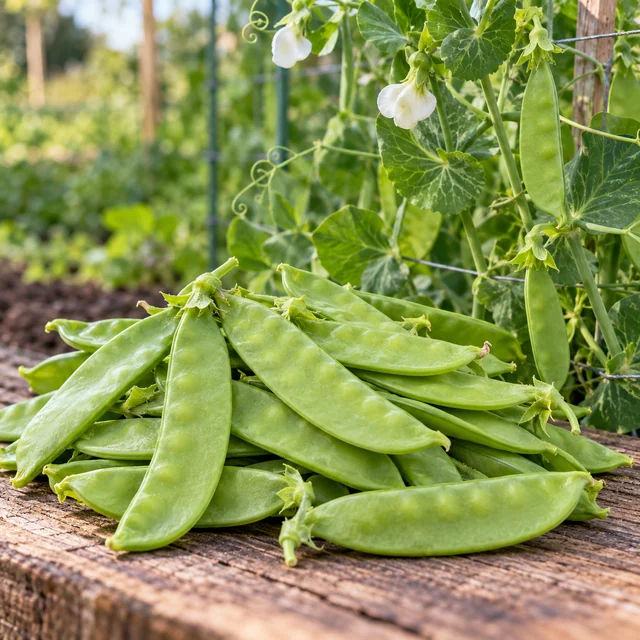
This image was created with AI from described plant characteristics and growing advice. It shows a possible situation and is not a photograph of a verified cultivar.
- Season
- Cool growing season; avoid saturated seedbeds
- Support
- Variety height determines trellis or twig supports
- Harvest
- Flat young pods with small seeds
This growing advice helps you choose. Your variety, growth stage, weather and conditions in your space determine the actual timing.
Sowing under cover and raising seedlings
Start under cover in cool conditions or sow directly · Mangetout
February–MarchStart under cover in cool, bright conditions; move to a suitable sheltered position after emergence.
- Germination and temperature
- A cool, bright growing space suits better than a hot loft. Do not sow in waterlogged, cold soil.
- After emergence
- Give seedlings light immediately after emergence. A dark loft needs suitable grow lights; warmth alone is insufficient. Ventilate and keep the compost moist without saturating it.
- Pricking out and potting on
- Use deep modules, pots or a seed gutter. Plant out with the whole root ball; do not pull the roots apart.
- Hardening off and planting out
- Gradually acclimatise indoor-raised plants to sun, wind and outdoor temperatures; shelter them again on cold nights. Plant out sturdy young plants once the soil is workable. Install pea sticks or a frame in good time.
Choose a suitable early or later cultivar. Avoid prolonged warm indoor propagation.
Sources and use
RHS · erwten en peulen ↗Britse teeltrichtlijn voor een gematigd klimaat; de genoemde perioden zijn richtlijnen voor Nederland en Vlaanderen.
Feggies · Rijspeul (-erwt) Heraut zaden ↗Nederlandse producent of teeltbron; de rasinstructie blijft leidend.
Feggies · Spring Blush Peulen Biologisch ↗Nederlandse producent of teeltbron; de rasinstructie blijft leidend.
Guideline periods for the Netherlands and Flanders. Check the variety, available light, soil and measured temperatures. Greenhouse heating does not guarantee enough winter light.
What makes Ambrosia different?
- Fruit size
- Medium-sized podsNetherlands
- Variety type
- Mangetout with edible young podsNetherlands
- Growth habit
- Bush mangetout; training along mesh recommendedNetherlands
- Height
- 70 cmNetherlands
- Main colour
- Light green podsNetherlands
The source context and any limitations are in the background information at the bottom.
Compare with another varietyHow to grow mangetout
The options below belong to the plant. From these, choose the method that suits your variety's growth habit.
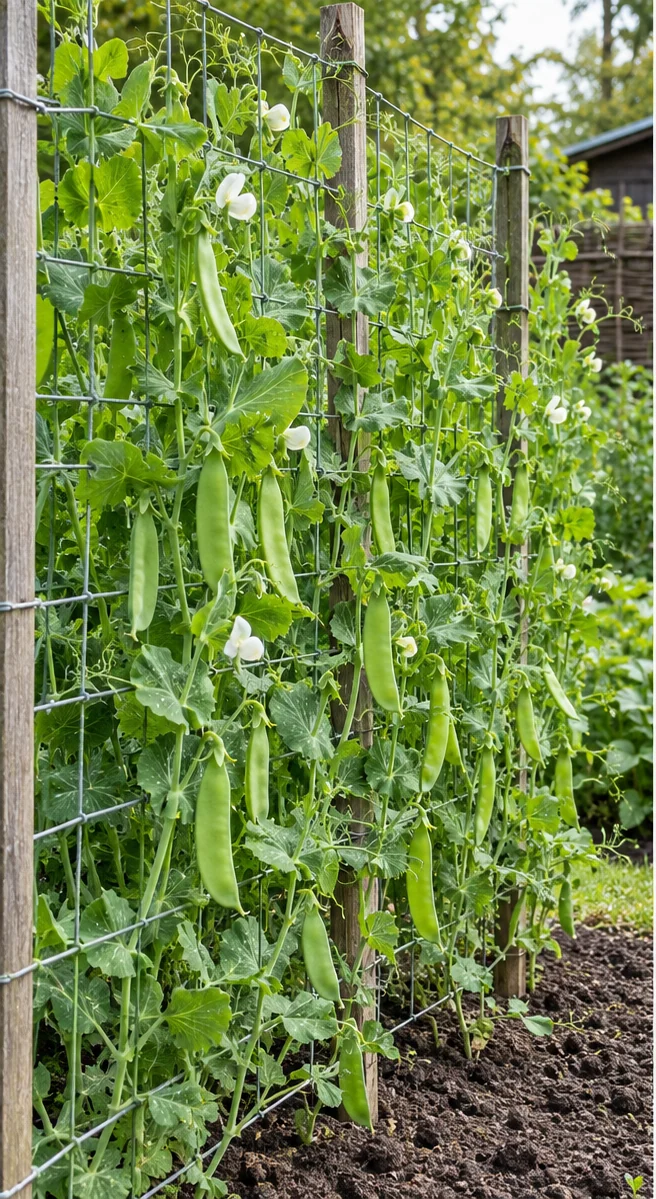
This image was created with AI from described plant characteristics and growing advice. It shows a possible situation and is not a photograph of a verified cultivar.
A tall row along sturdy mesh
Tall pod crops make an accessible green wall when the frame is installed on time.
- Install and anchor the frame before vines start searching.
- Sow or plant along the support and keep both sides accessible.
- Gently guide young tendrils towards the mesh and pick flat, young pods regularly.
For tall varieties and a bed where support can withstand wind.
Tick off your supplies →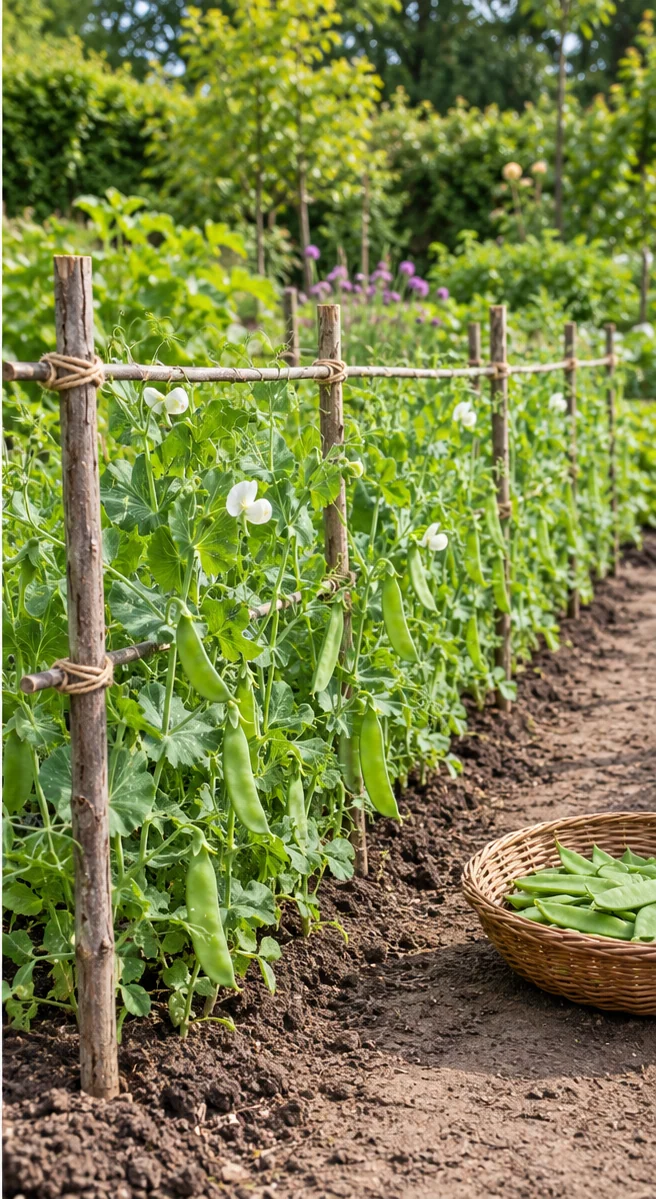
This image was created with AI from described plant characteristics and growing advice. It shows a possible situation and is not a photograph of a verified cultivar.
A low-growing variety with light support
Pea sticks hold a low row together without a tall structure.
- Choose a demonstrably low-growing mangetout variety.
- Place fine, branching pea sticks or low netting among young plants.
- Keep the path clear and check beneath outer leaves during harvesting.
For a small bed; low varieties may still need support against wind or fruit weight.
Tick off your supplies →A light green pod with its own variety name
Van der Wal describes medium, light green Ambrosia pods on about seventy-centimetre plants. These are source dimensions, not fixed bed heights. Compare the profile with your space. Here Ambrosia means mangetout; the white cabbage of the same name remains distinct.
A practical recommendation to start with
Ambrosia joins Norli in the Dutch Handboek Schooltuinen mangetout selection, a concrete inclusion reason, not proof of nationwide popularity. Use the recommendation as a start and assess whether you can make a row visited regularly during harvest.
Bush mangetout can still benefit from mesh
The supplier recommends mesh for Ambrosia. Dwarf mangetout does not mean support-free layout. Install mesh before stems hang and retain picking access. Check visibility from both sides; pods behind leaves easily escape quick rounds.
Start with the condition of your bed
Mangetout suits cooler seasons, though very wet cold soil hinders seed starts. Assess soil and follow current labels. Later pod colour says nothing about germination in wet ground. Note the start against variety and follow emergence.
Tend the row without repeatedly loosening it
Weed shallowly to spare pea roots. Check moisture during drought, particularly pod development. After care, reassess soil response. Beds need actual-condition attention; general foreign water quantities are no fixed ration for your row.
Light green colour does not tell everything
For mangetout, judge shape too: harvest developed flat pods before peas swell strongly. Green alone does not prove every pod remains young and tender. Observe several stages along mesh and handle a few to recognise readiness on the plant.
Take the harvest with you before it stays warm too long
Cool mangetout quickly after picking. Check and remove edge strings when cleaning. Plan room for the portion you will use. This completes the garden round: finding pods, treating them carefully and placing fresh harvests in your meal.
Let your own picking rhythm add to the comparison
Regular picking finds young pods. For Ambrosia, note mesh performance, first picking and harvest duration. Later compare dwarf Norli or taller mangetout. Choices become useful through recognising your own work, not variety names alone.
What you need
Tick what you already have. The extras depend on how you grow.
0 of 6 ticked off
Your ticks are saved in this browser.
Discover and grow more
More background, sources and image information
SeedSteps editorial team · updated on 11 October 2026. The AI images illustrate species and practical growing situations; they do not prove an exact cultivar, observations from your own garden or yield.
Britse gewasadviezen worden gecombineerd met Nederlandse en Vlaamse informatie waar beschikbaar. Amerikaanse Extension-bronnen ondersteunen plantprincipes en herkenning; hun kalenderdata, lokale plaagdruk, bestrijdingsmiddelen en mestdoseringen worden niet rechtstreeks op Nederland of Vlaanderen toegepast. Vorst, bodemwarmte, standplaats en expliciete rasinformatie blijven de lokale controle. Commerciële bronnen onderbouwen uitsluitend benoemde ras- en plantkenmerken; zij zijn geen affiliate-aanbeveling.
- World Checklist of Vascular Plants — 4 juni 2026Royal Botanic Gardens, Kew · accessed 2026-10-07
- Common catalogue of varieties of vegetable species — 27 januari 2023Europese Commissie · accessed 2026-10-07
- Norli en Ambrosia: biologische peulrassenZaadhandel Van der Wal · accessed 2026-10-08
- Rijspeul (-erwt) Heraut zadenFeggies · accessed 2026-10-11
- Stampeul (-erwt) Norli zadenFeggies · accessed 2026-10-11
- Erwten kweken — RHSRoyal Horticultural Society · accessed 2026-10-08
- Handboek Schooltuinen: raskeuze en plantuiHandboek Schooltuinen, via Velt · accessed 2026-10-08
- Erwten en eetbare peulen: verzorgen en oogstenUniversity of Maryland Extension · accessed 2026-10-08
- Growing peas in home gardensUniversity of Minnesota Extension · accessed 2026-10-08
- Spring Blush Peulen BiologischFeggies · accessed 2026-10-11
- Pois Gourmand À Rames Spring BlushAssociation Kokopelli · accessed 2026-10-11
Supporting evidence by chapter: A light green pod with its own variety name: Zaadhandel Van der Wal. A practical recommendation to start with: Handboek Schooltuinen, via Velt. Bush mangetout can still benefit from mesh: Zaadhandel Van der Wal, Royal Horticultural Society. Start with the condition of your bed: Royal Horticultural Society. Tend the row without repeatedly loosening it: University of Maryland Extension. Light green colour does not tell everything: University of Maryland Extension. Take the harvest with you before it stays warm too long: University of Minnesota Extension. Let your own picking rhythm add to the comparison: Royal Horticultural Society.
Fruit size: Medium-sized pods Beschrijving van Nederlandse zaadleverancier; bronmaat en rasportret, geen onafhankelijke proef of opbrengstgarantie. Zaadhandel Van der Wal
Variety type: Mangetout with edible young pods Beschrijving van Nederlandse zaadleverancier; bronmaat en rasportret, geen onafhankelijke proef of opbrengstgarantie. Zaadhandel Van der Wal
Growth habit: Bush mangetout; training along mesh recommended Beschrijving van Nederlandse zaadleverancier; bronmaat en rasportret, geen onafhankelijke proef of opbrengstgarantie. Zaadhandel Van der Wal
Height: 70 cm Beschrijving van Nederlandse zaadleverancier; bronmaat en rasportret, geen onafhankelijke proef of opbrengstgarantie. Zaadhandel Van der Wal
Main colour: Light green pods Beschrijving van Nederlandse zaadleverancier; bronmaat en rasportret, geen onafhankelijke proef of opbrengstgarantie. Zaadhandel Van der Wal