
Growing Red Baron: from a thin shoot to a red storage onion
Red Baron brings colour to the onion bed. Follow growing from seed or sets to a dry bulb, with separate source context for the variety, Dutch sowing guidance and general care.
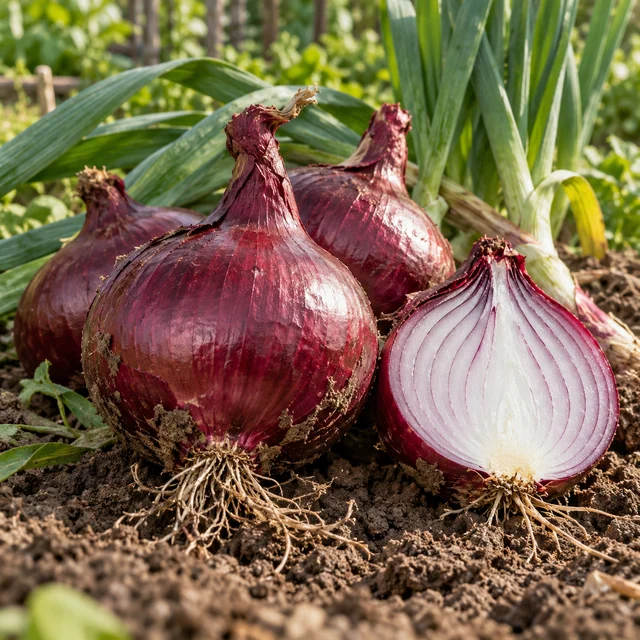
This image was created with AI from described plant characteristics and growing advice. It shows a possible situation and is not a photograph of a verified cultivar.
- Location
- Sunny, airy and free-draining
- Start
- Seed and onion sets have different schedules
- Onion set
- Root base down; tip just visible above the soil
- Harvest
- Foliage naturally yellow and fallen over; then dry carefully
This growing advice helps you choose. Your variety, growth stage, weather and conditions in your space determine the actual timing.
Sowing under cover and raising seedlings
Start under cover in a cool, bright position · Onion
February–March for seed-grown onionsSow lightly in modules or a seed tray and grow on steadily.
- Germination and temperature
- Germinate under cover, then grow on in good light without excessive warmth.
- After emergence
- Give seedlings light immediately after emergence. A dark loft needs suitable grow lights; warmth alone is insufficient. Ventilate and keep the compost moist without saturating it.
- Pricking out and potting on
- Sow in modules or a seed tray. Move young plants with their root ball according to cultivar guidance; a small group of spring onions can stay together.
- Hardening off and planting out
- Gradually acclimatise indoor-raised plants to sun, wind and outdoor temperatures; shelter them again on cold nights. Plant out sturdy young onions at suitable final spacing. Seed-grown onions are plants raised from seed; onion sets are planted directly.
Onion sets and seed-grown onions are different starting routes. Bunching and spring onions are generally harvested young.
Sources and use
Royal Horticultural Society · RHS — ui kweken ↗Soort- of productgebonden bron; buitenlandse perioden zijn geen vaste Nederlandse zaaidatum.
University of Minnesota Extension · UMN Extension — ui in de moestuin ↗Soort- of productgebonden bron; buitenlandse perioden zijn geen vaste Nederlandse zaaidatum.
Guideline periods for the Netherlands and Flanders. Check the variety, available light, soil and measured temperatures. Greenhouse heating does not guarantee enough winter light.
What makes Red Baron different?
- Height
- 10-50 cmUnited Kingdom
- Light
- Full sunUnited Kingdom
- Main colour
- Dark redUnited Kingdom
- Secondary colour
- White flesh with red edgesUnited Kingdom
- Save
- Stores well with suitable harvesting, drying and storageUnited Kingdom
- Flavour
- Strong flavourUnited Kingdom
- Texture
- Firm fleshUnited Kingdom
- Width
- 10-50 cmUnited Kingdom
The source context and any limitations are in the background information at the bottom.
Compare with another varietyHow to grow onion
The options below belong to the plant. From these, choose the method that suits your variety's growth habit.
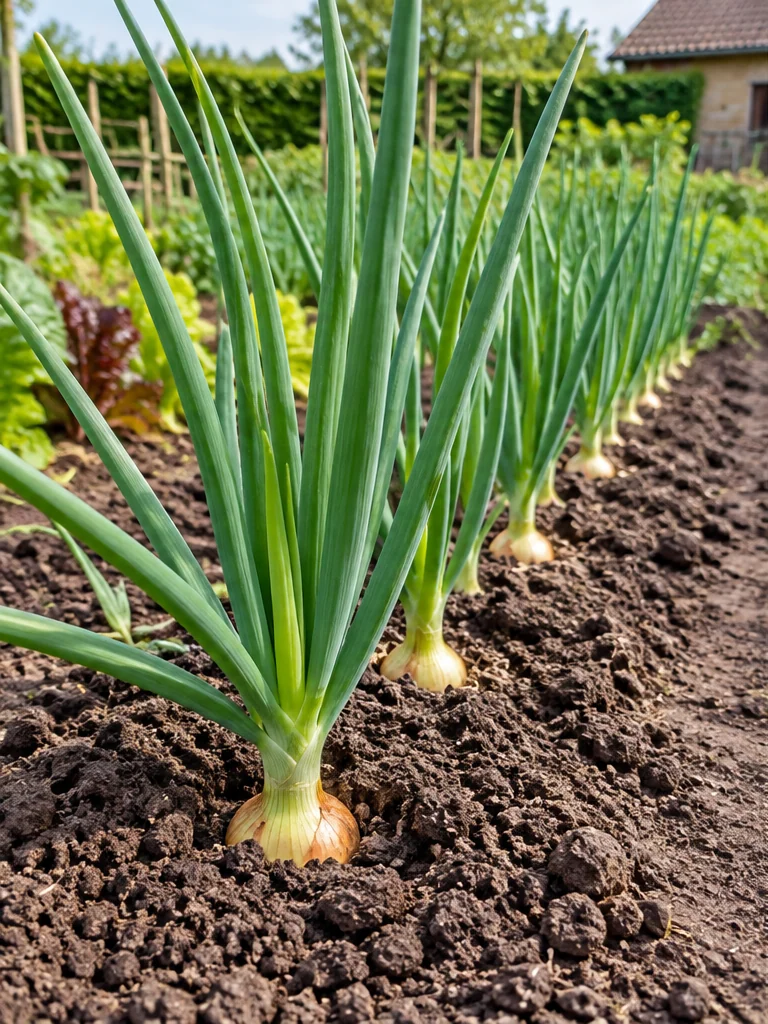
This image was created with AI from described plant characteristics and growing advice. It shows a possible situation and is not a photograph of a verified cultivar.
Onion sets in a manageable bed
Small planting bulbs make an accessible start. The tip stays visible and the root base gets loose soil.
- Choose healthy planting material for the intended season.
- Prepare a clean bed and space bulbs upright according to the variety.
- Leave the tip just above soil; do not press hard into dense ground.
- Weed carefully, check moisture and lift bulbs when foliage matures naturally.
For a simple start and a batch of storage onions.
Tick off your supplies →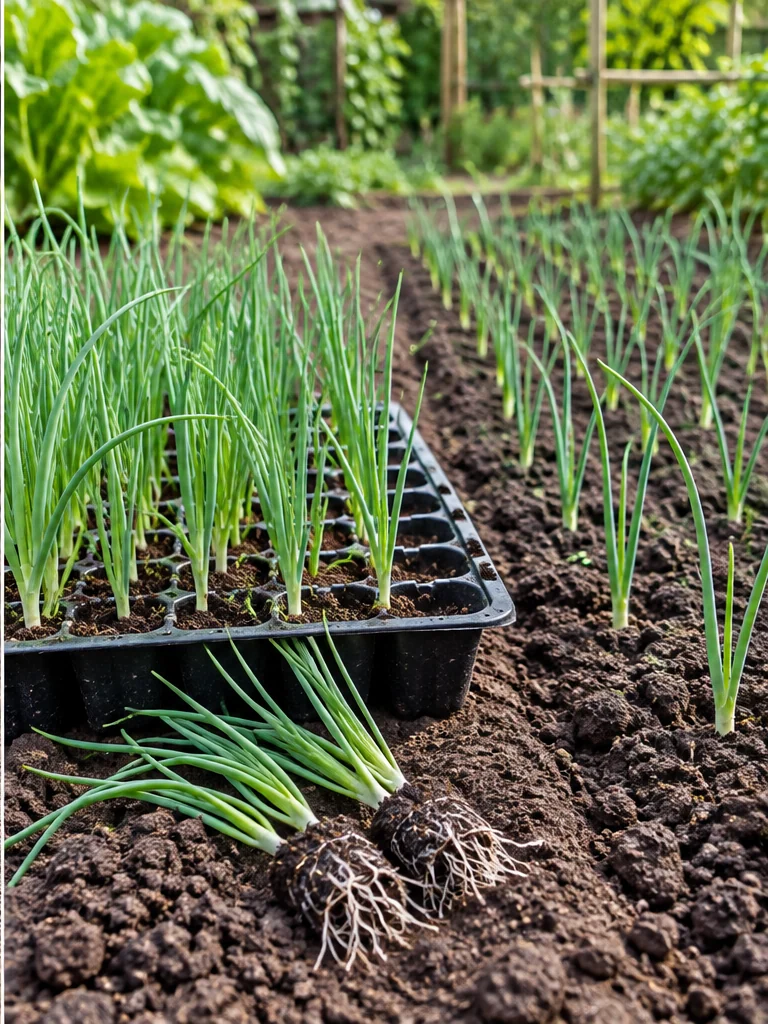
This image was created with AI from described plant characteristics and growing advice. It shows a possible situation and is not a photograph of a verified cultivar.
Onions from seed for greater variety choice
Sowing opens more choice but needs time for young shoots. Start timing must suit variety and intended planting position.
- Sow thinly in modules or a fine seedbed as the variety advises.
- Give plenty of light and keep the young root zone moist.
- Thin or plant sturdy seedlings at the recommended spacing.
- Let bulbs and foliage mature normally and select healthy produce for drying.
For anyone following the whole process with a suitable seed-grown variety.
Tick off your supplies →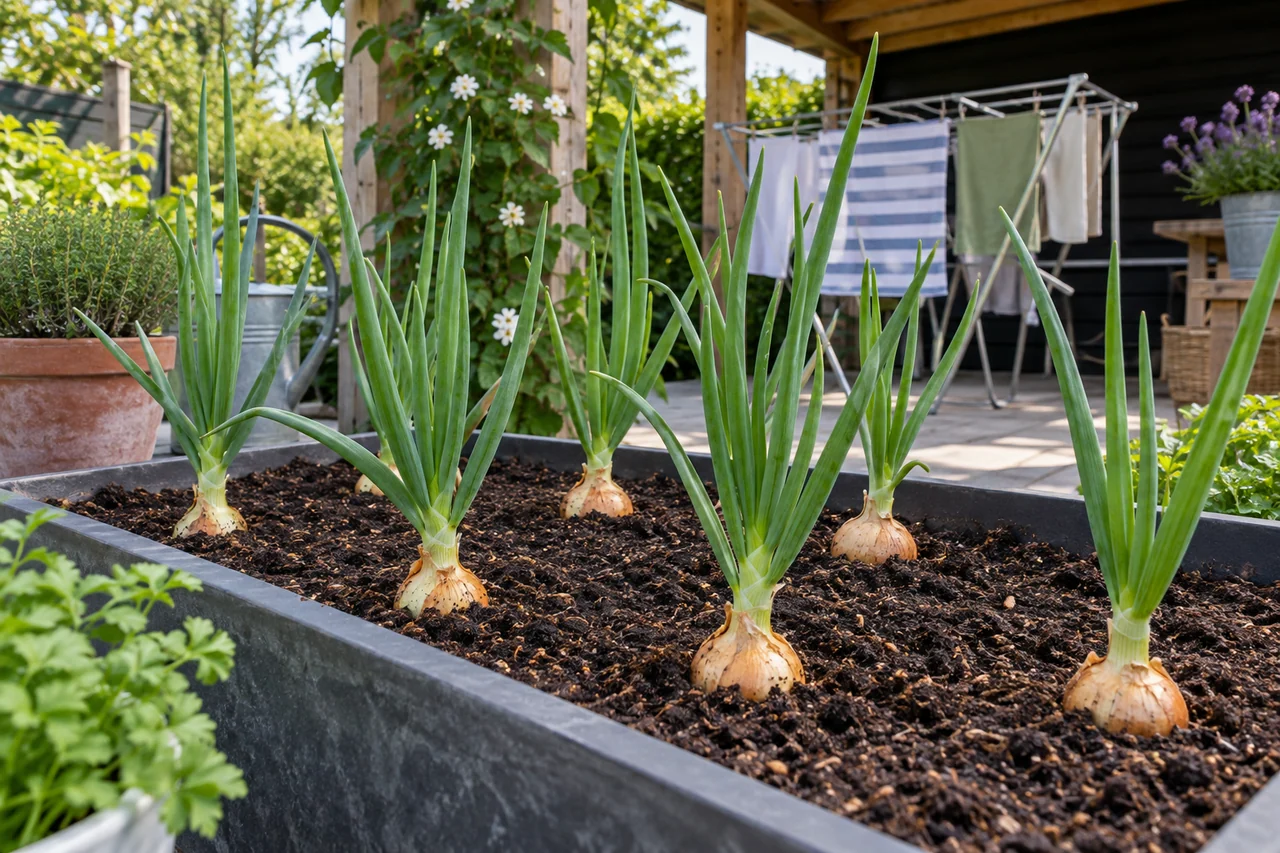
This image was created with AI from described plant characteristics and growing advice. It shows a possible situation and is not a photograph of a verified cultivar.
A smaller stored crop from a wide container
Onions can grow in a broad container if every bulb has enough room. A container makes weeding easy but needs more frequent moisture checks.
- Choose a wide container with unrestricted drainage and airy compost.
- Plant healthy onion sets or seedlings at normal spacing.
- Water evenly during growth and remove weeds early.
- Let foliage fall naturally and dry the harvest away from wet compost.
For a sunny balcony or patio and a limited stored crop.
Tick off your supplies →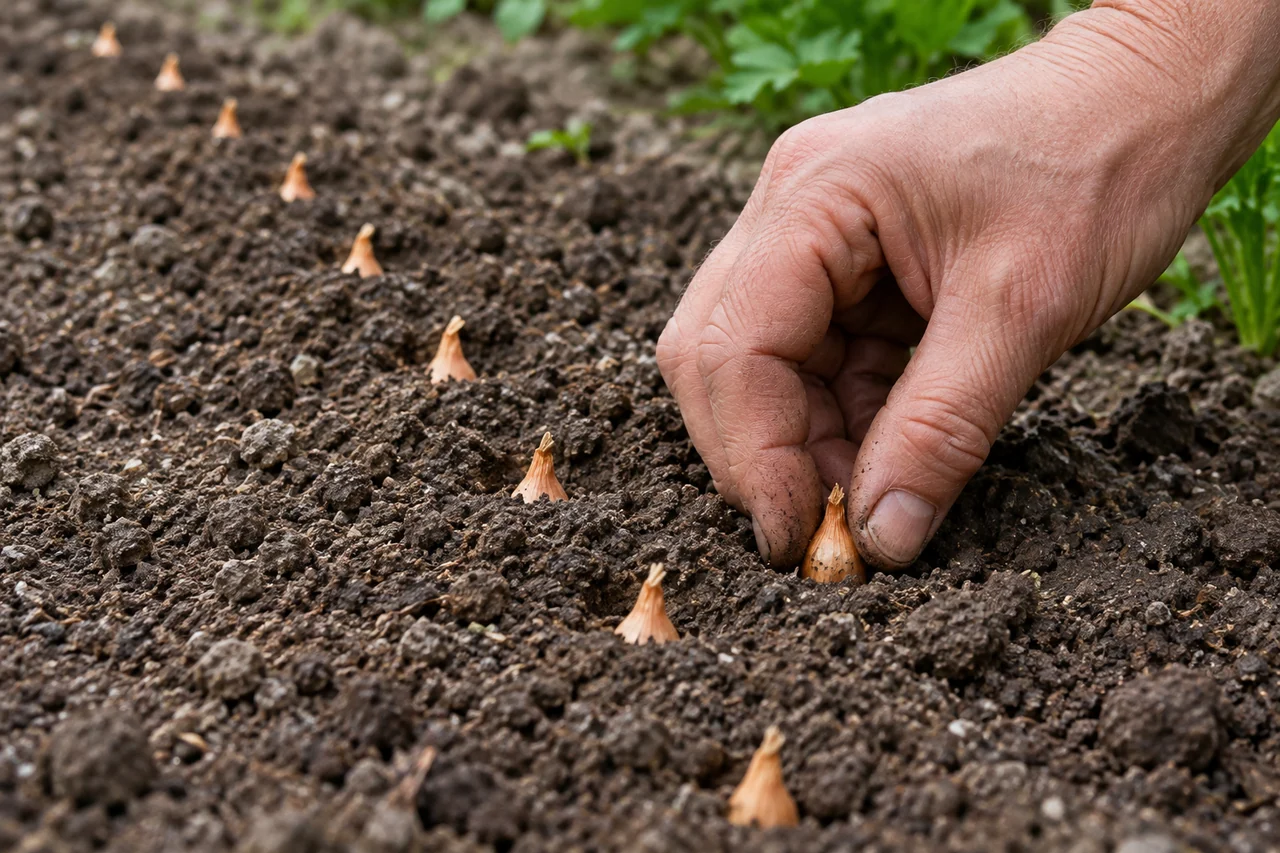
This image was created with AI from described plant characteristics and growing advice. It shows a possible situation and is not a photograph of a verified cultivar.
Leave the tip just visible
Put onion sets into the soil root-end down. The bulb belongs in the soil; only the dry tip stays above the surface.
View your supplies →A red skin with a recognisable interior
The RHS profile describes Red Baron as having dark red skin and firm white flesh with red edges. De Bolster describes it as pungent and slightly flattened. That profile helps you choose. Label the bed with the variety from the start, so you later know which onions you tasted and under what name you stored them.
Seeds and onion sets begin in different ways
Onion sets are small bulbs starting the crop; seed starts with seedling development. Record which you used, otherwise comparing harvest dates is less useful. Check purchased stock is actually Red Baron and save packet guidance with the crop.
The Dutch sowing instructions have their own conditions
De Bolster gives direct March sowing until mid-April at latest. This guides seed onions, not all sets. The page's table and full text differ on spacing. Check current labels before laying out rows; table values become no universal bed rule.
The roots are close to the surface
Onions root shallowly, making reachable moisture important. Check below surfaces in drought before watering. Needs change when bulbs mature and foliage flops. Reassess plants then rather than automatically repeating earlier watering rhythms.
Keep the row clear without damaging the bulb
Weeds compete with young onions. Work regularly and carefully. Deep hoeing can damage roots or bulbs; hand-weeding beside onions is easier to control. Observe foliage and bulb development simultaneously, tracking more than row cleanliness.
Let foliage indicate ripeness
Yellowing, flopping foliage helps recognise harvest stage. The RHS guide discourages deliberately bending leaves. Lift gently without bruising and separate damaged bulbs for prompt use. Calendars bring you to beds; plant condition determines what to do there.
Drying is part of harvesting
Storage onions need thorough drying. Look for papery outer skins and dry roots; airflow aids curing. Use shelter in wet weather. De Bolster advises drying out of full sun. Record conditions so later storage problems are not attributed solely to variety.
Stored crops need a round of checks too
Inspect stored onions regularly, using softening or sprouting bulbs first. Good-storage variety descriptions still require careful drying and inspection. Record quality progression and which batches were used first, continuing Red Baron's story beyond the bed season.
What you need
Tick what you already have. The extras depend on how you grow.
0 of 7 ticked off
Your ticks are saved in this browser.
Discover and grow more
More background, sources and image information
SeedSteps editorial team · updated on 11 October 2026. The AI images illustrate species and practical growing situations; they do not prove an exact cultivar, observations from your own garden or yield.
Britse gewasadviezen worden gecombineerd met Nederlandse en Vlaamse informatie waar beschikbaar. Amerikaanse Extension-bronnen ondersteunen plantprincipes en herkenning; hun kalenderdata, lokale plaagdruk, bestrijdingsmiddelen en mestdoseringen worden niet rechtstreeks op Nederland of Vlaanderen toegepast. Vorst, bodemwarmte, standplaats en expliciete rasinformatie blijven de lokale controle. Commerciële bronnen onderbouwen uitsluitend benoemde ras- en plantkenmerken; zij zijn geen affiliate-aanbeveling.
- World Checklist of Vascular Plants — 4 juni 2026Royal Botanic Gardens, Kew · accessed 2026-10-07
- Common catalogue of varieties of vegetable species — 27 januari 2023Europese Commissie · accessed 2026-10-07
- Red Baron: rasprofielRoyal Horticultural Society · accessed 2026-10-08
- Red Baron: Nederlandse zaai- en bewaaraanwijzingenDe Bolster · accessed 2026-10-08
- Handboek Schooltuinen: raskeuze en plantuiHandboek Schooltuinen, via Velt · accessed 2026-10-08
- Ajuin doux de Florence ras van Simiane zaden biologischFeggies · accessed 2026-10-11
- Ajuin rood van Abbeville zaden biologischFeggies · accessed 2026-10-11
- Ajuin Stuttgart zaden biologischFeggies · accessed 2026-10-11
- Ui Sturon 500gram BiologischFeggies · accessed 2026-10-11
- Ajuin wit uit Lisboa zaden biologischFeggies · accessed 2026-10-11
- Shakespeare Gele Herfst Ui - 250gr BiologischFeggies · accessed 2026-10-11
- Uien: zaaien, planten, oogsten en bewarenRoyal Horticultural Society · accessed 2026-10-08
- Growing onions: wortels, verzorging en bewaringUniversity of Minnesota Extension · accessed 2026-10-08
- Onions in the Garden: teelt en oogstUtah State University Extension · accessed 2026-10-08
- RHS — ui kwekenRoyal Horticultural Society · accessed 2026-10-10
- UMN Extension — ui in de moestuinUniversity of Minnesota Extension · accessed 2026-10-10
- Fenologische kalender: tuinieren met het seizoenVelt · accessed 2026-10-08
Supporting evidence by chapter: A red skin with a recognisable interior: Royal Horticultural Society, De Bolster. Seeds and onion sets begin in different ways: Royal Horticultural Society. The Dutch sowing instructions have their own conditions: De Bolster. The roots are close to the surface: University of Minnesota Extension. Keep the row clear without damaging the bulb: University of Minnesota Extension. Let foliage indicate ripeness: Royal Horticultural Society. Drying is part of harvesting: Utah State University Extension, De Bolster. Stored crops need a round of checks too: Utah State University Extension, Royal Horticultural Society.
Height: 10-50 cm Brits RHS-rasprofiel. Brongebonden beschrijving, geen vaste groei- of bewaargarantie voor Nederlandse of Vlaamse tuinen. Royal Horticultural Society
Light: Full sun Brits RHS-rasprofiel. Brongebonden beschrijving, geen vaste groei- of bewaargarantie voor Nederlandse of Vlaamse tuinen. Royal Horticultural Society
Main colour: Dark red Brits RHS-rasprofiel. Brongebonden beschrijving, geen vaste groei- of bewaargarantie voor Nederlandse of Vlaamse tuinen. Royal Horticultural Society
Secondary colour: White flesh with red edges Brits RHS-rasprofiel. Brongebonden beschrijving, geen vaste groei- of bewaargarantie voor Nederlandse of Vlaamse tuinen. Royal Horticultural Society
Save: Stores well with suitable harvesting, drying and storage Brits RHS-rasprofiel. Brongebonden beschrijving, geen vaste groei- of bewaargarantie voor Nederlandse of Vlaamse tuinen. Royal Horticultural Society
Flavour: Strong flavour Brits RHS-rasprofiel. Brongebonden beschrijving, geen vaste groei- of bewaargarantie voor Nederlandse of Vlaamse tuinen. Royal Horticultural Society
Texture: Firm flesh Brits RHS-rasprofiel. Brongebonden beschrijving, geen vaste groei- of bewaargarantie voor Nederlandse of Vlaamse tuinen. Royal Horticultural Society
Width: 10-50 cm Brits RHS-rasprofiel. Brongebonden beschrijving, geen vaste groei- of bewaargarantie voor Nederlandse of Vlaamse tuinen. Royal Horticultural Society