
Red Inferno: discover its flavour and how to grow it
Red Inferno is a small pak choi with red, spoon-shaped leaves and light green veins. Colour identifies young rosettes. Choose this variety when small, coloured pak choi suits your portions and space. Compare the rosette with Taisai.
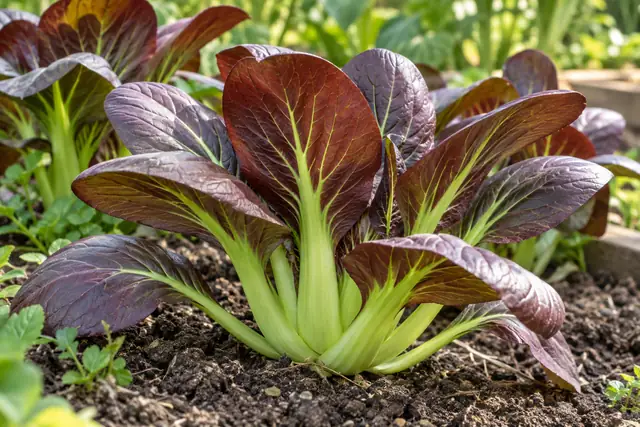
This image was created with AI from described plant characteristics and growing advice. It shows a possible situation and is not a photograph of a verified cultivar.
- Harvest
- Baby leaves or a whole plant
- Space
- Approximately 25–30 cm for mature plants
- Point to watch
- Cold, drought and long days can encourage bolting
This growing advice helps you choose. Your variety, growth stage, weather and conditions in your space determine the actual timing.
Sowing under cover and raising seedlings
Start under cover in cool conditions or sow directly · Pak choi
July–August for a simple autumn routeStart briefly under cover in modules; provide light and avoid heat.
- Germination and temperature
- Raise in cool to mild conditions; avoid severe cold, heat and drying out.
- After emergence
- Keep emerged lettuce bright and well ventilated; prevent high greenhouse temperatures and drying out.
- Pricking out and potting on
- Sow in modules or prick out manageable seedlings into individual cells. Keep the root ball intact when planting out.
- Hardening off and planting out
- Gradually acclimatise indoor-raised plants to sun, wind and outdoor temperatures; shelter them again on cold nights. Plant out sturdy young plants; keep the growing point clear and protect against slugs and snails.
These leafy crops can bolt under stress or unsuitable day length. Use early sowing only with an appropriate cultivar.
Sources and use
RHS · sla ↗Britse teeltrichtlijn voor een gematigd klimaat; de genoemde perioden zijn richtlijnen voor Nederland en Vlaanderen.
Royal Horticultural Society · Pak choi kweken ↗Soort- of productgebonden bron; buitenlandse perioden zijn geen vaste Nederlandse zaaidatum.
University of Minnesota Extension · Growing Chinese cabbage and bok choy ↗Soort- of productgebonden bron; buitenlandse perioden zijn geen vaste Nederlandse zaaidatum.
Guideline periods for the Netherlands and Flanders. Check the variety, available light, soil and measured temperatures. Greenhouse heating does not guarantee enough winter light.
What makes Red Inferno different?
- Fruit shape
- Small rosette and spoon-shaped leaves
- Main colour
- Red leaves with light green veins
The source context and any limitations are in the background information at the bottom.
Compare with another varietyFlavour and kitchen
A distinct pungency or sweetness for Red Inferno is not confirmed. The described crispness is a texture characteristic.
This flavour description applies to the crop; a separate taste test for this variety is not supported by evidence.Use young leaves in mixed salad or briefly stir-fry a small rosette. The source describes a crisp young harvest.
Why choose it? Choose this variety when small, coloured pak choi suits your portions and space. Compare the rosette with Taisai.
How to grow pak choi
The options below belong to the plant. From these, choose the method that suits your variety's growth habit.
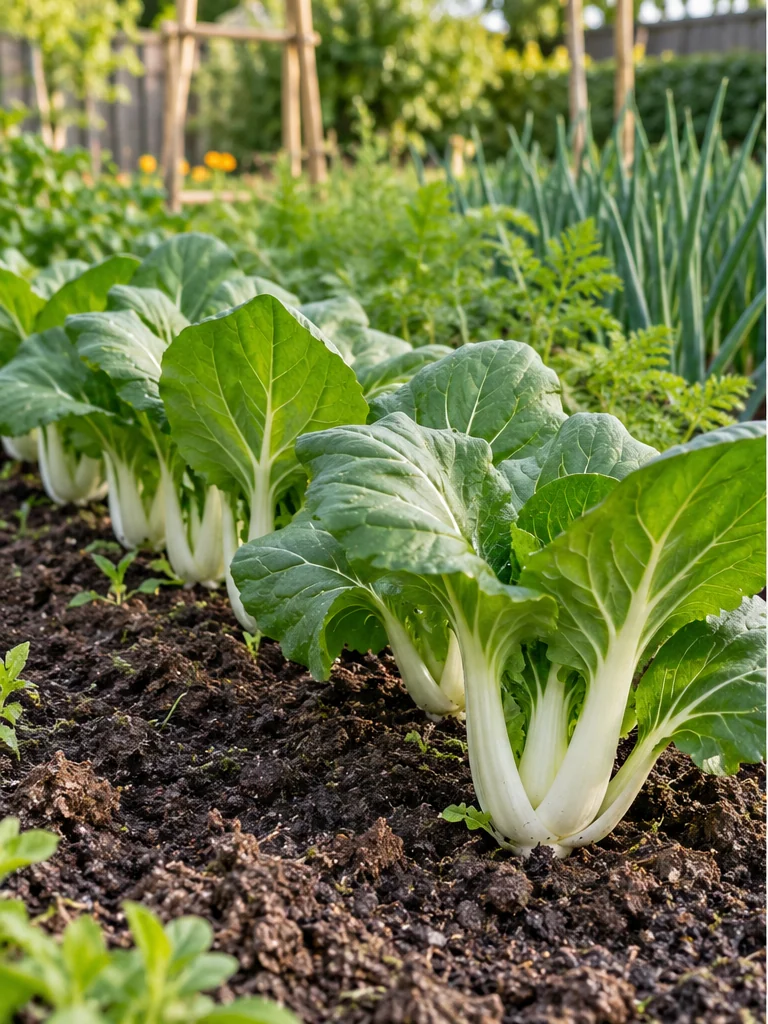
This image was created with AI from described plant characteristics and growing advice. It shows a possible situation and is not a photograph of a verified cultivar.
A row of full-sized pak choi plants
Give individual plants room to form broad stalks and leaves.
- Sow in a suitable variety window or use young plants with intact rootballs.
- Thin to about 25–30 cm for full-sized plants.
- Keep soil moist and cut a whole plant at the desired size.
For sturdy leaf stalks and a manageable late-summer crop.
Tick off your supplies →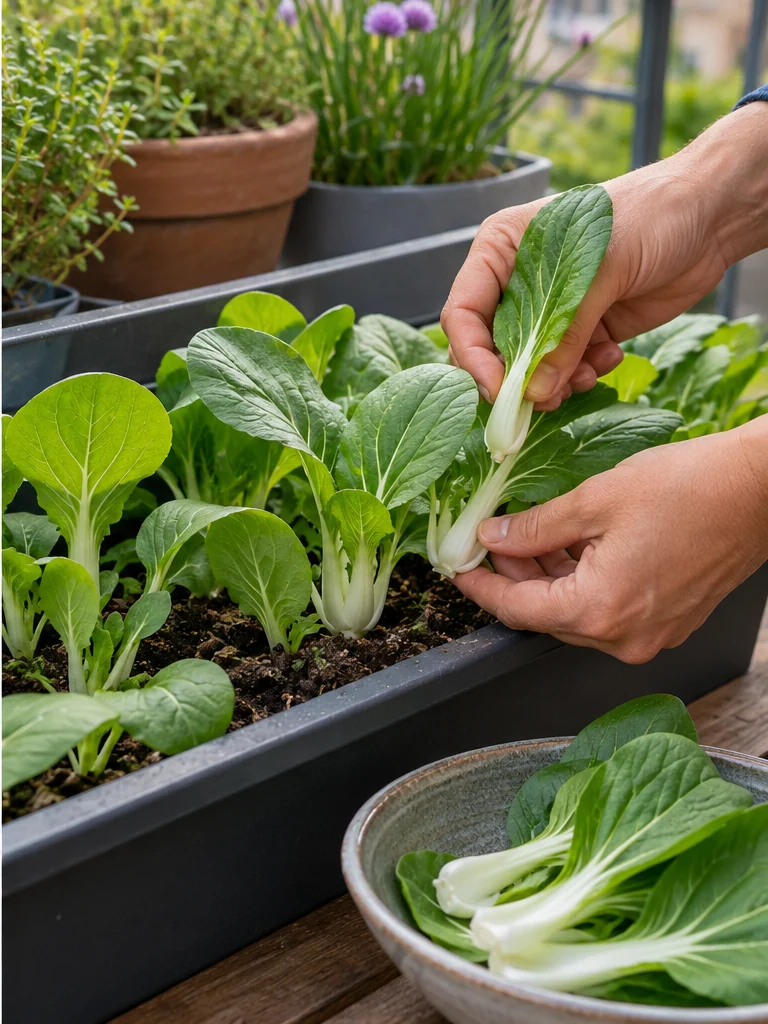
This image was created with AI from described plant characteristics and growing advice. It shows a possible situation and is not a photograph of a verified cultivar.
Young pak choi near the kitchen
A large container allows young harvesting and easy watering checks.
- Use a container at least approximately 30 cm wide with drainage.
- Sow and thin for baby leaves or small whole plants.
- Pick young and keep checking for drying and flower stems.
For small patio or balcony portions; closer sowing means earlier harvesting.
Tick off your supplies →Why grow Red Inferno?
Red Inferno is a small pak choi with red, spoon-shaped leaves and light green veins. Colour identifies young rosettes.
Choose this variety when small, coloured pak choi suits your portions and space. Compare the rosette with Taisai.
How this choice tastes
A distinct pungency or sweetness for Red Inferno is not confirmed. The described crispness is a texture characteristic.
From harvest to kitchen
Use young leaves in mixed salad or briefly stir-fry a small rosette. The source describes a crisp young harvest.
What needs attention when growing
Sow directly in a moisture-retentive position or use a container with drainage. Avoid drying out and protect young plants when frost threatens.
Harvest at the young stage before flowering lengthens the rosette. Use the stated weeks as a growth expectation, not a fixed deadline.
Choose by flavour, shape and use
Taisai: Taisai forms a rosette of dark green, spoon-shaped leaves with broad white ribs, without a closed head. Fry ribs first and add thin leaves later. Finely sliced raw ribs add crisp texture to salad.
The source gives no unique Taisai aroma. Familiar pak choi preparation is therefore described as crop information, not a cultivar comparison.
Red Inferno: Red Inferno is a small pak choi with red, spoon-shaped leaves and light green veins. Colour makes young rosettes recognisable. Use young leaves in mixed salad or stir-fry a small rosette briefly. The source mentions a crisp young harvest.
A distinct pungency or sweetness for Red Inferno is not confirmed. The described crispness is a texture characteristic.
Pak choi grows with open leaf stalks
Pak choi is not a closed Chinese cabbage head. Broad stalks remain visible beneath open leaves. Check whether the seed label gives a small or large final type. Many varieties allow baby harvests, but full-plant spacing and timing must match the type.
A late-summer round is often manageable
Pak choi grows in several periods, but bolting needs attention. Young cold exposure and warm long days interrupt leaf aims. Choose suitable varieties and consider late-summer starts. Minnesota calendars belong to another climate; transfer moisture, spacing and protection principles.
Sow in place or in separate modules
Sow thinly in a fine strip or raise individual plants in modules. Keep young roots undamaged when planting out. Do not let a plant become pot-bound in a small cell. A sowing line and label make thinning easier, especially when growing several Asian leafy vegetables in the bed at once.
Match space to the meal
Baby leaves allow closer growing than whole plants. The RHS gives about 25–30 cm for larger plants and less for younger stages. Choose the aim first. Crowding does not automatically give broad, firm stalks, while small portions need no large row.
Let the stalks grow steadily
Even soil moisture supports tender leaves and crisp stalks. Water bases and check beneath surfaces. Containers dry faster. Light shelter helps strong heat, but pak choi still needs light. Avoid saucers staying full of water.
Check the first leaves for small holes
Flea beetles damage seedlings quickly; slugs and caterpillars also feed. Inspect before assigning causes. Mesh needs closed edges and growth room. Check regularly under protection to reveal trapped pests or poor moisture promptly.
Pick young or cut a whole plant
For loose leaves, retain central growth. For whole pak choi, cut low at the base once size and firmness suit. Do not wait for an obvious flower stem. Young whole plants can be usable portions; maximum size is no required goal.
Use promptly and plan a small follow-on crop
Rinse sand between stalks and preferably use fresh. Cool leftover pak choi promptly. Note sowing, bolting and desired size. Start another round only when variety timing and care availability fit. Small rounds fit weekly cooking more easily.
What you need
Tick what you already have. The extras depend on how you grow.
0 of 6 ticked off
Your ticks are saved in this browser.
Discover and grow more
More background, sources and image information
SeedSteps editorial team · updated on 11 October 2026. The AI images illustrate species and practical growing situations; they do not prove an exact cultivar, observations from your own garden or yield.
Britse gewasadviezen worden gecombineerd met Nederlandse en Vlaamse informatie waar beschikbaar. Amerikaanse Extension-bronnen ondersteunen plantprincipes en herkenning; hun kalenderdata, lokale plaagdruk, bestrijdingsmiddelen en mestdoseringen worden niet rechtstreeks op Nederland of Vlaanderen toegepast. Vorst, bodemwarmte, standplaats en expliciete rasinformatie blijven de lokale controle. Commerciële bronnen onderbouwen uitsluitend benoemde ras- en plantkenmerken; zij zijn geen affiliate-aanbeveling.
- World Checklist of Vascular Plants — 4 juni 2026Royal Botanic Gardens, Kew · accessed 2026-10-07
- Paksoï red inferno zaden biologischFeggies · accessed 2026-10-11
- Pak Choi Taisai zaden biologischFeggies · accessed 2026-10-11
- Pak choi kwekenRoyal Horticultural Society · accessed 2026-10-10
- Growing Chinese cabbage and bok choyUniversity of Minnesota Extension · accessed 2026-10-10
Supporting evidence by chapter: Why grow Red Inferno?: Feggies. How this choice tastes: Feggies. From harvest to kitchen: Feggies. What needs attention when growing: Feggies. Choose by flavour, shape and use: Feggies, Feggies. Pak choi grows with open leaf stalks: Royal Horticultural Society, University of Minnesota Extension. A late-summer round is often manageable: Royal Horticultural Society, University of Minnesota Extension. Sow in place or in separate modules: Royal Horticultural Society, University of Minnesota Extension. Match space to the meal: Royal Horticultural Society, University of Minnesota Extension. Let the stalks grow steadily: Royal Horticultural Society, University of Minnesota Extension. Check the first leaves for small holes: Royal Horticultural Society, University of Minnesota Extension. Pick young or cut a whole plant: Royal Horticultural Society, University of Minnesota Extension. Use promptly and plan a small follow-on crop: Royal Horticultural Society, University of Minnesota Extension.
Fruit shape: Small rosette and spoon-shaped leaves Beschrijving van de genoemde rasbron; geen eigen tuinwaarneming. Feggies
Main colour: Red leaves with light green veins Beschrijving van de genoemde rasbron; geen eigen tuinwaarneming. Feggies