
Primero: een plek in jouw tuin
Ontdek Primero en kies hoe je rode kool wilt kweken. Hieronder staan de bevestigde rasgegevens en de praktische teeltgids voor deze groente.
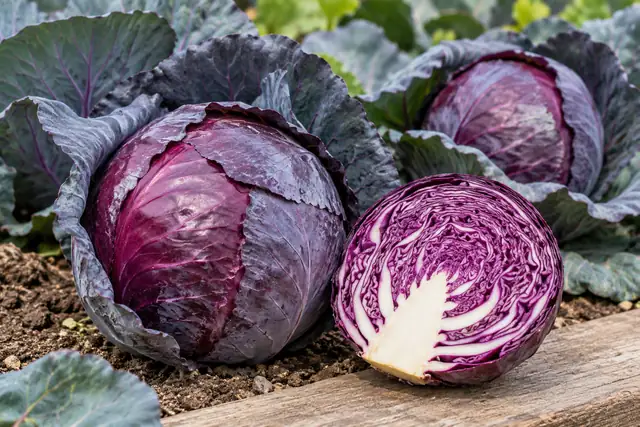
This image was created with AI from described plant characteristics and growing advice. It shows a possible situation and is not a photograph of a verified cultivar.
- Sowing
- Spring; exact sowing depends on early or late variety
- Harvesting
- Summer to autumn, depending on variety and sowing
- Location
- Sun, fertile soil and even moisture
- Space
- According to variety: approximately 30–60 cm as a practical guide
This growing advice helps you choose. Your variety, growth stage, weather and conditions in your space determine the actual timing.
Sowing under cover and raising seedlings
Start under cover in cool conditions in modules or a seedbed · Red cabbage
March–May, only for a suitable harvest typeSow somewhere cool and bright and avoid long, weak growth.
- Germination and temperature
- Germinate under cover, then grow on in cool, bright, well-ventilated conditions; avoid a hot growing space.
- After emergence
- Give seedlings light immediately after emergence. A dark loft needs suitable grow lights; warmth alone is insufficient. Ventilate and keep the compost moist without saturating it.
- Pricking out and potting on
- Sow in modules or prick out manageable young plants. Let the root ball firm up without a check in growth.
- Hardening off and planting out
- Gradually acclimatise indoor-raised plants to sun, wind and outdoor temperatures; shelter them again on cold nights. Plant out sturdy young brassicas and protect against cabbage root fly and caterpillars where needed.
Early, summer, autumn and winter cultivars have their own windows. The spring period shown is a basic route; use cultivar guidance for overwintering and winter cauliflower.
Sources and use
Royal Horticultural Society · RHS — kool kweken ↗Soort- of productgebonden bron; buitenlandse perioden zijn geen vaste Nederlandse zaaidatum.
University of Minnesota Extension · UMN Extension — kool in de moestuin ↗Soort- of productgebonden bron; buitenlandse perioden zijn geen vaste Nederlandse zaaidatum.
Guideline periods for the Netherlands and Flanders. Check the variety, available light, soil and measured temperatures. Greenhouse heating does not guarantee enough winter light.
How to grow red cabbage
The options below belong to the plant. From these, choose the method that suits your variety's growth habit.
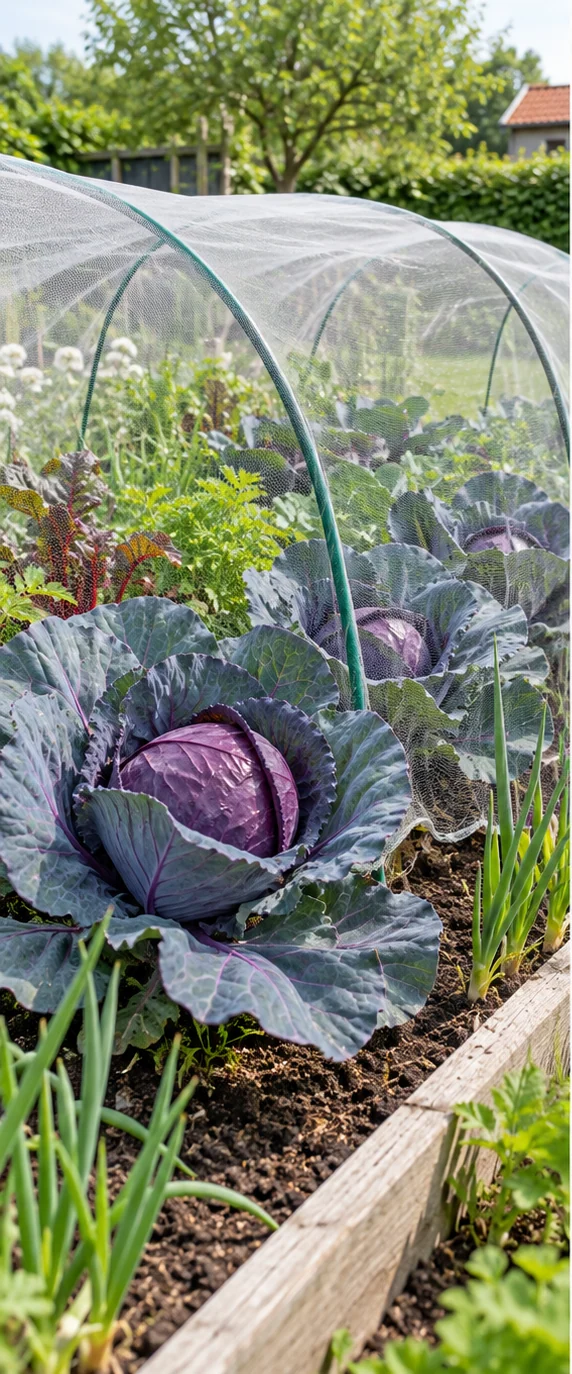
This image was created with AI from described plant characteristics and growing advice. It shows a possible situation and is not a photograph of a verified cultivar.
One head per plant in a spacious bed
In open ground, red cabbage has room to form a firm head. Do not plant extra closely to promise more yield: outer leaves need light to feed the heart.
- Start in modules or begin with healthy young plants.
- Plant in prepared soil at the cultivar’s spacing.
- Place insect mesh over hoops and seal the edges well.
For anyone able to reserve a cabbage bed for much of the season.
Tick off your supplies →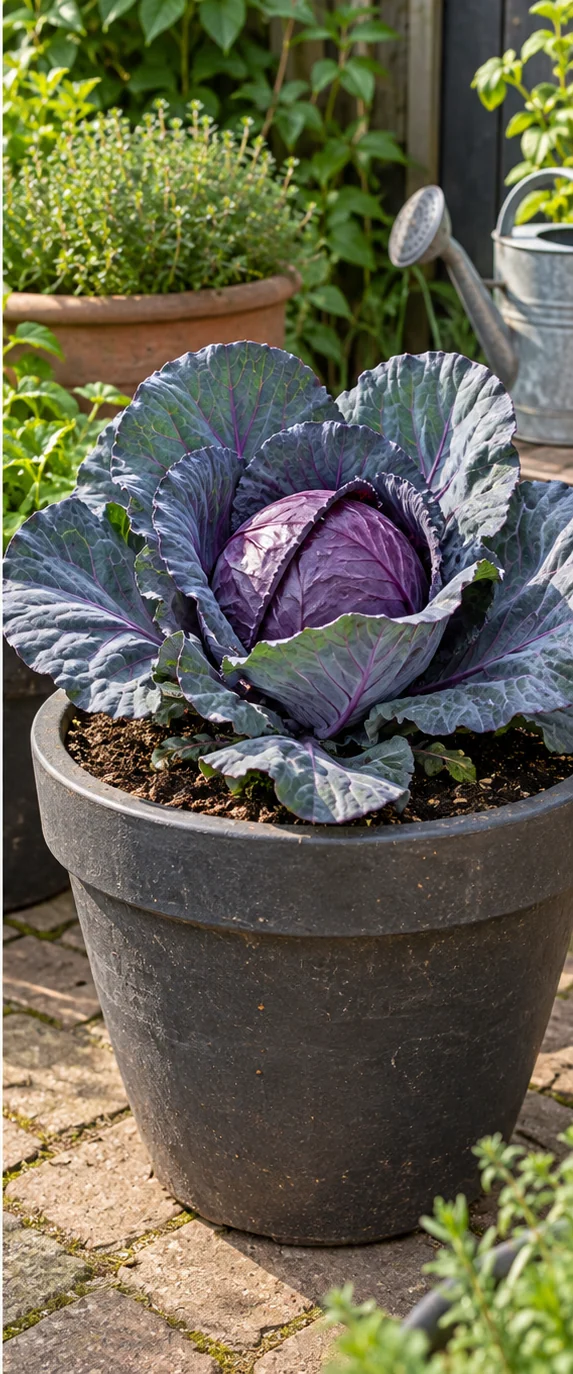
This image was created with AI from described plant characteristics and growing advice. It shows a possible situation and is not a photograph of a verified cultivar.
A compact cultivar in a deep pot
A demonstrably compact cabbage variety can grow in a large, deep pot. Soil and position are easier to choose, but water and feeding need more attention. A small balcony pot gives insufficient roots for a large cabbage.
- Choose a cultivar with confirmed compact growth.
- Use a deep pot with drainage holes and suitable compost.
- Check moisture regularly and allow light and air to the leaves.
For a small number of heads on a sunny patio.
Tick off your supplies →Choose by flavour, shape and use
Amarant: Amarant is an early red cabbage selection with a short stem and small, round, dense heads. This suits a harvest in modest portions. Slice finely for salad or cook. Smaller heads can help plan meals without large leftovers.
The source gives no specific flavour for Amarant. General red cabbage character is not converted into an unproven variety aroma.
A cabbage that suits your cooking
Red cabbage makes a striking bed. Leaves slowly close around the heart; harvest the whole head once firm enough. A small bed of different varieties can provide several harvest times without everything entering the kitchen at once.
Sow for the intended harvest season
The same cabbage species can include early and late cultivars. Follow your cultivar's recommended sowing window and work in small batches. A late sowing of a long-season winter cultivar will not automatically catch up.
Sturdy plants in individual modules
Sow in clean seed compost and place emerged seedlings in good light. Keep the compost moist. An individual module gives each plant its own rootball. Move the plants before growth stalls for long in a cell that is too small.
Bring the soil into contact with the rootball
Acclimatise plants raised under cover to outdoor conditions. Plant in a sunny bed with good drainage and firm the soil around the rootball. Water to bring roots and soil into contact. Leave enough space for the mature leaves.
Support growth without waterlogging
Cabbages need fertile soil that retains moisture. Mature compost helps on poor or badly structured soil. Base additional feeding on the soil and product advice. Do not work wet clay into a compact, smooth planting hole where rainwater collects.
Even growth through to heart formation
Check the root zone more often during heart formation. Prolonged drought restricts development, while a sudden change to plentiful water may split vulnerable hearts. Water directly where needed during dry weather and retain an airy soil around the plant.
Avoid trapping the first caterpillars inside
Put insect mesh in place early and seal the edges, but also inspect beneath it. Mesh does not exclude a caterpillar already on a plant. Remove affected leaves and identify the pest before choosing a measure.
Consider all brassicas in your plan
Broccoli, cauliflower, Brussels sprouts and turnips also belong to the brassicas. Do not grow them in the same position every year. With clubroot, ordinary rotation is insufficient: have the cause assessed and use healthy starting material and a suitable growing position.
Feel the heart and look at the leaves
Cut a firm head free above ground with a sharp knife. Leave healthy protective leaves if storing briefly. Outer colour tells you less about harvest readiness than a closed, firm heart.
Adapt storage to the cultivar
Red cabbage can be used fresh or preserved with a reliable recipe. Choose a storage variety for a longer winter supply; early and late varieties do not automatically share keeping quality.
What you need
Tick what you already have. The extras depend on how you grow.
0 of 5 ticked off
Your ticks are saved in this browser.
Discover and grow more
More background, sources and image information
SeedSteps editorial team · updated on 11 October 2026. The AI images illustrate species and practical growing situations; they do not prove an exact cultivar, observations from your own garden or yield.
Britse gewasadviezen worden gecombineerd met Nederlandse en Vlaamse informatie waar beschikbaar. Amerikaanse Extension-bronnen ondersteunen plantprincipes en herkenning; hun kalenderdata, lokale plaagdruk, bestrijdingsmiddelen en mestdoseringen worden niet rechtstreeks op Nederland of Vlaanderen toegepast. Vorst, bodemwarmte, standplaats en expliciete rasinformatie blijven de lokale controle. Commerciële bronnen onderbouwen uitsluitend benoemde ras- en plantkenmerken; zij zijn geen affiliate-aanbeveling.
- World Checklist of Vascular Plants — 4 juni 2026Royal Botanic Gardens, Kew · accessed 2026-10-07
- Common catalogue of varieties of vegetable species — 27 januari 2023Europese Commissie · accessed 2026-10-07
- Rodekool Amarant zadenFeggies · accessed 2026-10-11
- RHS — kool kwekenRoyal Horticultural Society · accessed 2026-10-10
- UMN Extension — kool in de moestuinUniversity of Minnesota Extension · accessed 2026-10-10
- USU Extension — kool in de tuinUtah State University Extension · accessed 2026-10-10
Supporting evidence by chapter: Choose by flavour, shape and use: Feggies. A cabbage that suits your cooking: Royal Horticultural Society, University of Minnesota Extension, Utah State University Extension. Sow for the intended harvest season: Royal Horticultural Society, University of Minnesota Extension, Utah State University Extension. Sturdy plants in individual modules: Royal Horticultural Society, University of Minnesota Extension, Utah State University Extension. Bring the soil into contact with the rootball: Royal Horticultural Society, University of Minnesota Extension, Utah State University Extension. Support growth without waterlogging: Royal Horticultural Society, University of Minnesota Extension, Utah State University Extension. Even growth through to heart formation: Royal Horticultural Society, University of Minnesota Extension, Utah State University Extension. Avoid trapping the first caterpillars inside: Royal Horticultural Society, University of Minnesota Extension, Utah State University Extension. Consider all brassicas in your plan: Royal Horticultural Society, University of Minnesota Extension, Utah State University Extension. Feel the heart and look at the leaves: Royal Horticultural Society, University of Minnesota Extension, Utah State University Extension. Adapt storage to the cultivar: Royal Horticultural Society, University of Minnesota Extension, Utah State University Extension.