
Romanesco: green spirals you can watch develop
Romanesco’s pointed green florets grow together into a remarkable head. Keep growth steady and even, and choose a variety with a suitable growing window. Its finest moment is just before the compact head starts to loosen.
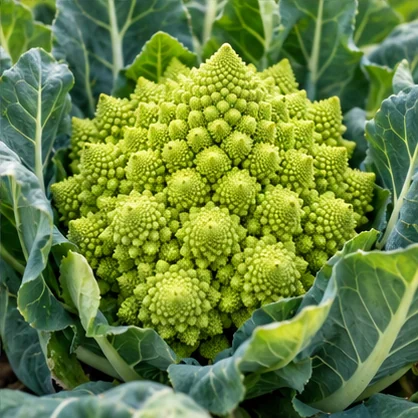
This image was created with AI from described plant characteristics and growing advice. It shows a possible situation and is not a photograph of a verified cultivar.
- Sowing
- Spring or early summer, according to variety
- Harvesting
- Summer or autumn, depending on cultivar
- Location
- Sun and evenly moist, fertile soil
- Head
- Green pointed florets; do not cover as with white cauliflower
This growing advice helps you choose. Your variety, growth stage, weather and conditions in your space determine the actual timing.
Sowing under cover and raising seedlings
Start under cover in cool conditions in modules or a seedbed · Romanesco
March–May, only for a suitable harvest typeSow somewhere cool and bright and avoid long, weak growth.
- Germination and temperature
- Germinate under cover, then grow on in cool, bright, well-ventilated conditions; avoid a hot growing space.
- After emergence
- Give seedlings light immediately after emergence. A dark loft needs suitable grow lights; warmth alone is insufficient. Ventilate and keep the compost moist without saturating it.
- Pricking out and potting on
- Sow in modules or prick out manageable young plants. Let the root ball firm up without a check in growth.
- Hardening off and planting out
- Gradually acclimatise indoor-raised plants to sun, wind and outdoor temperatures; shelter them again on cold nights. Plant out sturdy young brassicas and protect against cabbage root fly and caterpillars where needed.
Early, summer, autumn and winter cultivars have their own windows. The spring period shown is a basic route; use cultivar guidance for overwintering and winter cauliflower.
Sources and use
RHS · kolen ↗Britse teeltrichtlijn voor een gematigd klimaat; de genoemde perioden zijn richtlijnen voor Nederland en Vlaanderen.
Royal Horticultural Society · RHS — romanesco kweken ↗Soort- of productgebonden bron; buitenlandse perioden zijn geen vaste Nederlandse zaaidatum.
University of Minnesota Extension · UMN Extension — romanesco in de moestuin ↗Soort- of productgebonden bron; buitenlandse perioden zijn geen vaste Nederlandse zaaidatum.
Guideline periods for the Netherlands and Flanders. Check the variety, available light, soil and measured temperatures. Greenhouse heating does not guarantee enough winter light.
A different flavour, a different harvest.
Choose by more than the name. Discover how these varieties and crop types taste, what you can use them for and what growing them involves.
5 of 5 choices · 3 named varieties
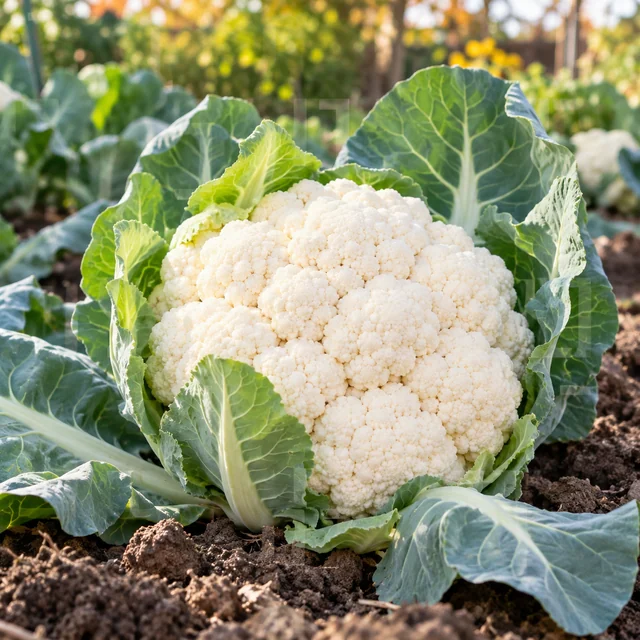
This image was created with AI from described plant characteristics and growing advice. It shows a possible situation and is not a photograph of a verified cultivar.
Flora Blanca
Flora Blanca is a white cauliflower for autumn growing. It gives a clear seasonal emphasis to cabbage planning.
Choose this variety to extend cabbage harvesting into autumn. Neckarperle is a different selection for very early harvesting.
Flavour, kitchen and growing
How does it taste?
The source gives no cultivar-specific aroma comparison. Familiar cauliflower flavour is therefore used as crop information, not as a unique promise.
This flavour description applies to the crop; there is no separate tasting result for this variety.In the kitchen
Small florets suit brief steaming or frying. Use firm parts of the stalk too after trimming.
A space in the garden
Maintain uninterrupted growth with fertile soil and enough moisture. A stressed plant can form a small head too early.
Harvesting
Cut the head while florets are compact. Check regularly, as a harvestable head does not stay firm indefinitely.
Read the source notes →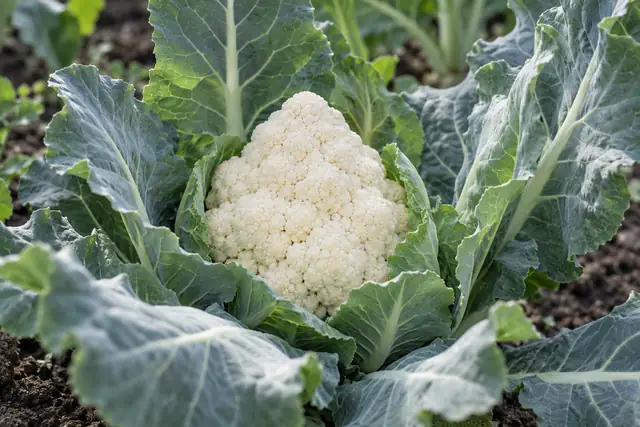
This image was created with AI from described plant characteristics and growing advice. It shows a possible situation and is not a photograph of a verified cultivar.
Neckarperle
Neckarperle is a very early selection with relatively small, cone-shaped heads. A smaller cabbage can suit a modest household well.
Choose Neckarperle for an early, compact harvest. A growing calendar still depends on raising conditions, protection and the local spring.
Flavour, kitchen and growing
How does it taste?
The source describes no distinct aroma for Neckarperle. Earliness and head shape are stronger selection criteria than unproven flavour superiority.
This flavour description applies to the crop; there is no separate tasting result for this variety.In the kitchen
Cook the small head in a few portions or divide it into florets. This reduces leftover cut cabbage in the fridge.
A space in the garden
Start under protection for an early crop and avoid growth checks. Transplant sturdy young plants before they stay in their pots too long.
Harvesting
Harvest the compact head at the intended size. Its described early development calls for more frequent checks.
Read the source notes →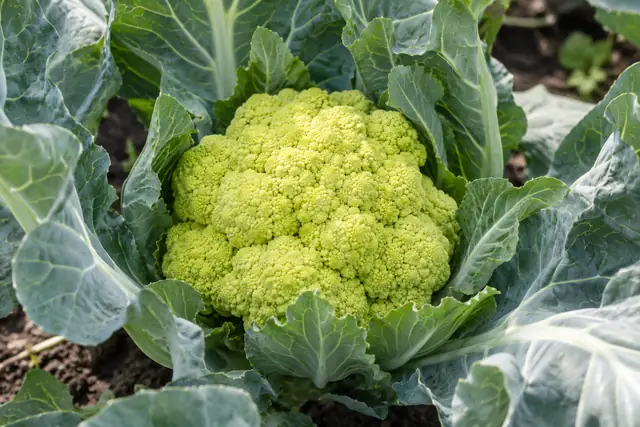
This image was created with AI from described plant characteristics and growing advice. It shows a possible situation and is not a photograph of a verified cultivar.
Verde di Macerata
Verde di Macerata forms pale green to yellow-green heads. The unusual colour makes even a simple cauliflower dish distinctive.
Choose this variety for a coloured, later cauliflower harvest. The French reference calendar does not guarantee a Dutch harvest.
Flavour, kitchen and growing
How does it taste?
The product source describes the flavour as delicate. A specific nutty note or comparison with white cultivars has not been confirmed.
In the kitchen
Steam or roast florets with simple preparation. The source reports that colour can remain during cooking.
A space in the garden
Give plants fertile soil, sufficient space and constant moisture. Match propagation to suitable late growing.
Harvesting
Harvest when the coloured head is still closed and firm. Judge by head development, rather than only the stated product size.
Read the source notes →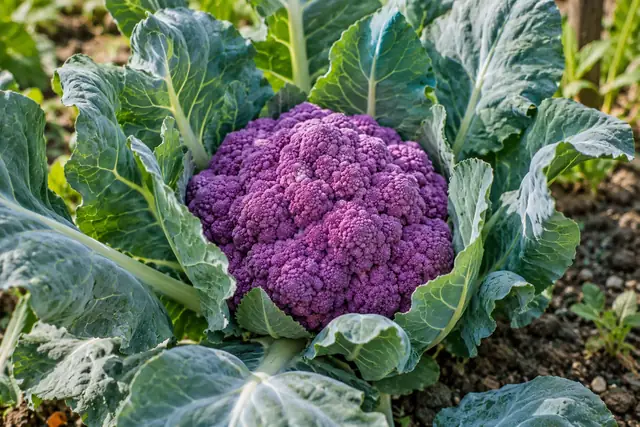
This image was created with AI from described plant characteristics and growing advice. It shows a possible situation and is not a photograph of a verified cultivar.
Paars uit Sicilië
This Sicilian offering is named for origin and purple cabbage colour. It forms round compact heads with vigorous plant development.
Choose this type for colour variety. Do not treat the geographical name as a registered variety identity without further evidence.
Flavour, kitchen and growing
How does it taste?
The source provides no specific flavour profile for this type designation. The inspiration rests on appearance and use as cauliflower.
This flavour description applies to the crop; there is no separate tasting result for this variety.In the kitchen
Use the purple florets to add colour to a plate. Check the result when cooking; colour retention has not been established here.
A space in the garden
Allow room for a substantial cabbage plant and avoid prolonged drying out. Balanced growth matters more than providing extra nitrogen.
Harvesting
Cut a compact head before its structure loosens. Correct harvest timing determines usability more than the colour name.
Also listed as: Paarse bloemkool uit Sicilië.
Read the source notes →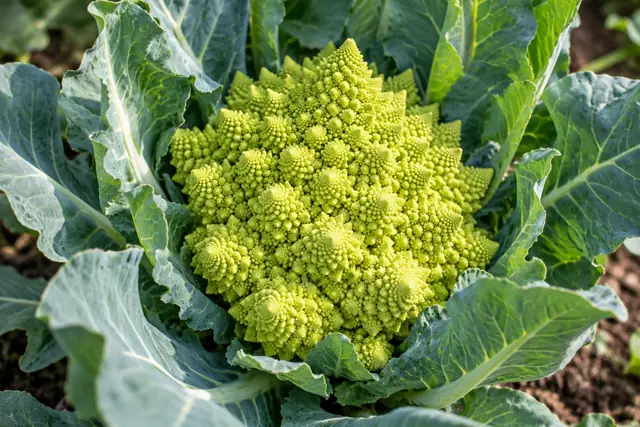
This image was created with AI from described plant characteristics and growing advice. It shows a possible situation and is not a photograph of a verified cultivar.
Romanesco
Romanesco is recognisable by apple-green florets forming a spiral head. The name describes a type with several possible selections.
Choose Romanesco if shape matters and you want to try a brassica for an autumn-focused growing plan.
Flavour, kitchen and growing
How does it taste?
The source mentions a delicate flavour. This is type information here; no separate Romanesco cultivar with a unique aroma is confirmed.
This flavour description applies to the crop; there is no separate tasting result for this variety.In the kitchen
Leave some complete spirals intact when dividing. Brief cooking keeps their recognisable form more visible on the plate.
A space in the garden
Sow in good time for autumn development and give the plants a fertile, moisture-retentive position. Avoid interruptions to growth.
Harvesting
Harvest a closed head with firm spirals. Once flower development breaks compact structure, presentation declines.
Read the source notes →Choose your way to grow
From a garden bed to a suitable pot or support: give your plant a place that suits your garden and the care you can provide.
This image was created with AI from described plant characteristics and growing advice. It shows a possible situation and is not a photograph of a verified cultivar.
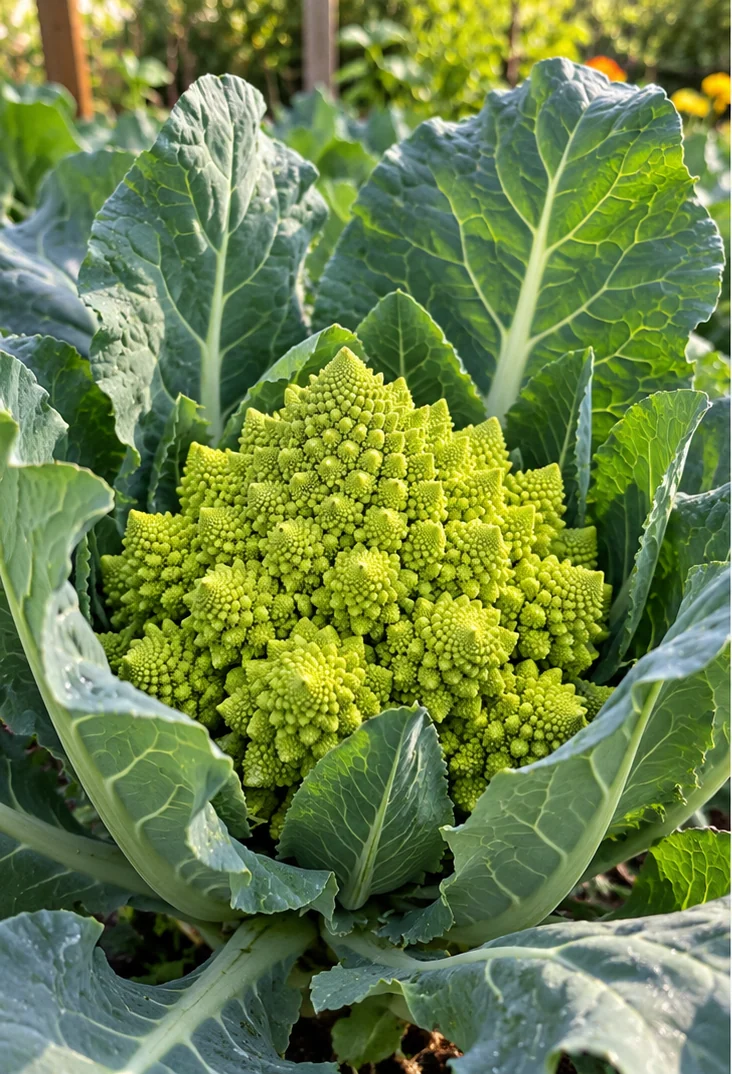
A steady main crop in a cabbage bed
Romanesco grows best without major interruptions in water and nutrients. Give each plant the space its variety needs and let the green head develop in light.
- Grow separate young plants.
- Plant in fertile soil with sufficient spacing.
- Monitor head formation and harvest before florets loosen.
For anyone able to check water and head formation regularly.
Tick off your supplies →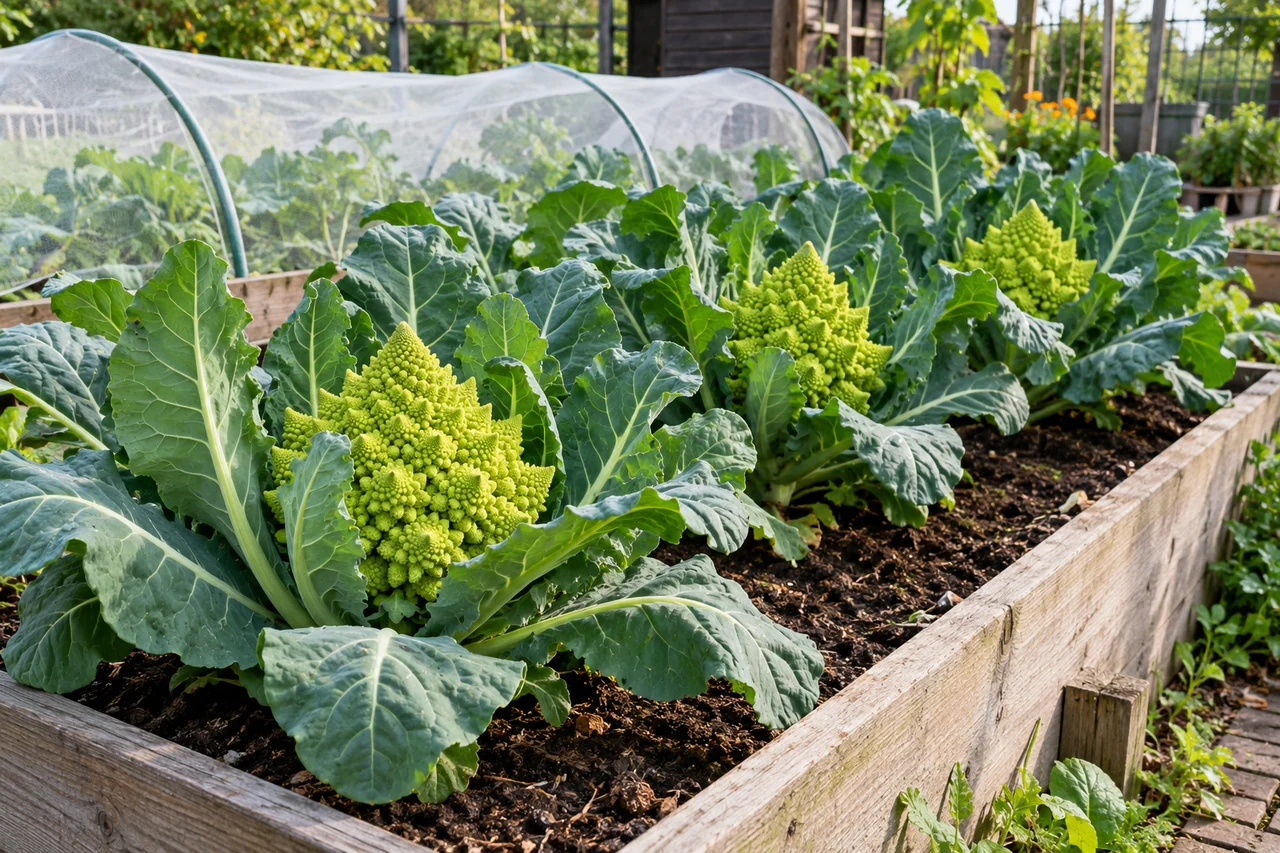
This image was created with AI from described plant characteristics and growing advice. It shows a possible situation and is not a photograph of a verified cultivar.
Romanesco in a raised cabbage bed
A deep raised bed gives more control over a heavy or poorly drained site. Give each plant normal room and leave the green head in light. The container does not automatically make a large cabbage variety small.
- Create a rootable raised bed with fertile, moisture-retentive soil and good drainage.
- Plant sturdy, hardened-off young plants at variety spacing and water in.
- Set hoops with fine insect mesh well above leaves and seal the edges.
- Check moisture more often than in an ordinary bed and harvest each head when compact and usable.
For a small garden or heavy soil with room for a deep bed and mature cabbage foliage.
Tick off your supplies →A cauliflower type with a distinctive head
Romanesco forms a green, pointed head and is treated among cauliflower types in guides. It is not ordinary broccoli with sideshoots. Choose by growing duration and harvest season and let head shape guide readiness.
The variety determines sowing time
Romanesco cannot be described with one general calendar for all varieties. Check whether yours suits summer or autumn harvesting. Start with a few plants to follow actual space and care needs.
Avoid stalled seedlings
Sow in clean compost and keep young plants light and evenly moist. A small pot or dried root ball can disrupt development. Plant sturdy young specimens before they wait too long to move.
A cabbage bed with sufficient airflow
Harden plants off and put them in fertile soil that retains water without staying waterlogged. Use the variety's spacing. Firm soil around the root ball and water after planting.
Avoid major fluctuations
A good head needs uninterrupted growth. Check the root zone in drought and water before the whole plant wilts for long. Base extra feeding on soil; ever more fertiliser does not guarantee a larger head.
Keep the green top exposed
Do not cover romanesco heads as with some white cauliflowers. Green florets need light for colour. Leave healthy leaves and remove only damaged material causing problems.
A small or loose head
A growth check, drought or unsuitable timing can affect the head. If florets begin separating, do not wait for a larger perfect head. Check for caterpillars under leaves too and keep insect mesh closed.
Compact harvesting
Cut the head while florets remain tight and firm. Do not leave a ripe head for a shared harvest day; plants can respond differently to weather and care. Support the head when cutting so it does not fall.
Preserve the shape and freshness
Cool the harvested head and use as soon as possible. Divide gently into florets for processing. Freeze a large harvest following reliable guidance. Keep cabbage-family crops together in next season's rotation plan.
What you need
Tick what you already have. The extras depend on how you grow.
0 of 6 ticked off
Your ticks are saved in this browser.
Discover and grow more
More background, sources and image information
SeedSteps editorial team · updated on 11 October 2026. The AI images illustrate species and practical growing situations; they do not prove an exact cultivar, observations from your own garden or yield.
Britse gewasadviezen worden gecombineerd met Nederlandse en Vlaamse informatie waar beschikbaar. Amerikaanse Extension-bronnen ondersteunen plantprincipes en herkenning; hun kalenderdata, lokale plaagdruk, bestrijdingsmiddelen en mestdoseringen worden niet rechtstreeks op Nederland of Vlaanderen toegepast. Vorst, bodemwarmte, standplaats en expliciete rasinformatie blijven de lokale controle. Commerciële bronnen onderbouwen uitsluitend benoemde ras- en plantkenmerken; zij zijn geen affiliate-aanbeveling.
- World Checklist of Vascular Plants — 4 juni 2026Royal Botanic Gardens, Kew · accessed 2026-10-07
- Bloemkool 'Flora Blanca' BiologischFeggies · accessed 2026-10-11
- Bloemkool Neckarperle zaden biologischFeggies · accessed 2026-10-11
- Bloemkool paars uit Sicilië zaden biologischFeggies · accessed 2026-10-11
- Bloemkool Romanesco zaden biologischFeggies · accessed 2026-10-11
- Bloemkool Verde di Macerata BiologischFeggies · accessed 2026-10-11
- Bloemkool Verde di Macerata biologischFeggies · accessed 2026-10-11
- RHS — romanesco kwekenRoyal Horticultural Society · accessed 2026-10-10
- UMN Extension — romanesco in de moestuinUniversity of Minnesota Extension · accessed 2026-10-10
Supporting evidence by chapter: A cauliflower type with a distinctive head: Royal Horticultural Society, University of Minnesota Extension. The variety determines sowing time: Royal Horticultural Society, University of Minnesota Extension. Avoid stalled seedlings: Royal Horticultural Society, University of Minnesota Extension. A cabbage bed with sufficient airflow: Royal Horticultural Society, University of Minnesota Extension. Avoid major fluctuations: Royal Horticultural Society, University of Minnesota Extension. Keep the green top exposed: Royal Horticultural Society, University of Minnesota Extension. A small or loose head: Royal Horticultural Society, University of Minnesota Extension. Compact harvesting: Royal Horticultural Society, University of Minnesota Extension. Preserve the shape and freshness: Royal Horticultural Society, University of Minnesota Extension.