Why grow Long Turga?
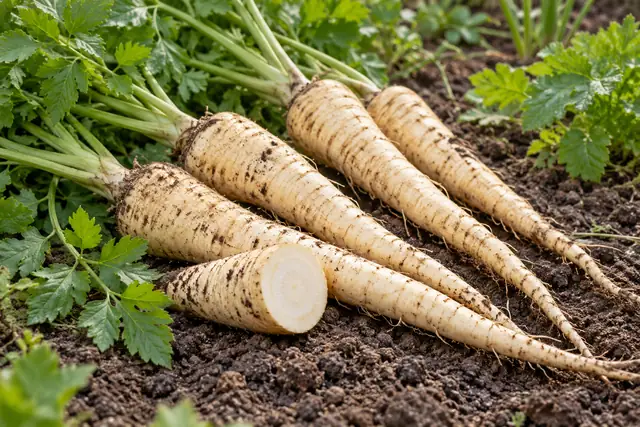
Even, long roots of approximately 25–30 centimetres.
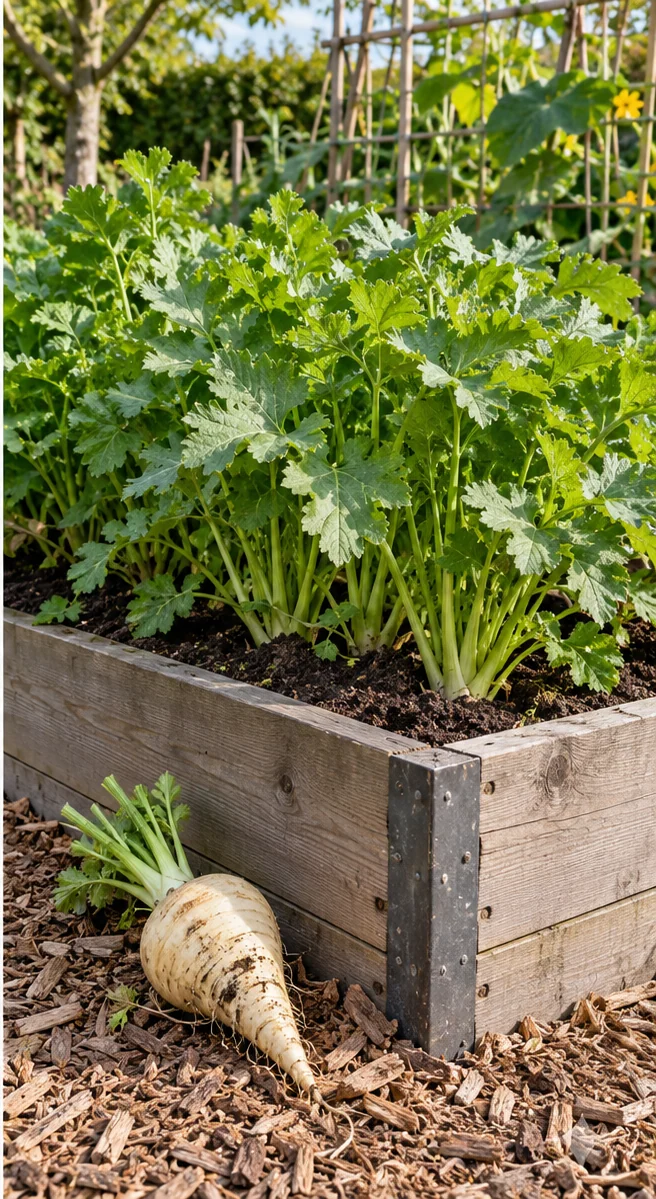
Choose this variety if you have a deep, loose bed and want long roots. A shorter root type is easier to accommodate in a shallow container.
How this choice tastes
Long Turga has the aromatic, slightly sweet character of parsnip. The source mainly supports its length and uniformity, so no more distinctive aroma than Guernsey is promised.
From harvest to kitchen
Cut long roots into equally thick batons for the oven. The even shape helps several pieces cook together without burning thin ends.
What needs attention when growing
Sow directly into well-loosened soil and keep the germination layer moist. Remove compacted layers and large stones before sowing to allow space for the long taproot.
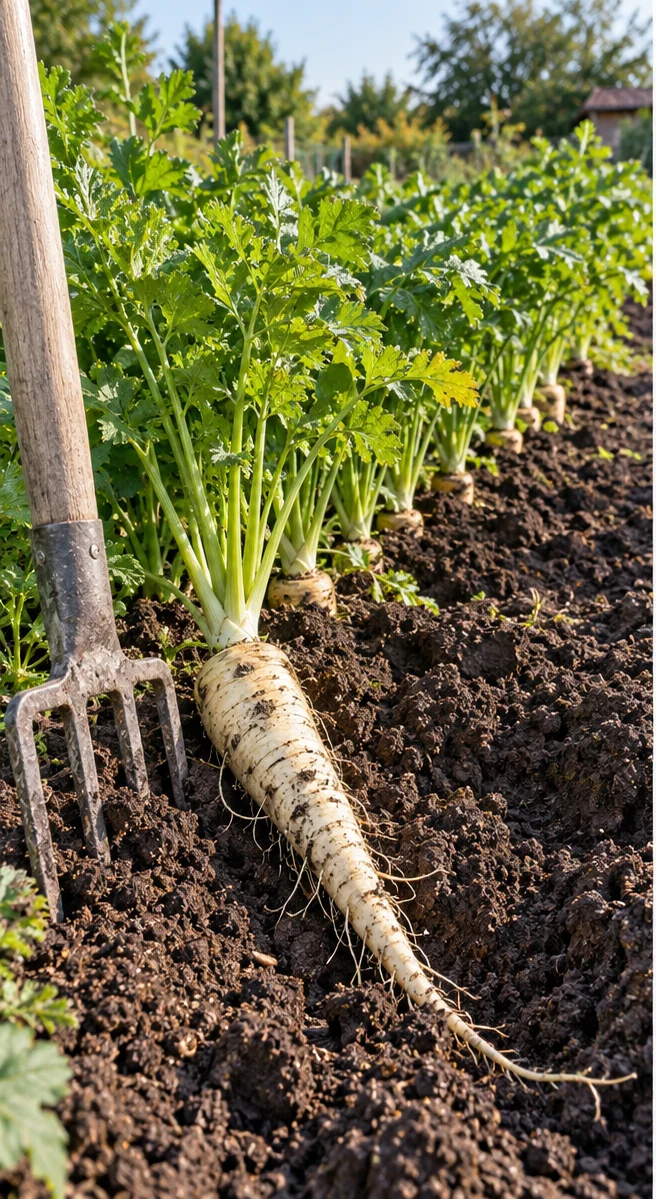
Lift deeply enough and loosen the soil beside the root first. Use broken parts straight away for soup and leave intact roots for further winter harvesting.
Choose by flavour, shape and use
Guernsey: Pale parsnip root for a sweet autumn meal. Roast equal pieces with a little oil or combine the root with onion in soup. First mix a modest amount into potato mash to control the aroma.
Guernsey is described as mild and sweet. Its recognisable parsnip aroma emerges during roasting; this description does not provide a fixed sweetness score against other parsnips.
Long Turga: Even, long roots of about 25–30 centimetres. Cut long roots into equally thick batons for the oven. The even shape helps several pieces cook together without burning thin ends.
Long Turga has the aromatic, slightly sweet character of parsnip. The source mainly supports its length and uniformity, so no more distinctive aroma than Guernsey is promised.
White King: Long, cream-coloured roots with smooth skin. Scrub the smooth roots clean and roast wedges with thyme. For soup, briefly fry root pieces first to release the aroma.
White King has the familiar aromatic character of parsnip. The smooth, cream-coloured root is the substantiated cultivar description; an extra-sweet tasting score has not been established.
Rond vroeg: Short, spinning-top root type for shallower soil. Roast small roots or cut the broad top into equal wedges. The shorter shape requires fewer long batons and suits smaller portions.
This type is described as having sweet white flesh. Its short shape mainly changes how it grows; extra sweetness compared with long parsnips has not been proved.
Match the root shape to the soil
Many parsnips form long tapering roots. Shallow, stony or heavy soil may suit shorter types. Match choice to available depth. Raised beds need genuinely deep loose soil; attractive thin surface layers do not solve hard layers beneath.
Prepare the spot steadily in advance
Remove stones from the growing zone and loosen compacted soil where needed. Do not work fresh manure or much coarse organic material into the row immediately before sowing; this can encourage forked roots. Previously improved soil offers a steadier starting point. Rotate this root crop to a different place from last time.
Sow fresh seed directly
Parsnip seed loses viability relatively quickly. Use fresh seed for reliability and sow directly. Raising and transplanting can damage taproots and alter shape. Prefer a neat final-position seed strip to indoor pots needing transfer.
Give the seed row time
Germination can take several weeks. Keep the strip moist and weed carefully before weeds hide the young plants. Wait to assess time and conditions before sowing again. An early calendar date is not always an advantage: emergence can be better in warmed spring soil than cold, wet February earth.
Leave space between young plants
Thin clearly recognisable seedlings. About 15 cm is a useful start for many long varieties; refine by label. Minimise root damage. Row markers distinguish young parsnips from fast weeds during the work.
Prevent dry interruptions and root damage
Water remains important after emergence. Prolonged drought reduces quality; sudden moisture changes can encourage cracking. For abnormal roots, inspect structure, stones and previous cultivation. Carrot fly also attacks parsnip. Include site and protective mesh in clean varied garden plans.
Harvest with room for the long root
Loosen soil beside the parsnip and carefully lift the root. Do not pull only on the foliage, as a long root can break. Start with one test root and assess size and quality. Some can remain in suitable winter soil; immediate lifting is difficult when soil is frozen.
Use the bed as a small store
Harvest as needed when weather and soil allow. Use damaged roots first and keep lifted ones cool against drying. Note shape, flavour and sowing time. Branched roots may remain usable while revealing soil improvements for the next crop.