
Cardoon: silver leaves and an unusual stalk harvest
Cardoon is a large relative of the artichoke, grown for its leaf stalks. You can blanch these before harvest by excluding light. The silvery-grey rosette also makes it attractive in a spacious border. Start with one or two plants and leave enough room to work.
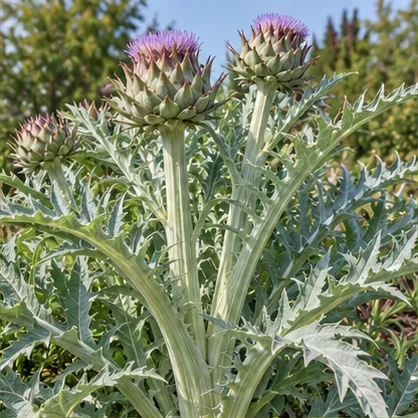
This image was created with AI from described plant characteristics and growing advice. It shows a possible situation and is not a photograph of a verified cultivar.
- Harvested part
- Blanched leaf stalks
- Location
- Sun and shelter
- Space
- Large leaf rosette
- Route
- Vegetable harvest or perennial ornamental
This growing advice helps you choose. Your variety, growth stage, weather and conditions in your space determine the actual timing.
Sowing under cover and raising seedlings
Start under cover or use young plants · Cardoon
March–AprilSow under cover in pots and reserve space for the substantial young plants.
- Germination and temperature
- Germinate in bright, sheltered conditions according to seed guidance; protect young plants from severe cold.
- After emergence
- Give seedlings light immediately after emergence. A dark loft needs suitable grow lights; warmth alone is insufficient. Ventilate and keep the compost moist without saturating it.
- Pricking out and potting on
- Prick out once the first true leaves are manageable. Hold a seedling by a leaf. Pot on when the roots fill the root ball.
- Hardening off and planting out
- Gradually acclimatise indoor-raised plants to sun, wind and outdoor temperatures; shelter them again on cold nights. Plant sturdy plants in a spacious, sheltered position; assess cold sensitivity for each type.
Early propagation does not guarantee a first-year harvest. Globe artichoke and cardoon have different harvest aims.
Sources and use
RHS · artisjok ↗Britse teeltrichtlijn voor een gematigd klimaat; de genoemde perioden zijn richtlijnen voor Nederland en Vlaanderen.
Royal Horticultural Society · Cynara cardunculus Cardoon: standplaats en verzorging ↗Soort- of productgebonden bron; buitenlandse perioden zijn geen vaste Nederlandse zaaidatum.
Oregon State University · Cardoon: teelt en bleken ↗Soort- of productgebonden bron; buitenlandse perioden zijn geen vaste Nederlandse zaaidatum.
Guideline periods for the Netherlands and Flanders. Check the variety, available light, soil and measured temperatures. Greenhouse heating does not guarantee enough winter light.
Choose your way to grow
From a garden bed to a suitable pot or support: give your plant a place that suits your garden and the care you can provide.
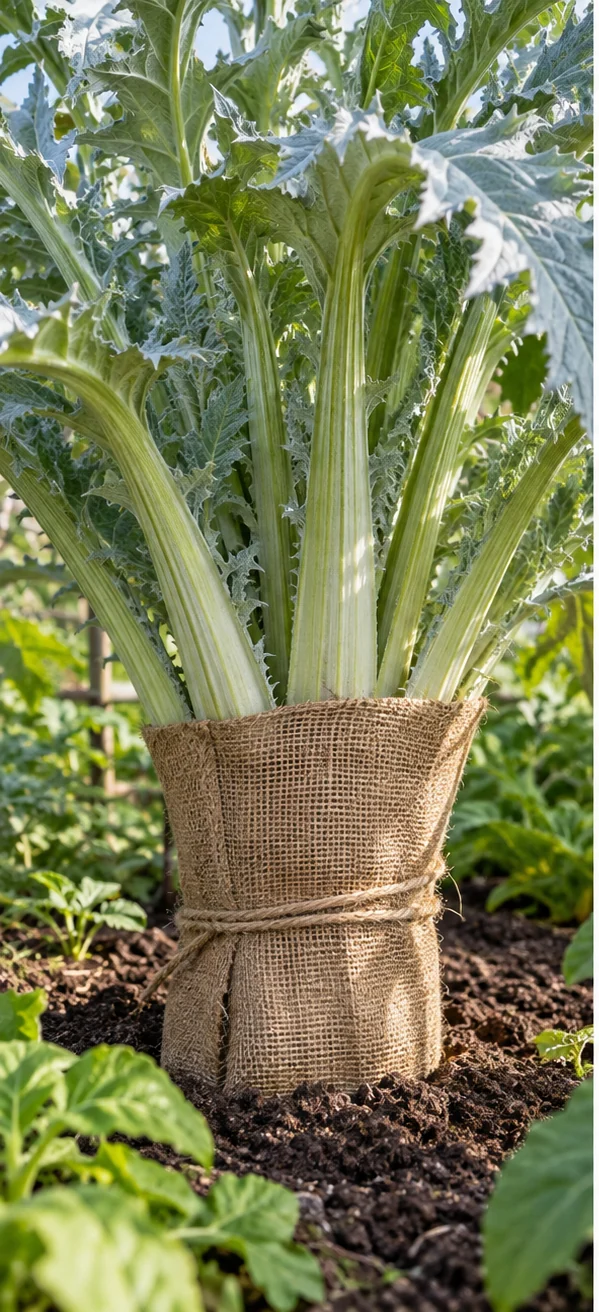
This image was created with AI from described plant characteristics and growing advice. It shows a possible situation and is not a photograph of a verified cultivar.
A plant for blanched stalks
A spacious position keeps blanching accessible.
- Plant in fertile, well-drained soil.
- Let the rosette grow strongly first.
- Before harvesting, fit a light-blocking sleeve loosely around stalks.
For an unusual vegetable needing extra handwork.
Tick off your supplies →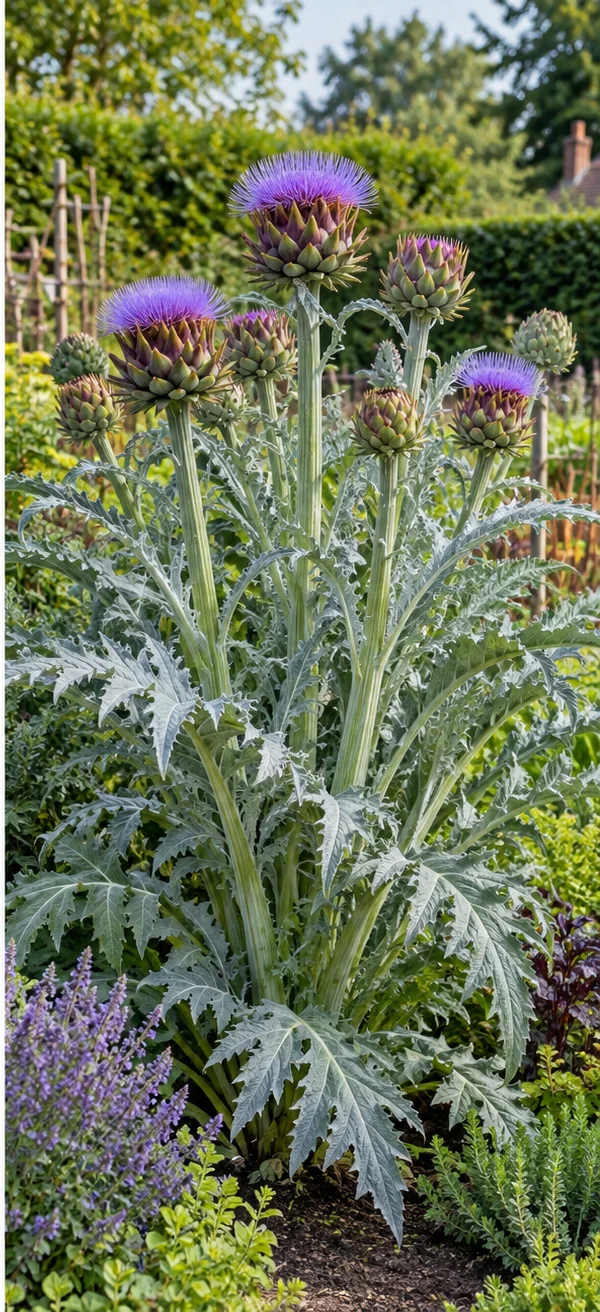
This image was created with AI from described plant characteristics and growing advice. It shows a possible situation and is not a photograph of a verified cultivar.
A perennial for leaves and flowers
A perennial plant can later produce tall, purple flower stalks.
- Choose a permanently spacious, sunny position.
- Support tall stems in strong winds.
- Keep the base dry and protected in hard frost.
For a spacious border; edible harvesting needs a separate choice.
Tick off your supplies →Cardoon gives a different harvest from artichoke
Globe artichoke gives closed flower buds; cardoon gives leaf stalks. Similar thistle shapes do not make them interchangeable vegetables. Choose a selection for edible stalks and keep its label. The mature rosette grows much wider than ordinary lettuce.
Start seed propagation on a manageable scale
Sow in pots with suitable seed compost in spring. Keep young plants light and moist and repot when roots need room. Healthy purchased plants also work. A few well-cared-for plants beat a crowded patch difficult to access.
Sun and deeply rootable soil
Cardoon needs fertile, well-drained soil and shelter from strong wind. A hard layer just below the surface restricts roots. Add mature compost where needed. On wet clay, prioritise drainage over repeatedly adding more nutrients.
Plan for the mature rosette
Harden indoor plants off and transplant intact root balls when outdoor conditions suit young growth. Follow variety spacing and reserve access around them. Professional foreign row spacings have their own context; you need access for blanching, inspecting and harvesting.
Steady growth produces better stalks
Prevent prolonged drought: water stress can coarsen stalks. Feel soil and water directly without waterlogging. Weed young plants and base feeding on soil. Large leaves are no reason for unlimited extra fertiliser.
Exclude light but allow growth and airflow
Before harvest, wrap developed stalks to exclude light for a few weeks. Gather foliage carefully and secure a suitable sleeve loosely. Leave the top free and check moisture and rot. Do this only for plants you can then harvest promptly.
Look beneath the blanching sleeve too
Sleeves hide stalks and need extra checks. Inspect slugs, aphids and soft patches separately. Tall flower stems may need wind support. Wear gloves for prickly foliage. Flowering ornamentals follow a different route from stalks soon to be harvested.
Use the stalks fresh
Cut usable blanched stalks and remove coarse outer parts. Process with an appropriate recipe; this crop needs kitchen work. Cool briefly stored harvests and prevent drying. For perennial ornamentals, leave healthy leaves and assess winter position.
For overwintering a perennial plant, a dry protective layer helps in severe cold. Prevent the plant base suffocating under wet material; winter moisture and frost each need checking.
What you need
Tick what you already have. The extras depend on how you grow.
0 of 6 ticked off
Your ticks are saved in this browser.
Discover and grow more
More background, sources and image information
SeedSteps editorial team · updated on 11 October 2026. The AI images illustrate species and practical growing situations; they do not prove an exact cultivar, observations from your own garden or yield.
Britse gewasadviezen worden gecombineerd met Nederlandse en Vlaamse informatie waar beschikbaar. Amerikaanse Extension-bronnen ondersteunen plantprincipes en herkenning; hun kalenderdata, lokale plaagdruk, bestrijdingsmiddelen en mestdoseringen worden niet rechtstreeks op Nederland of Vlaanderen toegepast. Vorst, bodemwarmte, standplaats en expliciete rasinformatie blijven de lokale controle. Commerciële bronnen onderbouwen uitsluitend benoemde ras- en plantkenmerken; zij zijn geen affiliate-aanbeveling.
- World Checklist of Vascular Plants — 4 juni 2026Royal Botanic Gardens, Kew · accessed 2026-10-07
- Cardoon: teelt en blekenOregon State University · accessed 2026-10-10
- Cynara cardunculus Cardoon: standplaats en verzorgingRoyal Horticultural Society · accessed 2026-10-10
Supporting evidence by chapter: Cardoon gives a different harvest from artichoke: Royal Horticultural Society, Oregon State University. Start seed propagation on a manageable scale: Royal Horticultural Society, Oregon State University. Sun and deeply rootable soil: Royal Horticultural Society, Oregon State University. Plan for the mature rosette: Royal Horticultural Society, Oregon State University. Steady growth produces better stalks: Royal Horticultural Society, Oregon State University. Exclude light but allow growth and airflow: Royal Horticultural Society, Oregon State University. Look beneath the blanching sleeve too: Royal Horticultural Society, Oregon State University. Use the stalks fresh: Royal Horticultural Society, Oregon State University.