
Jerusalem artichoke: a tall summer garden with a winter harvest
Above ground, Jerusalem artichoke becomes a large plant reminiscent of a sunflower. Below ground, knobbly tubers form for autumn and winter. Give this crop a permanent corner: small tubers left behind often regrow the following spring.
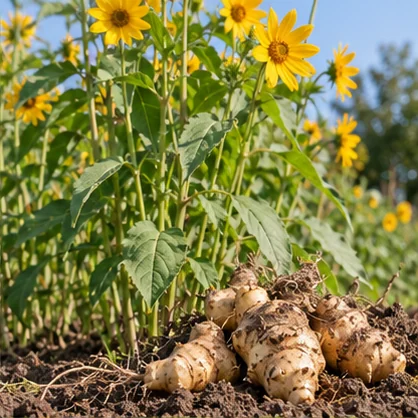
This image was created with AI from described plant characteristics and growing advice. It shows a possible situation and is not a photograph of a verified cultivar.
- Start
- Plant tubers in spring
- Location
- Sun or light partial shade
- Growth
- Tall; shelter or support
- Harvest
- Autumn and winter
This growing advice helps you choose. Your variety, growth stage, weather and conditions in your space determine the actual timing.
Sowing under cover and raising seedlings
Plant tubers · Jerusalem artichoke
Late winter–springPlant healthy tubers when the soil is workable.
- Germination and temperature
- Plant tubers in workable, unfrozen soil; warm indoor propagation is unnecessary.
- After emergence
- Let tubers sprout in their permanent position and keep the soil suitably moist during drought.
- Pricking out and potting on
- Do not prick out: this is a tuber crop grown from planting stock.
- Hardening off and planting out
- Plant healthy tubers directly in the final position; tubers do not need hardening off.
Jerusalem artichoke can regrow from tubers left behind. Choose a suitable permanent spot.
Sources and use
RHS · aardappels ↗Britse teeltrichtlijn voor een gematigd klimaat; de genoemde perioden zijn richtlijnen voor Nederland en Vlaanderen.
Royal Horticultural Society · Aardpeer kweken ↗Soort- of productgebonden bron; buitenlandse perioden zijn geen vaste Nederlandse zaaidatum.
Velt · Aardpeer bewaren en verwerken ↗Soort- of productgebonden bron; buitenlandse perioden zijn geen vaste Nederlandse zaaidatum.
Guideline periods for the Netherlands and Flanders. Check the variety, available light, soil and measured temperatures. Greenhouse heating does not guarantee enough winter light.
A different flavour, a different harvest.
Choose by more than the name. Discover how these varieties and crop types taste, what you can use them for and what growing them involves.
2 of 2 choices · 0 named varieties
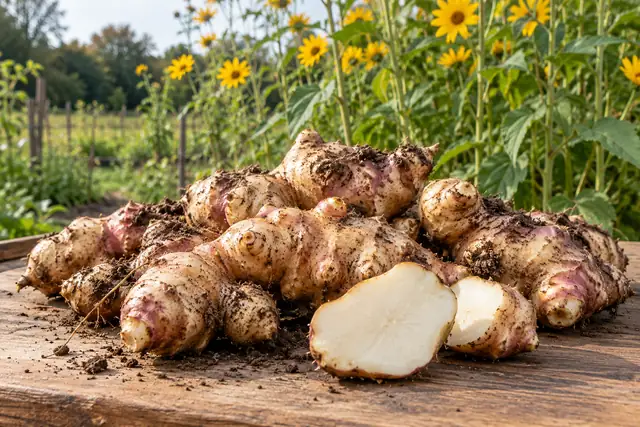
This image was created with AI from described plant characteristics and growing advice. It shows a possible situation and is not a photograph of a verified cultivar.
Common
A tall tuber crop for autumn and winter harvests.
Choose this Jerusalem artichoke for a crop with a long harvesting season at the edge of the vegetable garden. It grows tall and remaining tubers regrow; give it a permanent position.
Flavour, kitchen and growing
How does it taste?
Jerusalem artichoke has a gentle, nutty flavour reminiscent of globe artichoke. No distinct flavour difference is established for the ordinary offering; preparation partly determines perceived sweetness.
This flavour description applies to the crop; there is no separate tasting result for this variety.In the kitchen
Scrub the irregular tubers and roast thin pieces with oil, or make soup. Small, fresh tubers can be finely grated as a crisp addition to raw salads.
A space in the garden
Plant tubers in a spacious, sunny patch. The product text is unclear about skin colour; assess received planting stock before selecting the ordinary offering by colour.
Harvesting
Lift small amounts from autumn onwards while the ground is not frozen. The tubers dry out quickly out of the soil; when clearing the bed, look for the small remaining tubers too.
Read the source notes →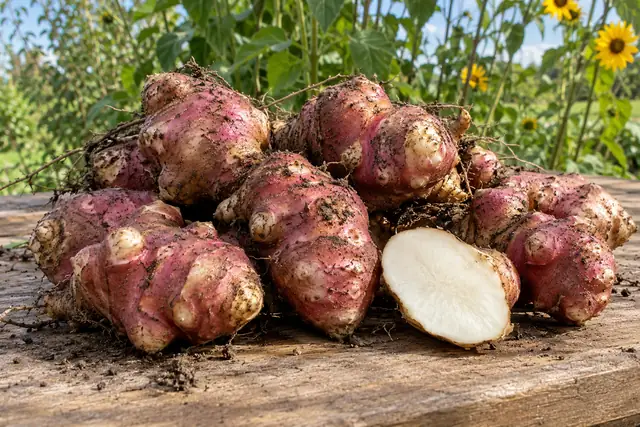
This image was created with AI from described plant characteristics and growing advice. It shows a possible situation and is not a photograph of a verified cultivar.
Red
A red-skinned Jerusalem artichoke for a tuber bed that can regrow.
This is a choice based on skin colour without a specific variety name. Use a few tubers beside the ordinary offering for a visible comparison and keep both patches identifiable.
Flavour, kitchen and growing
How does it taste?
Red-skinned Jerusalem artichoke has the crop's mild, nutty character. Skin colour does not prove a stronger aroma than a pale-skinned type; compare both with the same preparation.
This flavour description applies to the crop; there is no separate tasting result for this variety.In the kitchen
Roast scrubbed tubers in equal pieces. The red exterior adds variety to the platter; in puréed soup, the mild aroma comes to the fore instead.
A space in the garden
Position tall plants where they cast little shade on lower crops. Keep the patch defined, as small tubers left behind can sprout again the following year.
Harvesting
Harvest fresh portions in autumn and winter. Insert the fork well beside the plant to avoid piercing tubers, and store briefly, cool and protected from drying out.
Read the source notes →Choose your way to grow
From a garden bed to a suitable pot or support: give your plant a place that suits your garden and the care you can provide.
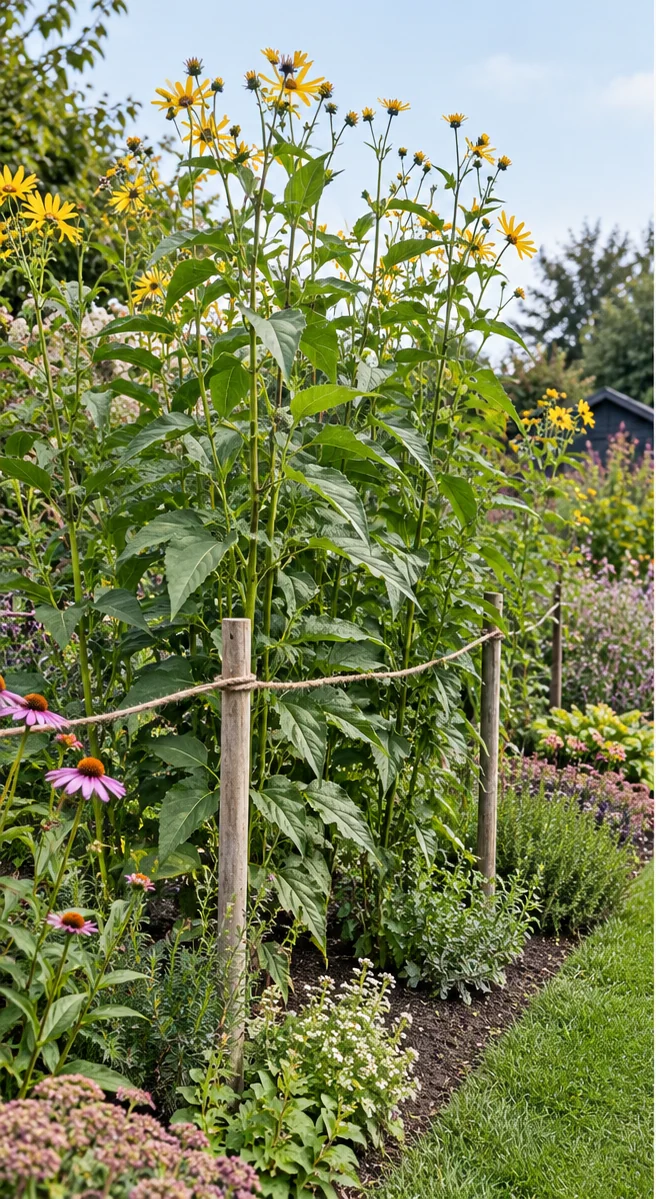
This image was created with AI from described plant characteristics and growing advice. It shows a possible situation and is not a photograph of a verified cultivar.
A permanent row along the garden edge
Give Jerusalem artichoke its own position where new shoots remain welcome.
- Choose an accessible edge that does not shade other beds.
- Plant healthy tubers and mark the row.
- Install sturdy support along stems in windy conditions.
For a garden with permanent space for a tall crop.
Tick off your supplies →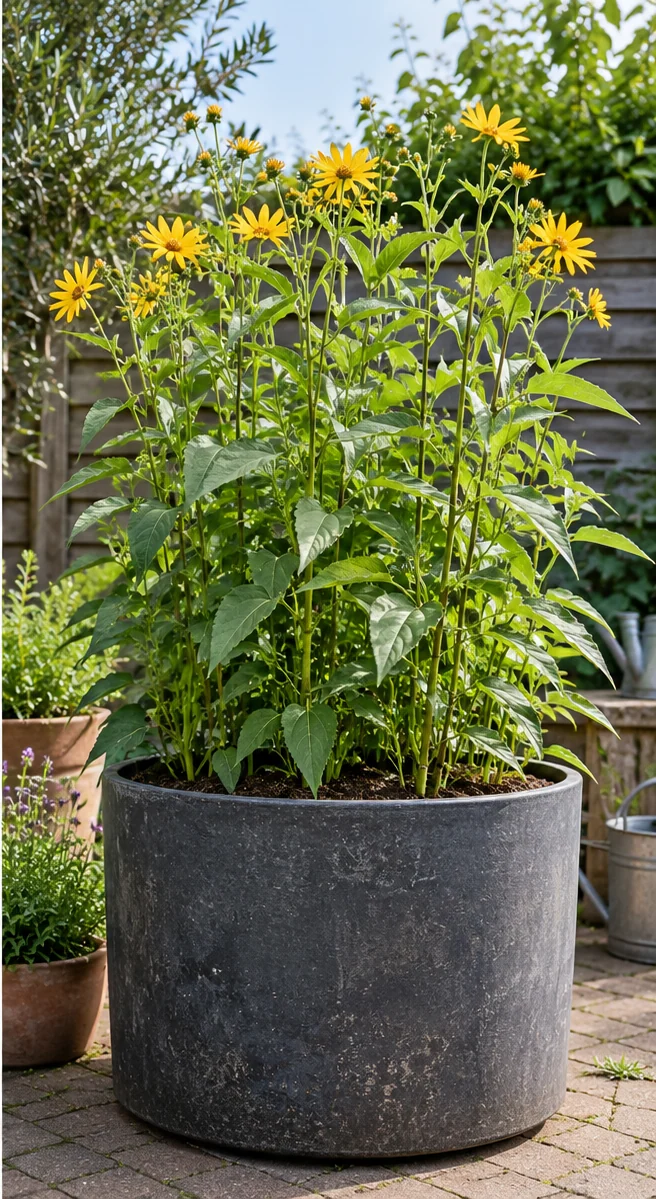
This image was created with AI from described plant characteristics and growing advice. It shows a possible situation and is not a photograph of a verified cultivar.
Growing in a large container
A large container helps keep tubers together; choose a variety described as compact.
- Use a large, deep container with drainage holes.
- Plant tubers in suitable potting compost.
- Check moisture and stability frequently in summer.
For limited ground space, with sufficient height and water.
Tick off your supplies →Choose by flavour, shape and use
Gewoon: Tall-growing tuber crop for autumn and winter harvesting. Scrub the irregular tubers and roast thin pieces with oil, or make soup. Small, fresh tubers can be finely grated as a crisp addition to raw salads.
Jerusalem artichoke has a gentle, nutty flavour reminiscent of globe artichoke. No distinct flavour difference is established for the ordinary offering; preparation partly determines perceived sweetness.
Rood: Red-skinned Jerusalem artichoke for a tuber bed that can regrow. Roast scrubbed tubers in equal pieces. The red exterior adds variety to the platter; in puréed soup, the mild aroma comes to the fore instead.
Red-skinned Jerusalem artichoke has the crop's mild, nutty character. Skin colour does not prove a stronger aroma than a pale-skinned type; compare both with the same preparation.
Reserve a position for several seasons
Jerusalem artichoke grows from tubers and can return each spring. Avoid shading low beds with tall stems. A path-accessible edge eases winter harvesting. Watch spread: a forgotten small tuber may become a new plant.
Plant firm tubers in spring
Choose firm, healthy tubers and plant in workable soil. Starting is similar to planting potatoes, but Jerusalem artichoke is a separate crop with different growth and harvesting. Follow the spacing for your chosen variety. Mark the row before leaves appear so you know where you can hoe.
Make the soil ready for harvesting
Plants tolerate varied soils, but deep rootable soil eases tuber growth and lifting. Do not work soaking clay. Mature compost improves structure and retention. A fixed harvest strip avoids walking through other beds repeatedly in winter.
Give tall stems gentle support
Compact varieties may stand with little help in shelter. Exposed tall stems need stakes and soft cord. Add support before falling. Do not tighten cord around individual stems; support should resist wind without constricting growth.
Avoid prolonged summer drought
Strong plants may look healthy above ground while tubers have little swelling room. Check soil in prolonged drought and water as needed. Containers dry faster and need more attention. Mulch retains moisture but must not wrap plant bases permanently wet.
Start as above-ground growth declines
Harvest tubers from late autumn. Leave short stems or labels to locate them. Insert a fork beside the row and lift gently; tubers can lie farther from stems than expected. Take a small portion first to explore flavour and processing.
Leave the stored crop in the ground as long as possible
Jerusalem artichokes dry fairly quickly after lifting. In reachable, unfrozen winter soil, harvest as needed. Store small supplies cool, protected from drying, for example in slightly damp sand. Use damaged tubers first and check soft spots regularly.
Decide what may return next year
To continue, save healthy tubers for replanting. To stop, remove as many small tubers as possible and pull new shoots promptly. Scrub harvests before use; smooth thin skins need not always be removed. Start with small portions: Jerusalem artichoke does not agree equally with everyone.
What you need
Tick what you already have. The extras depend on how you grow.
0 of 6 ticked off
Your ticks are saved in this browser.
Discover and grow more
More background, sources and image information
SeedSteps editorial team · updated on 11 October 2026. The AI images illustrate species and practical growing situations; they do not prove an exact cultivar, observations from your own garden or yield.
Britse gewasadviezen worden gecombineerd met Nederlandse en Vlaamse informatie waar beschikbaar. Amerikaanse Extension-bronnen ondersteunen plantprincipes en herkenning; hun kalenderdata, lokale plaagdruk, bestrijdingsmiddelen en mestdoseringen worden niet rechtstreeks op Nederland of Vlaanderen toegepast. Vorst, bodemwarmte, standplaats en expliciete rasinformatie blijven de lokale controle. Commerciële bronnen onderbouwen uitsluitend benoemde ras- en plantkenmerken; zij zijn geen affiliate-aanbeveling.
Bewaring en keukenverwerking; groeimethoden zijn onderbouwd door RHS.
- World Checklist of Vascular Plants — 4 juni 2026Royal Botanic Gardens, Kew · accessed 2026-10-07
- Aardpeer gewoon biologisch | 10 stuksFeggies · accessed 2026-10-11
- Aardpeer rood biologisch | 10 stuksFeggies · accessed 2026-10-11
- Aardpeer kwekenRoyal Horticultural Society · accessed 2026-10-10
- Aardpeer bewaren en verwerkenVelt · accessed 2026-10-10
Supporting evidence by chapter: Choose by flavour, shape and use: Feggies, Feggies. Reserve a position for several seasons: Royal Horticultural Society. Plant firm tubers in spring: Royal Horticultural Society. Make the soil ready for harvesting: Royal Horticultural Society. Give tall stems gentle support: Royal Horticultural Society. Avoid prolonged summer drought: Royal Horticultural Society. Start as above-ground growth declines: Royal Horticultural Society. Leave the stored crop in the ground as long as possible: Royal Horticultural Society, Velt. Decide what may return next year: Royal Horticultural Society, Velt.