
Sweet Candle: een plek in jouw tuin
Ontdek Sweet Candle en kies hoe je wortel wilt kweken. Hieronder staan de bevestigde rasgegevens en de praktische teeltgids voor deze groente.
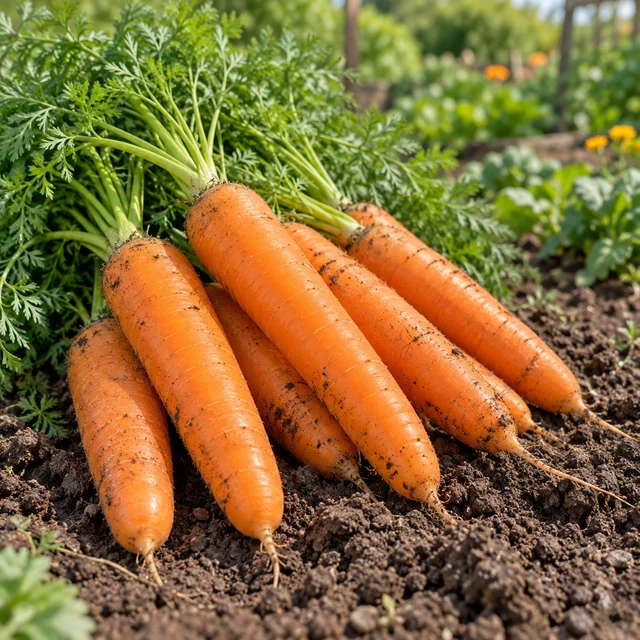
This image was created with AI from described plant characteristics and growing advice. It shows a possible situation and is not a photograph of a verified cultivar.
- Sowing
- Spring to summer according to cultivar
- Harvesting
- From usable root size; storage varieties later
- Location
- Sun and deep, loose soil
- Propagation
- Direct sowing in the final position
This growing advice helps you choose. Your variety, growth stage, weather and conditions in your space determine the actual timing.
Sowing under cover and raising seedlings
Sow directly · Carrot
Late winter–spring, only with a suitable early cultivarSow directly into the final greenhouse soil or deep container; do not transplant later.
- Germination and temperature
- Wait for workable, warmed soil; follow the cultivar’s minimum sowing temperature.
- After emergence
- Keep the seed row evenly moist during emergence and identifiable with a label.
- Pricking out and potting on
- Do not prick out. Thin in place; transplanting can damage the taproot.
- Hardening off and planting out
- Stays where sown; hardening off and planting out are unnecessary for direct sowing.
Use deep soil with little compaction. A warm tray in the loft is not a suitable propagation route for this root crop.
Sources and use
Royal Horticultural Society · RHS — wortel kweken ↗Soort- of productgebonden bron; buitenlandse perioden zijn geen vaste Nederlandse zaaidatum.
De Bolster · De Bolster — Wortel telen ↗Nederlandse producent of teeltbron; de rasinstructie blijft leidend.
Guideline periods for the Netherlands and Flanders. Check the variety, available light, soil and measured temperatures. Greenhouse heating does not guarantee enough winter light.
What makes Sweet Candle different?
- Light
- Full sunUnited Kingdom
- Main colour
- Orange rootUnited Kingdom
- Shape
- Cylindrical with a rounded tip; smooth skinUnited Kingdom
- Soil
- Deeply worked soil with good drainageUnited Kingdom
- Flavour
- Sweet according to RHSUnited Kingdom
- Texture
- Virtually coreless according to RHSUnited Kingdom
The source context and any limitations are in the background information at the bottom.
Compare with another varietyHow to grow carrot
The options below belong to the plant. From these, choose the method that suits your variety's growth habit.
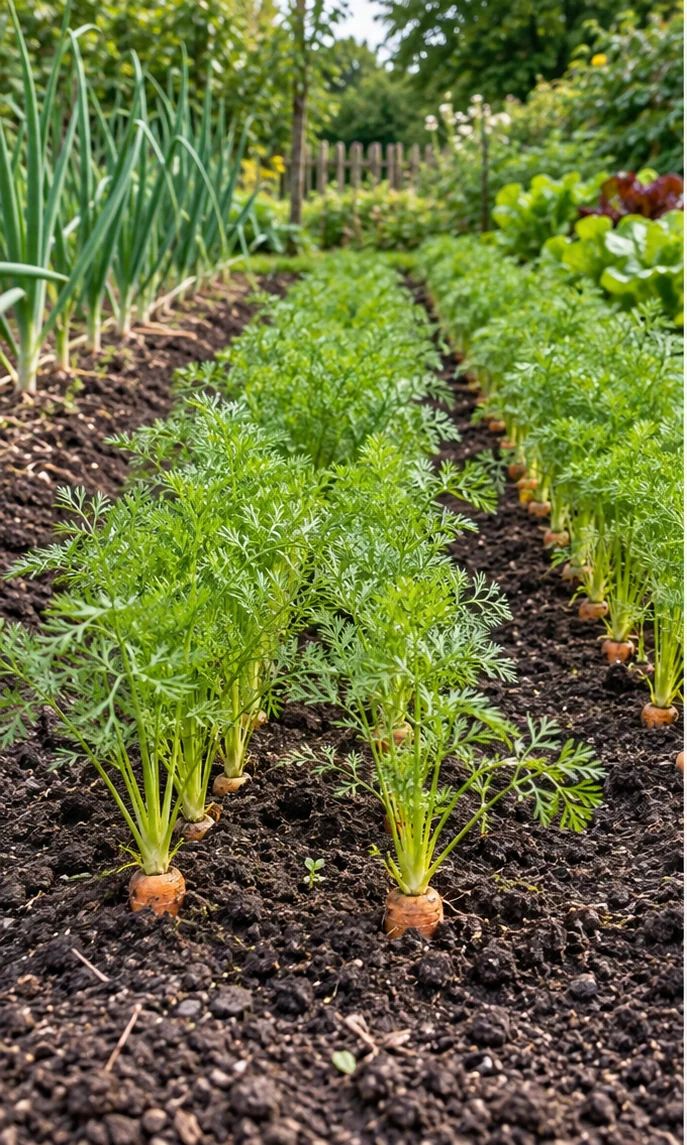
This image was created with AI from described plant characteristics and growing advice. It shows a possible situation and is not a photograph of a verified cultivar.
Sowing directly into a cleared bed
A root builds its harvest underground. First choose workable soil and a spot that will stay available for long enough. Sow directly and keep the row identifiable, even while seedlings are still small.
- Remove stones, weeds and hard clods without smearing wet clay into a compacted surface.
- Sow at the depth for the cultivar and keep the germination zone moist.
- Thin in time and harvest a first test specimen.
For anyone with a suitable bed and enough root space.
Tick off your supplies →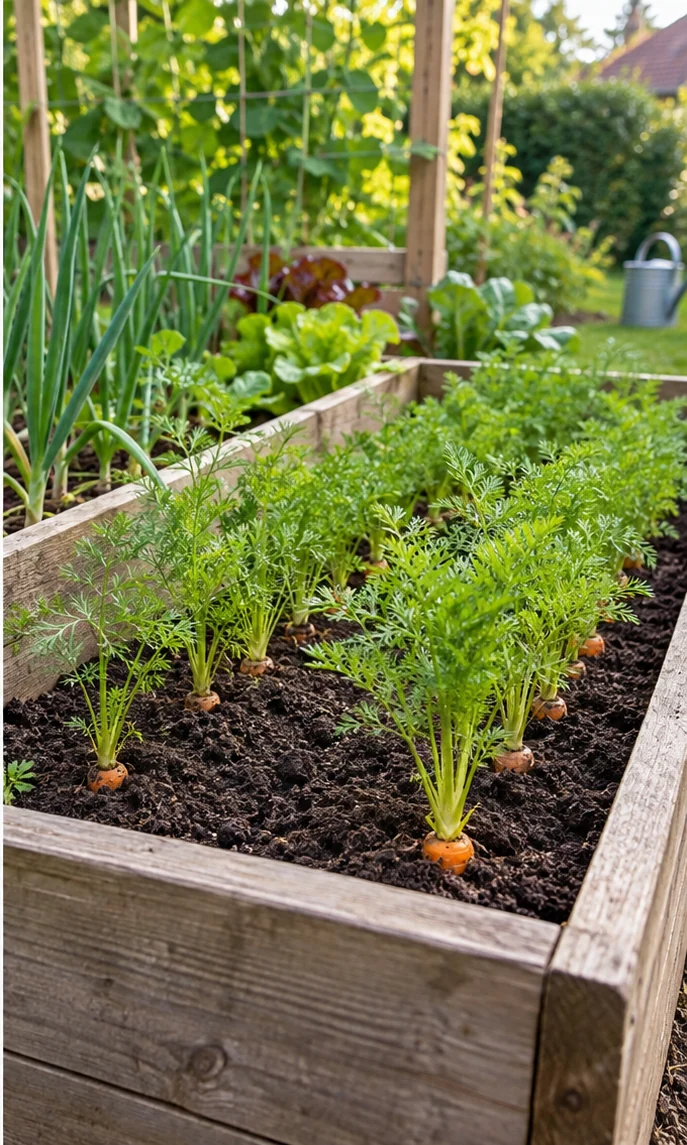
This image was created with AI from described plant characteristics and growing advice. It shows a possible situation and is not a photograph of a verified cultivar.
A small trial in a suitable container
Choose a pot clearly deeper than the expected root and start with a suitable short or round variety. Sow directly and thin. Loose filling and drainage holes give roots more chance than hard, wet garden soil in a small pot.
- Check the cultivar’s expected root size.
- Choose a container with enough depth and unobstructed drainage.
- Sow directly and check moisture more often than in the ground.
For limited space, provided the container suits the root shape.
Tick off your supplies →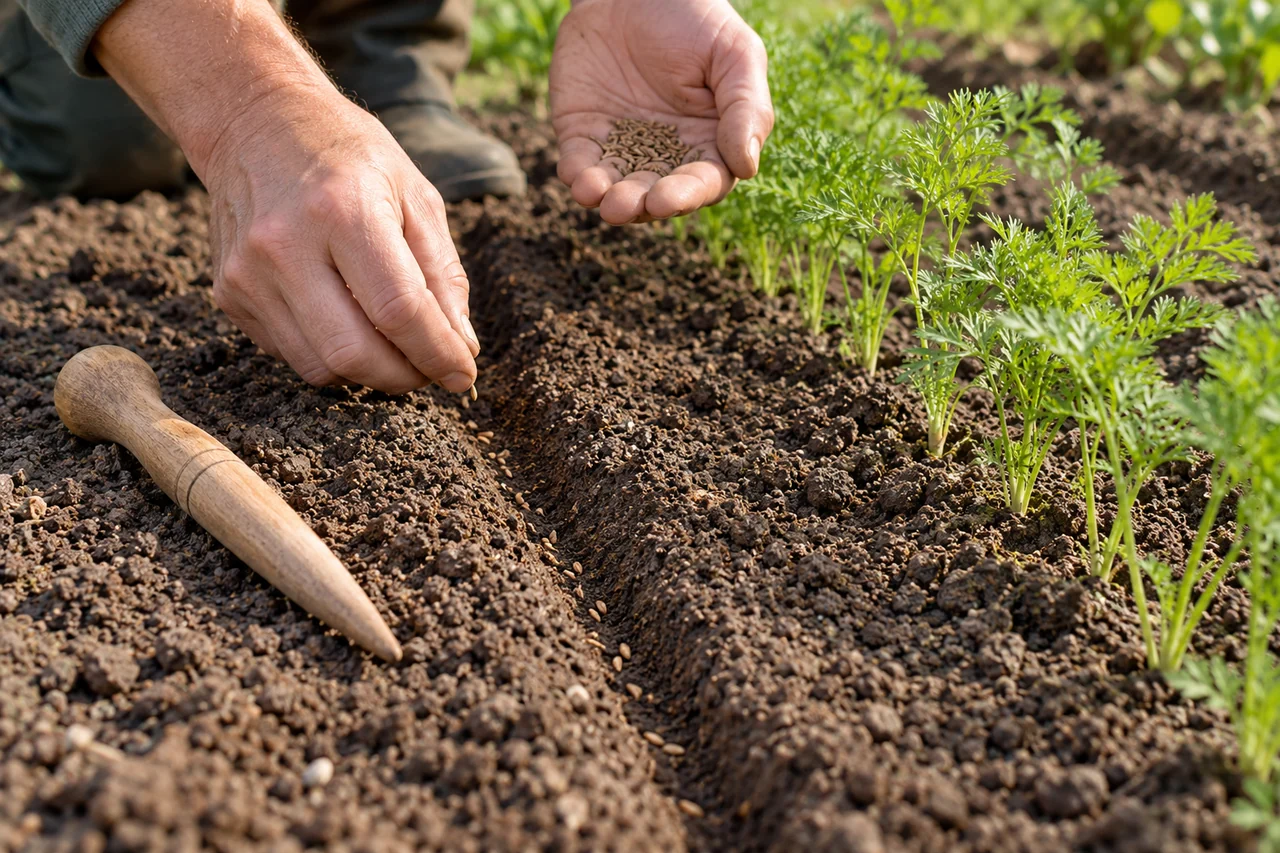
This image was created with AI from described plant characteristics and growing advice. It shows a possible situation and is not a photograph of a verified cultivar.
A tidy row starts with thin sowing
Spread the fine seed along a shallow drill. Gently cover it with soil and keep the surface moist until seedlings appear.
View your supplies →Choose by flavour, shape and use
Jaune du Doubs: Yellow storage carrot with a rounded tip. Slice yellow carrots for raw salads or cut into thick sticks for roasting. Combine with orange carrot to show the colour difference in the same dish.
The supplier describes Jaune du Doubs as sweet and mild. The yellow colour mainly adds harvest variety; no fixed difference in sugar content has been measured.
Nantes 2: Sweet summer carrot for fresh harvests. Slice summer carrots thinly for raw salads or cook briefly so they retain some bite. Fresh carrots also work as small sticks on a platter with dip.
Nantes 2 is described as having a sweet carrot flavour. The young root has a fresh bite; perceived sweetness also depends on ripeness and preparation.
Flakkee 2: Large orange winter carrot for growing a supply to store. Dice for soup or cut into generous wedges for roasting. Cook large pieces for long enough and cut all carrots to similar sizes in a mixed dish.
Flakkee 2 is described as sweet. The large root size gives more substantial pieces per plant, suited to stews and soup; preparation affects mouthfeel.
Blanche des Vosges: White carrot with broad shoulders, best used young in the kitchen. Slice young white carrots for a light raw salad or cook equal-sized pieces with other carrot colours. The white colour adds variety without a separate sauce.
The source describes the root as tasty when harvested young. Large mature roots were also used as a fodder crop; for a fine meal, therefore, try a young root in good time.
Choosing a suitable root crop
Summer carrots, winter carrots and short, round types need different space and time. Choose what fits your soil and pot first. A long root in a shallow container has no room to grow straight; a short type is more logical there.
Make room underground
Feel whether the soil is loose enough below the top layer. A fine surface can hide a hard layer. Carefully relieve obstructive compaction when the soil is workable. Avoid fresh, coarse manure directly in a row where straight roots need to develop.
Sow in the final position
Sow directly in a fine, cleared seedbed. Keep the surface moist during sometimes slow emergence and mark the row. Transplanting is inconvenient for an ordinary carrot crop because the young taproot damages easily and may branch as a result.
The surface layer deserves attention
After sowing, keep the germination zone evenly moist. A hard crust and drying can hold back small plants. Water with a fine rose and do not walk over the row. A label helps you find the sowing position before recognisable leaves appear.
Give every young plant its own space
Thin small groups in good time so each root can thicken. Keep to the cultivar's final spacing and work carefully. Sow thinly enough to avoid excessive pulling. An evenly spaced row is more useful than a dense carpet that mainly produces foliage.
Growing without large fluctuations
During dry periods, check moisture below the surface. Young plants and containers need more frequent watering checks than a well-rooted crop in a bed. Water according to need and let it soak down; a wet surface every day tells you little about the root zone.
Take time over the first one
Harvest gradually from a useful root size. Loosen heavy soil first with a fork so the foliage does not tear away. For a storage cultivar, let sound roots mature according to cultivar advice and harvest vulnerable or damaged specimens earlier.
An unusual root tells you something
Forked roots may relate to stones, compacted soil or damage to the young root. Carrot fly makes tunnels; where necessary, protect with suitable mesh and seal the edges. Fluctuating moisture can cause splitting. Choose a following growing position with better soil structure.
Start with a sound harvest
Use damaged roots first and store only sound ones, following guidance for the type and cultivar. Cool conditions and suitable humidity help limit drying, but check for deterioration. Storage advice for one winter cultivar is not a shelf-life promise for the whole species.
What you need
Tick what you already have. The extras depend on how you grow.
0 of 5 ticked off
Your ticks are saved in this browser.
Discover and grow more
More background, sources and image information
SeedSteps editorial team · updated on 11 October 2026. The AI images illustrate species and practical growing situations; they do not prove an exact cultivar, observations from your own garden or yield.
Britse gewasadviezen worden gecombineerd met Nederlandse en Vlaamse informatie waar beschikbaar. Amerikaanse Extension-bronnen ondersteunen plantprincipes en herkenning; hun kalenderdata, lokale plaagdruk, bestrijdingsmiddelen en mestdoseringen worden niet rechtstreeks op Nederland of Vlaanderen toegepast. Vorst, bodemwarmte, standplaats en expliciete rasinformatie blijven de lokale controle. Commerciële bronnen onderbouwen uitsluitend benoemde ras- en plantkenmerken; zij zijn geen affiliate-aanbeveling.
- World Checklist of Vascular Plants — 4 juni 2026Royal Botanic Gardens, Kew · accessed 2026-10-07
- Common catalogue of varieties of vegetable species — 27 januari 2023Europese Commissie · accessed 2026-10-07
- RHS-rasprofiel: Sweet CandleRoyal Horticultural Society · accessed 2026-10-08
- Common catalogue of varieties of vegetable species — Supplement H 2025/11 (C/2025/6470), Nantaise 2Europese Commissie · accessed 2026-10-11
- Organic Zomerwortelen Nantes 2 zadenFeggies · accessed 2026-10-11
- Gele winterwortel 'Jaune Du Doubs' zaden biologischFeggies · accessed 2026-10-11
- Winterwortel Flakkee 2 BiologischFeggies · accessed 2026-10-11
- Wortel Blanche des VosgesFeggies · accessed 2026-10-11
- Wortel gemengdFeggies · accessed 2026-10-11
- Wortel Gniff zadenFeggies · accessed 2026-10-11
- Wortel lang geel uit BelgiëFeggies · accessed 2026-10-11
- Wortel Nantaise 2Feggies · accessed 2026-10-11
- Wortel Rood Hart uit Chantenay zaden biologischFeggies · accessed 2026-10-11
- Wortel Rouge Sang BiologischFeggies · accessed 2026-10-11
- Wortel vroege uit AmsterdamFeggies · accessed 2026-10-11
- Zomerwortel 'Amsterdamse Bak 2' BiologischFeggies · accessed 2026-10-11
- De Bolster — Wortel telenDe Bolster · accessed 2026-10-10
- RHS — wortel kwekenRoyal Horticultural Society · accessed 2026-10-10
- UMN Extension — wortel in de moestuinUniversity of Minnesota Extension · accessed 2026-10-10
Supporting evidence by chapter: Choose by flavour, shape and use: Feggies, Feggies, Feggies, Europese Commissie, Feggies, Feggies. Choosing a suitable root crop: Royal Horticultural Society, University of Minnesota Extension, De Bolster. Make room underground: Royal Horticultural Society, University of Minnesota Extension, De Bolster. Sow in the final position: Royal Horticultural Society, University of Minnesota Extension, De Bolster. The surface layer deserves attention: Royal Horticultural Society, University of Minnesota Extension, De Bolster. Give every young plant its own space: Royal Horticultural Society, University of Minnesota Extension, De Bolster. Growing without large fluctuations: Royal Horticultural Society, University of Minnesota Extension, De Bolster. Take time over the first one: Royal Horticultural Society, University of Minnesota Extension, De Bolster. An unusual root tells you something: Royal Horticultural Society, University of Minnesota Extension, De Bolster. Start with a sound harvest: Royal Horticultural Society, University of Minnesota Extension, De Bolster.
Light: Full sun Rasspecifieke RHS-beschrijving in Britse omstandigheden; geen gegarandeerde Nederlandse oogsttijd, opbrengst of bescherming. Royal Horticultural Society
Main colour: Orange root Rasspecifieke RHS-beschrijving in Britse omstandigheden; geen gegarandeerde Nederlandse oogsttijd, opbrengst of bescherming. Royal Horticultural Society
Shape: Cylindrical with a rounded tip; smooth skin Rasspecifieke RHS-beschrijving in Britse omstandigheden; geen gegarandeerde Nederlandse oogsttijd, opbrengst of bescherming. Royal Horticultural Society
Soil: Deeply worked soil with good drainage Rasspecifieke RHS-beschrijving in Britse omstandigheden; geen gegarandeerde Nederlandse oogsttijd, opbrengst of bescherming. Royal Horticultural Society
Flavour: Sweet according to RHS Rasspecifieke RHS-beschrijving in Britse omstandigheden; geen gegarandeerde Nederlandse oogsttijd, opbrengst of bescherming. Royal Horticultural Society
Texture: Virtually coreless according to RHS Rasspecifieke RHS-beschrijving in Britse omstandigheden; geen gegarandeerde Nederlandse oogsttijd, opbrengst of bescherming. Royal Horticultural Society