
Root parsley: a white root with a familiar aroma
Root parsley provides a winter vegetable of its own: a white root with a parsley aroma. Use a little of the foliage, but leave enough to let the root grow. Sow directly in deep, loose soil and allow time for germination.
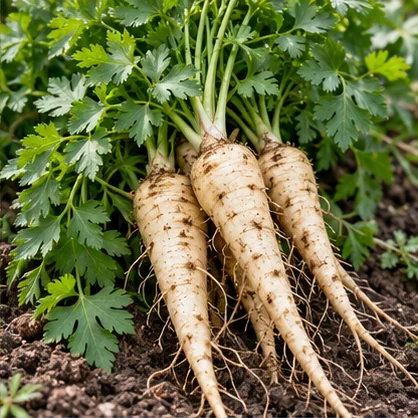
This image was created with AI from described plant characteristics and growing advice. It shows a possible situation and is not a photograph of a verified cultivar.
- Sowing
- Spring, directly in the final position
- Harvesting
- Autumn to spring in a suitable position
- Location
- Deep, moist but well-drained soil
- Leaf
- Harvest sparingly if the root is the main crop
This growing advice helps you choose. Your variety, growth stage, weather and conditions in your space determine the actual timing.
Sowing under cover and raising seedlings
Sow directly · Root parsley
March–April; follow species and cultivar guidanceSow in the final position in deeply workable soil. Wait during cold or waterlogging.
- Germination and temperature
- Wait for workable, warmed soil; follow the cultivar’s minimum sowing temperature.
- After emergence
- Keep the seed row evenly moist during emergence and identifiable with a label.
- Pricking out and potting on
- Do not prick out. Thin in place; transplanting can damage the taproot.
- Hardening off and planting out
- Stays where sown; hardening off and planting out are unnecessary for direct sowing.
This taproot crop stays where sown. Parsnip needs fresh seed and can germinate slowly; follow separate seed guidance for scorzonera, salsify and root parsley.
Sources and use
RHS · pastinaak ↗Britse teeltrichtlijn voor een gematigd klimaat; de genoemde perioden zijn richtlijnen voor Nederland en Vlaanderen.
De Bolster · Wortelpeterselie oogsten ↗Nederlandse producent of teeltbron; de rasinstructie blijft leidend.
Guideline periods for the Netherlands and Flanders. Check the variety, available light, soil and measured temperatures. Greenhouse heating does not guarantee enough winter light.
A different flavour, a different harvest.
Choose by more than the name. Discover how these varieties and crop types taste, what you can use them for and what growing them involves.
1 of 1 choices · 0 named varieties
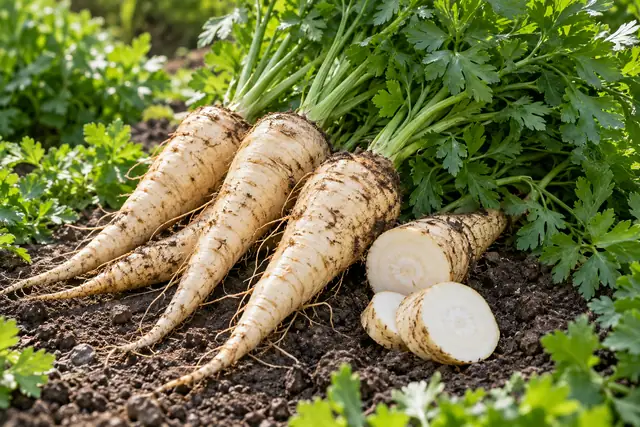
This image was created with AI from described plant characteristics and growing advice. It shows a possible situation and is not a photograph of a verified cultivar.
Root parsley
An aromatic white kitchen root with usable parsley foliage too.
Choose this crop type if you want to use both root and aromatic foliage. No extra variety name is given; the choice concerns the crop and its dual kitchen use.
Flavour, kitchen and growing
How does it taste?
Root parsley has a distinctive parsley aroma with a slight sweetness. This gives it a different kitchen character from parsnip, even if the pale root shape looks similar.
This flavour description applies to the crop; there is no separate tasting result for this variety.In the kitchen
Use cubes in soup or roast wedges with thyme. Chop healthy foliage like parsley; during growth, take only a modest amount so that the root can keep developing.
A space in the garden
Sow directly in deeply loosened soil and keep slow emergence moist. For container growing, use a deep container and leave the taproot undisturbed in place.
Harvesting
After sufficient autumn growth, lift carefully with a fork. Use roots fresh or store undamaged specimens cool against drying out; process damaged parts first.
Read the source notes →Choose your way to grow
From a garden bed to a suitable pot or support: give your plant a place that suits your garden and the care you can provide.
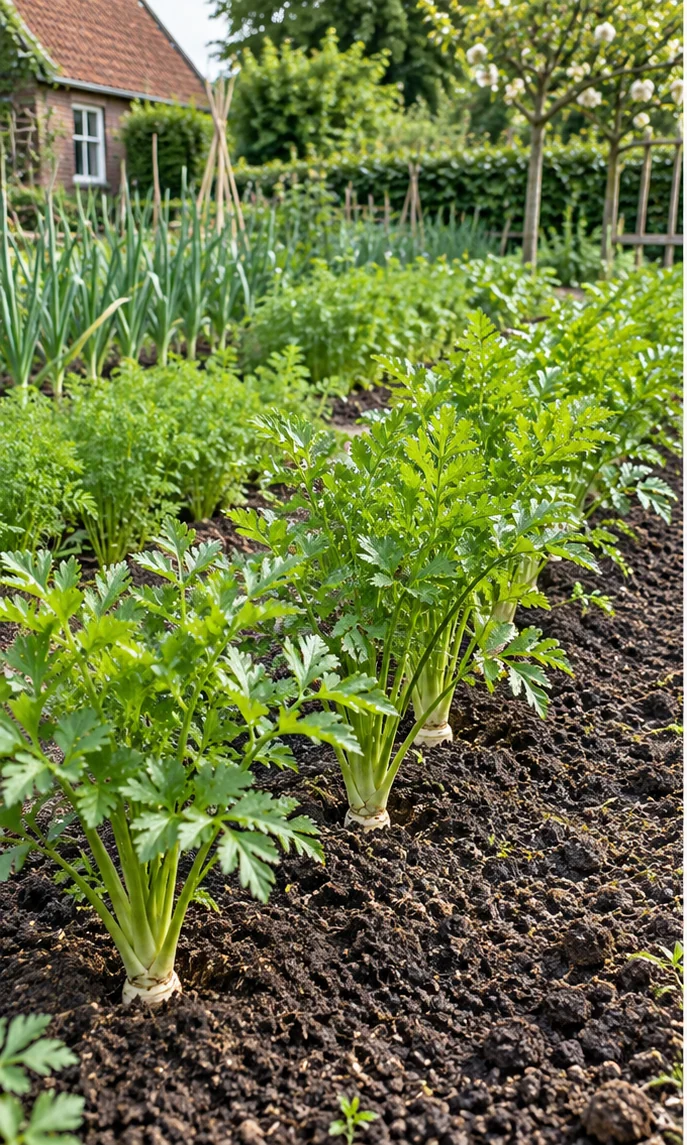
This image was created with AI from described plant characteristics and growing advice. It shows a possible situation and is not a photograph of a verified cultivar.
Sowing directly into a cleared bed
A root builds its harvest underground. First choose workable soil and a spot that will stay available for long enough. Sow directly and keep the row identifiable, even while seedlings are still small.
- Remove stones, weeds and hard clods without smearing wet clay into a compacted surface.
- Sow at the depth for the cultivar and keep the germination zone moist.
- Thin in time and harvest a first test specimen.
For anyone with a suitable bed and enough root space.
Tick off your supplies →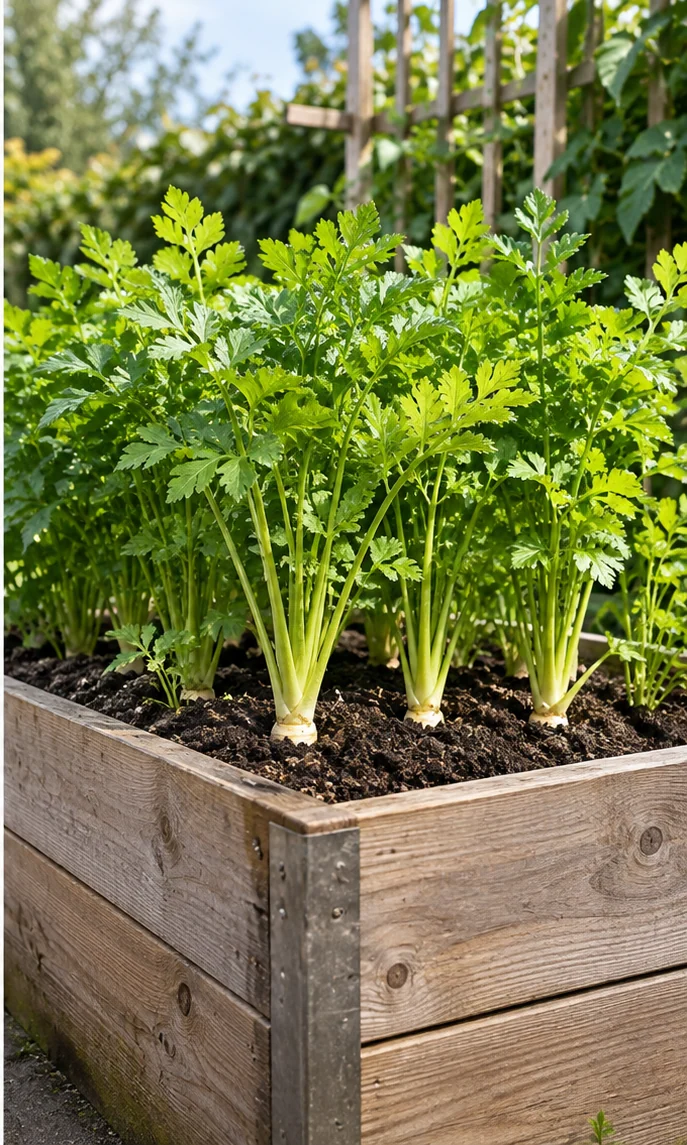
This image was created with AI from described plant characteristics and growing advice. It shows a possible situation and is not a photograph of a verified cultivar.
A small trial in a suitable container
A deep container suits a small Hamburg parsley trial. Soil needs enough depth, drainage and moisture. Sow directly in the final container and allow root space; a shallow herb pot is for leaves, not long roots.
- Check the cultivar’s expected root size.
- Choose a container with enough depth and unobstructed drainage.
- Sow directly and check moisture more often than in the ground.
For limited space, provided the container suits the root shape.
Tick off your supplies →Choose by flavour, shape and use
Hamburg parsley: Aromatic white kitchen root with usable parsley foliage too. Use cubes in soup or roast wedges with thyme. Chop healthy foliage like parsley; during growth, take only a modest amount so that the root can keep developing.
Root parsley has a distinctive parsley aroma with a slight sweetness. This gives it a different kitchen character from parsnip, even if the pale root shape looks similar.
Choosing a suitable root crop
Hamburg parsley is a parsley type grown for roots. Ordinary leaf parsley does not automatically give the same useful root. Check type and choose somewhere the taproot can grow deeply without persistent clods.
Make room underground
Feel whether the soil is loose enough below the top layer. A fine surface can hide a hard layer. Carefully relieve obstructive compaction when the soil is workable. Avoid fresh, coarse manure directly in a row where straight roots need to develop.
Sow in the final position
Sow directly in a fine seedbed and keep the surface moist during slower germination. Label the row and remove only weeds you recognise clearly. A dry surface can disrupt emergence before the first leaves appear.
The surface layer deserves attention
After sowing, keep the germination zone evenly moist. A hard crust and drying can hold back small plants. Water with a fine rose and do not walk over the row. A label helps you find the sowing position before recognisable leaves appear.
Give every young plant its own space
Thin emerged plants to the variety spacing. Work carefully around young roots and give remaining plants room. For root harvests, leave most foliage: leaves feed underground growth.
Growing without large fluctuations
During dry periods, check moisture below the surface. Young plants and containers need more frequent watering checks than a well-rooted crop in a bed. Water according to need and let it soak down; a wet surface every day tells you little about the root zone.
Take time over the first one
Loosen soil with a fork before lifting white roots. Harvest from a usable size, usually in autumn. In a suitable position, they can remain in the ground longer; wet or frozen soil makes harvesting harder.
An unusual root tells you something
Poor emergence can reflect a drying germination zone; thin roots can also follow crowding or heavy leaf harvests. Check soil structure, space and care before feeding. Use damaged roots in the kitchen sooner.
Start with a sound harvest
Use damaged roots first and store only sound ones, following guidance for the type and cultivar. Cool conditions and suitable humidity help limit drying, but check for deterioration. Storage advice for one winter cultivar is not a shelf-life promise for the whole species.
What you need
Tick what you already have. The extras depend on how you grow.
0 of 5 ticked off
Your ticks are saved in this browser.
Discover and grow more
More background, sources and image information
SeedSteps editorial team · updated on 11 October 2026. The AI images illustrate species and practical growing situations; they do not prove an exact cultivar, observations from your own garden or yield.
Britse gewasadviezen worden gecombineerd met Nederlandse en Vlaamse informatie waar beschikbaar. Amerikaanse Extension-bronnen ondersteunen plantprincipes en herkenning; hun kalenderdata, lokale plaagdruk, bestrijdingsmiddelen en mestdoseringen worden niet rechtstreeks op Nederland of Vlaanderen toegepast. Vorst, bodemwarmte, standplaats en expliciete rasinformatie blijven de lokale controle. Commerciële bronnen onderbouwen uitsluitend benoemde ras- en plantkenmerken; zij zijn geen affiliate-aanbeveling.
- World Checklist of Vascular Plants — 4 juni 2026Royal Botanic Gardens, Kew · accessed 2026-10-07
- Wortelpeterselie oogstenDe Bolster · accessed 2026-10-11
- Wortel peterselieFeggies · accessed 2026-10-11
- De Bolster — Wortelpeterselie oogstenDe Bolster · accessed 2026-10-10
- Wortelpeterselie — professionele teeltinformatieJohnny’s Selected Seeds · accessed 2026-10-10
Supporting evidence by chapter: Choose by flavour, shape and use: Feggies, De Bolster. Choosing a suitable root crop: Johnny’s Selected Seeds, De Bolster. Make room underground: Johnny’s Selected Seeds, De Bolster. Sow in the final position: Johnny’s Selected Seeds, De Bolster. The surface layer deserves attention: Johnny’s Selected Seeds, De Bolster. Give every young plant its own space: Johnny’s Selected Seeds, De Bolster. Growing without large fluctuations: Johnny’s Selected Seeds, De Bolster. Take time over the first one: Johnny’s Selected Seeds, De Bolster. An unusual root tells you something: Johnny’s Selected Seeds, De Bolster. Start with a sound harvest: Johnny’s Selected Seeds, De Bolster.