
Celtuce
With celtuce, the focus shifts from a head of leaves to the thickening stem. Leaves and stems provide two different harvest opportunities.
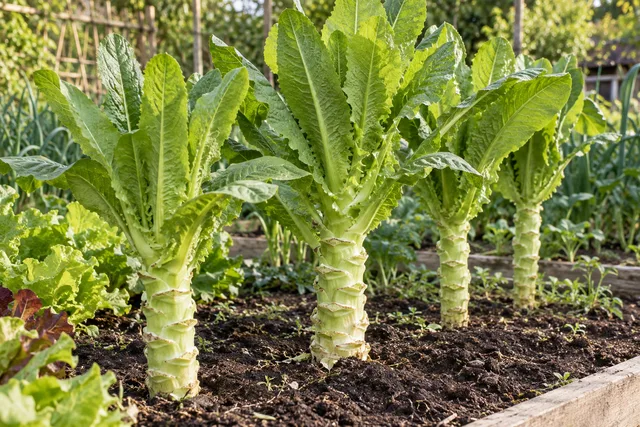
This image was created with AI from described plant characteristics and growing advice. It shows a possible situation and is not a photograph of a verified cultivar.
- Botanical name
- Lactuca sativa
- Plant type
- Stem lettuce; Lactuca sativa
- Harvested part
- Mainly the swollen above-ground stem
- Growing forms
- Individual plants in a bed or deep container
This growing advice helps you choose. Your variety, growth stage, weather and conditions in your space determine the actual timing.
Sowing under cover and raising seedlings
Start under cover in cool conditions or sow directly · Celtuce
February–August, depending on cultivarSow in a bright position that is not hot. A warm loft can be too hot.
- Germination and temperature
- Germinate in cool, bright conditions; much lettuce germinates poorly above about 25 °C.
- After emergence
- Keep emerged lettuce bright and well ventilated; prevent high greenhouse temperatures and drying out.
- Pricking out and potting on
- Sow in modules or prick out manageable seedlings into individual cells. Keep the root ball intact when planting out.
- Hardening off and planting out
- Gradually acclimatise indoor-raised plants to sun, wind and outdoor temperatures; shelter them again on cold nights. Plant out sturdy young plants; keep the growing point clear and protect against slugs and snails.
Choose a spring, summer or winter cultivar. Celtuce has a different harvest aim from heading lettuce; follow its own cultivar window.
Sources and use
RHS · sla ↗Britse teeltrichtlijn voor een gematigd klimaat; de genoemde perioden zijn richtlijnen voor Nederland en Vlaanderen.
Magic Garden Seeds · Stengelsla / Chinese aspergesla ↗Nederlandse producent of teeltbron; de rasinstructie blijft leidend.
Feggies · Aspergesla zaden biologisch ↗Nederlandse producent of teeltbron; de rasinstructie blijft leidend.
Guideline periods for the Netherlands and Flanders. Check the variety, available light, soil and measured temperatures. Greenhouse heating does not guarantee enough winter light.
A different flavour, a different harvest.
Choose by more than the name. Discover how these varieties and crop types taste, what you can use them for and what growing them involves.
1 of 1 choices · 0 named varieties
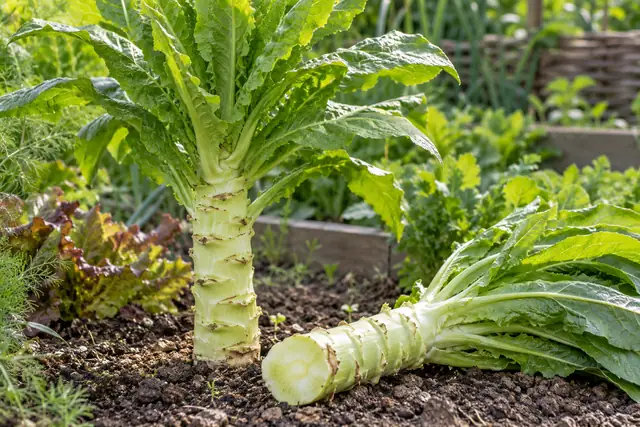
This image was created with AI from described plant characteristics and growing advice. It shows a possible situation and is not a photograph of a verified cultivar.
Celtuce
With celtuce, the focus shifts from a head of leaves to the thickening stem. Leaves and stems provide two different harvest opportunities.
Choose stem lettuce if you want to try a different type of harvest from a familiar lettuce species. This is not a separately named variety.
Flavour, kitchen and growing
How does it taste?
The source does not substantiate an asparagus-like flavour. The name mainly refers to using the stem as a vegetable.
This flavour description applies to the crop; there is no separate tasting result for this variety.In the kitchen
Peel the stem before use and cut strips for cooking. Young leaves are usable too.
A space in the garden
Let selected plants develop their stems rather than cutting all the leaves young. Avoid competition between plants in a dense sowing.
Harvesting
Harvest the swollen stem before clear bud formation. Waiting longer increases the chance of a more fibrous preparation.
Also listed as: Stengelsla.
Read the source notes →Choose your way to grow
From a garden bed to a suitable pot or support: give your plant a place that suits your garden and the care you can provide.
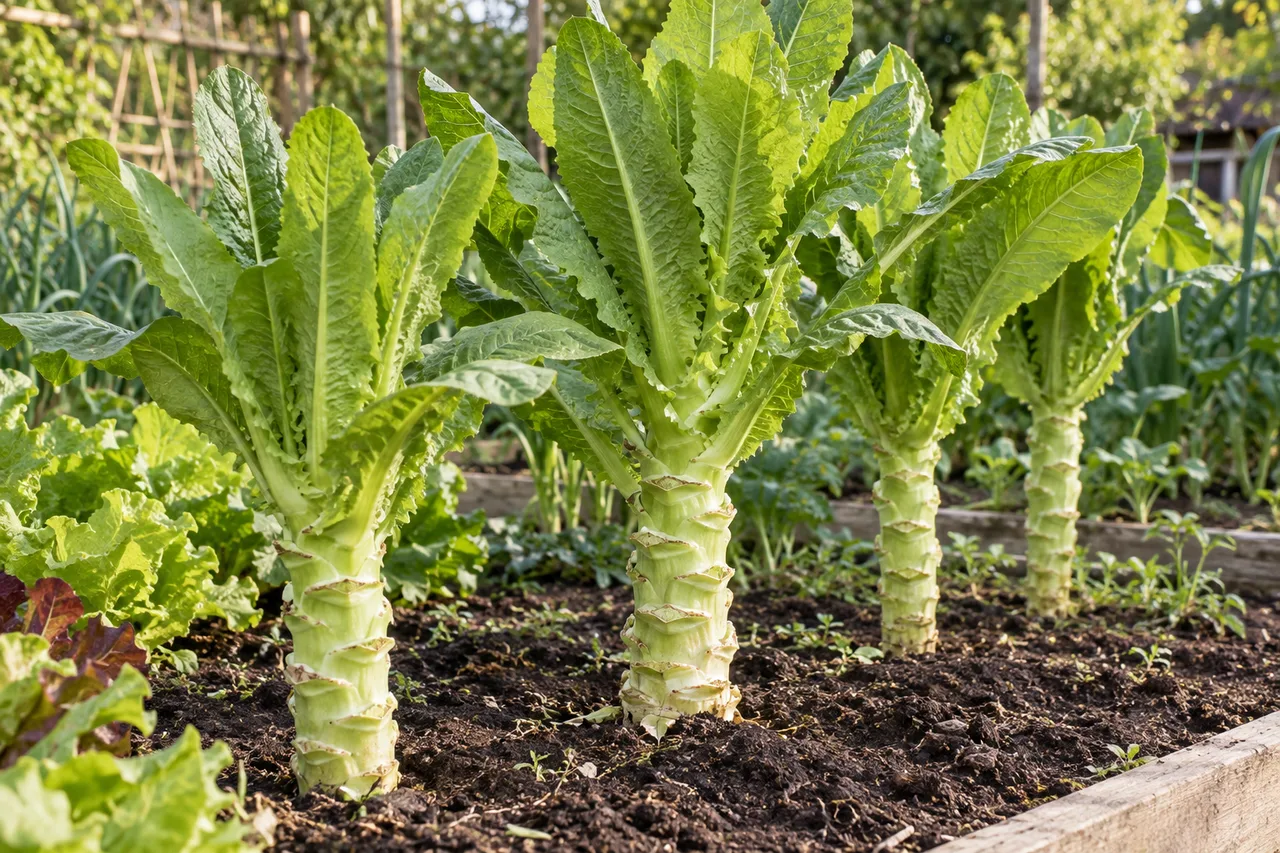
This image was created with AI from described plant characteristics and growing advice. It shows a possible situation and is not a photograph of a verified cultivar.
Let stems develop in a bed
Start lettuce in modules or sow thinly; allow room for individual plants; harvest thickening stems before clear flower buds.
- Start lettuce in modules or sow thinly.
- Leave space for individual plants.
- Harvest thickening stems before clear flower buds appear.
For several plants whose stem thickening you want to observe side by side.
Tick off your supplies →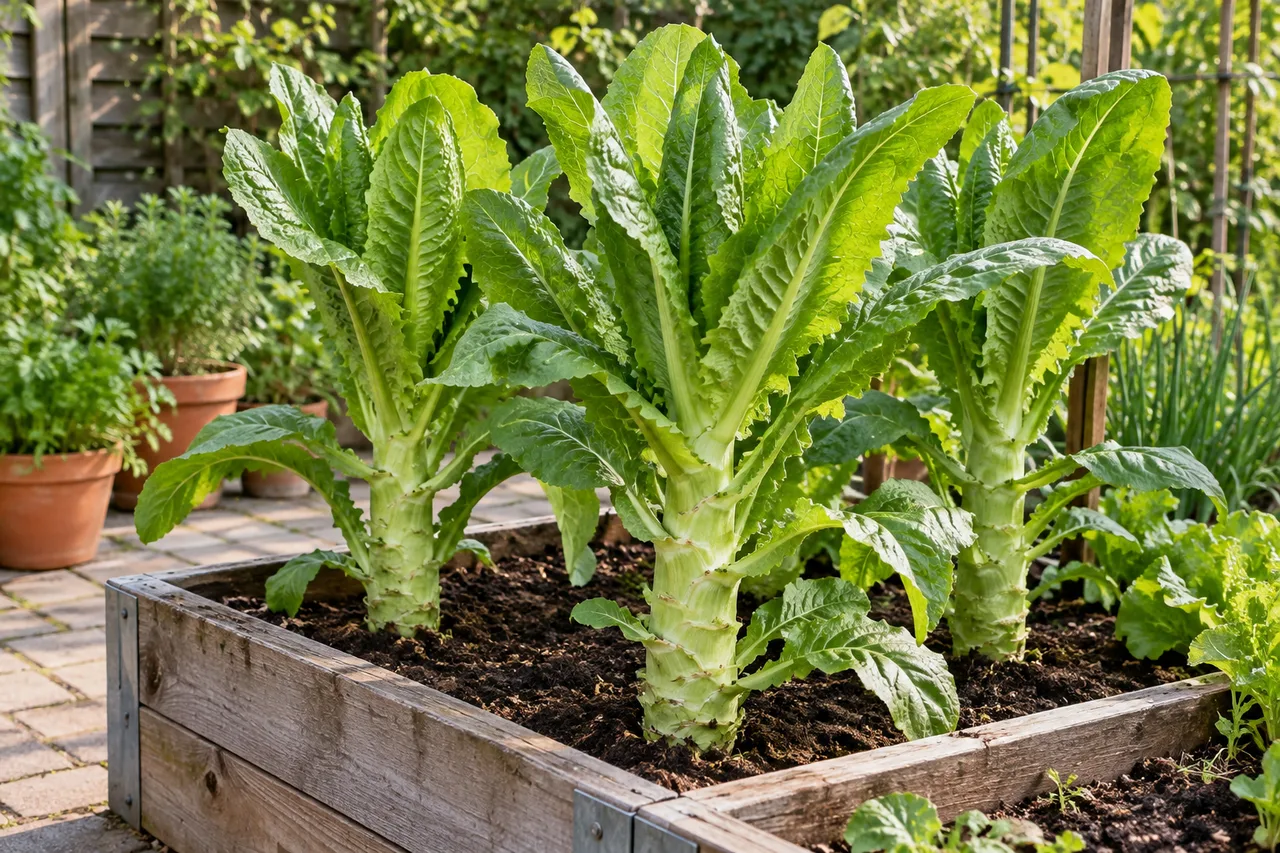
This image was created with AI from described plant characteristics and growing advice. It shows a possible situation and is not a photograph of a verified cultivar.
A trial plant in a deep container
Fill a deep, free-draining container; plant young asparagus lettuce; keep roots moist and let the stem develop.
- Fill a deep, free-draining container.
- Plant a young celtuce plant.
- Keep the root zone moist and let the stem develop.
For one manageable trial plant with sufficient root space.
Tick off your supplies →Choose by flavour, shape and use
Stem lettuce: Focus shifts from a head to the thickening stem. Leaves and stem give two harvest opportunities. Peel and cut the stem into strips for cooking. Young leaves are usable too.
The source does not substantiate an asparagus-like flavour. The name mainly refers to using the stem as a vegetable.
Lettuce with an edible stem
Stem lettuce is Lactuca sativa grown for a thickened stem. Names stem lettuce and Celtuce share this purpose. It is not asparagus and needs no underground-harvest bed. Site and container depth concern the whole above-ground lettuce plant.
Room to monitor the stem
Choose light and individually visible plants. Beds make comparing stems easy; deep containers offer manageable trials. Avoid dense screens of larger vegetables. Observe useful stem formation before flower stems dominate.
Start very shallow
The seed producer advises very shallow sowing and about thirty centimetres between mature plants. Moisten beds first and press fine seeds lightly. Use few labelled plants to compare later stem thickness without a crowded row hiding everything.
An evenly filled bed or barrel
Use draining soil with sufficient root room. Fill containers evenly and check drainage before sowing or planting. Leave room for targeted watering. Leaf-filled edges look attractive but hide soil and lower stems.
A regular checking time
During growth, inspect both leaf and stem. On a few plants, record when the stem starts thickening and when further elongation becomes visible. These changes can look almost identical in a photo. A short series of observations helps you recognise the correct harvest stage earlier in a following sowing.
Stem crop bed or deep container
Stem beds develop a few plants together, with one harvested early for comparison. Containers suit closer observation of small numbers. Give visible space. Open rows prevent judging them like loose-leaf lettuce focused on abundant young leaves.
Assess the stem
The characteristic harvested part is the thickened stem. For a first crop, try one plant earlier and compare it with a more developed specimen. The source gives no universal harvest time for every Dutch garden. Record how the stem looked and how you found the texture after peeling.
Peel and taste separately
Peel stems for raw or steamed use. Young leaves are also usable but may taste more bitter. For a first comparison, taste a small peeled piece without strong sauce to understand why this lettuce needs different kitchen choices from ordinary heads.
What you need
Tick what you already have. The extras depend on how you grow.
0 of 5 ticked off
Your ticks are saved in this browser.
Discover and grow more
More background, sources and image information
SeedSteps editorial team · updated on 11 October 2026. The AI images illustrate species and practical growing situations; they do not prove an exact cultivar, observations from your own garden or yield.
Britse gewasadviezen worden gecombineerd met Nederlandse en Vlaamse informatie waar beschikbaar. Amerikaanse Extension-bronnen ondersteunen plantprincipes en herkenning; hun kalenderdata, lokale plaagdruk, bestrijdingsmiddelen en mestdoseringen worden niet rechtstreeks op Nederland of Vlaanderen toegepast. Vorst, bodemwarmte, standplaats en expliciete rasinformatie blijven de lokale controle. Commerciële bronnen onderbouwen uitsluitend benoemde ras- en plantkenmerken; zij zijn geen affiliate-aanbeveling.
- World Checklist of Vascular Plants — 4 juni 2026Royal Botanic Gardens, Kew · accessed 2026-10-07
- Aspergesla zaden biologischFeggies · accessed 2026-10-11
- Stengelsla / Chinese aspergeslaMagic Garden Seeds · accessed 2026-10-11
Supporting evidence by chapter: Choose by flavour, shape and use: Feggies. Lettuce with an edible stem: Feggies, Magic Garden Seeds. Room to monitor the stem: Feggies, Magic Garden Seeds. Start very shallow: Feggies, Magic Garden Seeds. An evenly filled bed or barrel: Feggies, Magic Garden Seeds. A regular checking time: Feggies, Magic Garden Seeds. Stem crop bed or deep container: Feggies, Magic Garden Seeds. Assess the stem: Feggies, Magic Garden Seeds. Peel and taste separately: Feggies, Magic Garden Seeds.