
Growing Florence fennel: juicy bulbs among fine fennel foliage
Florence fennel forms a swollen leaf base above the soil. It works well in a summer bed after an early harvest, or as a compact crop in a container. Choose Florence fennel seed: ordinary herb fennel does not automatically produce the same edible bulb.
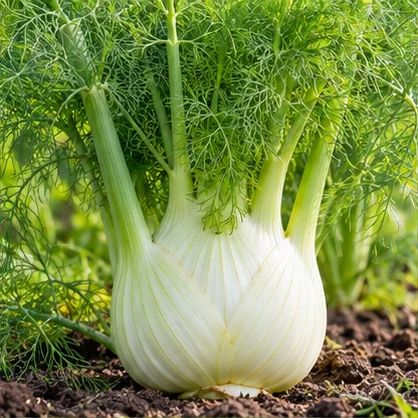
This image was created with AI from described plant characteristics and growing advice. It shows a possible situation and is not a photograph of a verified cultivar.
- Sowing method
- Direct sow or start in individual modules
- Summer cultivation
- June and July are often suitable sowing months
- Point to watch
- Avoid root damage and drought stress
This growing advice helps you choose. Your variety, growth stage, weather and conditions in your space determine the actual timing.
Sowing under cover and raising seedlings
Sow directly or in modules · Florence fennel
June–July for a manageable autumn cropSow in individual modules and keep propagation brief.
- Germination and temperature
- Do not start in persistently cold soil; early cold can encourage bolting.
- After emergence
- Give seedlings light immediately after emergence. A dark loft needs suitable grow lights; warmth alone is insufficient. Ventilate and keep the compost moist without saturating it.
- Pricking out and potting on
- Sow directly or in individual modules. Do not prick out unnecessarily; root damage can disrupt growth and tuber formation.
- Hardening off and planting out
- Gradually acclimatise indoor-raised plants to sun, wind and outdoor temperatures; shelter them again on cold nights. Plant out small, sturdy root balls without pulling the roots apart.
Long days, drought and growth checks can encourage bolting. Choose a suitable cultivar; early cultivars follow their own schedule.
Sources and use
Royal Horticultural Society · Knolvenkel kweken ↗Soort- of productgebonden bron; buitenlandse perioden zijn geen vaste Nederlandse zaaidatum.
Utah State University Extension · Fennel in the garden ↗Soort- of productgebonden bron; buitenlandse perioden zijn geen vaste Nederlandse zaaidatum.
Guideline periods for the Netherlands and Flanders. Check the variety, available light, soil and measured temperatures. Greenhouse heating does not guarantee enough winter light.
A different flavour, a different harvest.
Choose by more than the name. Discover how these varieties and crop types taste, what you can use them for and what growing them involves.
3 of 3 choices · 2 named varieties
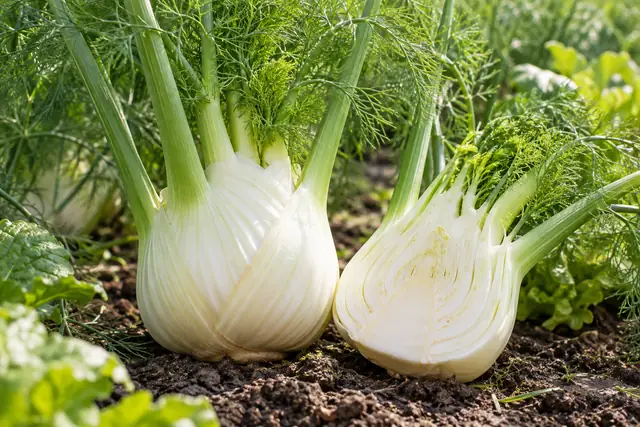
This image was created with AI from described plant characteristics and growing advice. It shows a possible situation and is not a photograph of a verified cultivar.
Fino
Florence fennel for sheltered and outdoor growing with sufficient moisture.
Fino suits a spring or autumn plan under cover and outdoor growing. Choose it if you can keep the bed evenly moist during growth.
Flavour, kitchen and growing
How does it taste?
Fino has the fresh anise aroma of Florence fennel. Raw slices are crisp; braising softens the texture and rounds out the aroma.
This flavour description applies to the crop; there is no separate tasting result for this variety.In the kitchen
Slice thinly for a salad with citrus or braise wedges with a little water. A little finely chopped foliage can add fennel aroma just before serving.
A space in the garden
Sow in small pots and transplant with little root disturbance, or follow direct-sowing advice on the packaging. A cold start and drought stress increase bolting risk.
Harvesting
Harvest once the swollen leaf base is well filled and before a flower stem appears. Protect a late harvest from frost; the regional calendar remains weather-dependent.
Read the source notes →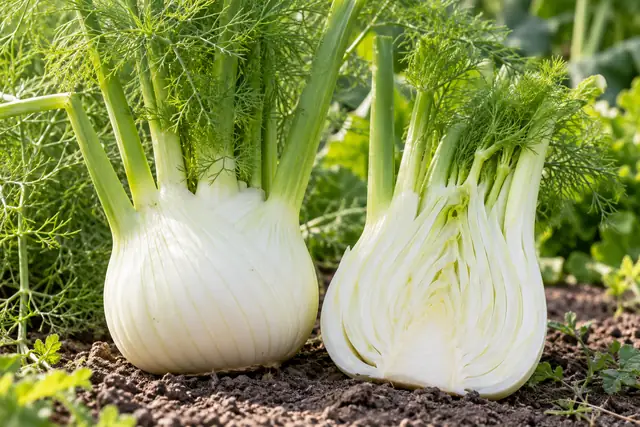
This image was created with AI from described plant characteristics and growing advice. It shows a possible situation and is not a photograph of a verified cultivar.
Doux de Florence
White, swollen leaf bases with a fresh anise flavour.
Choose Doux de Florence if you want classic white bulb fennel. The choice focuses on the edible, swollen leaf bases; ordinary herb fennel gives a different harvest.
Flavour, kitchen and growing
How does it taste?
This Florence fennel is described as having a fresh anise flavour. That is the crop’s character; the cultivar name Doux does not mean it is demonstrably sweeter than Fino.
This flavour description applies to the crop; there is no separate tasting result for this variety.In the kitchen
Use thinly sliced white parts in a raw salad or grill evenly sized wedges. Keep the base attached when cutting so each wedge holds together during cooking.
A space in the garden
Sow during the stated period and keep soil evenly moist. Give each plant enough room for the broad base and avoid a long stay in an undersized pot.
Harvesting
Harvest at a full, firm base and use the bulb fresh. Do not wait for maximum height: for bulb fennel, harvesting before bolting is the key quality choice.
Read the source notes →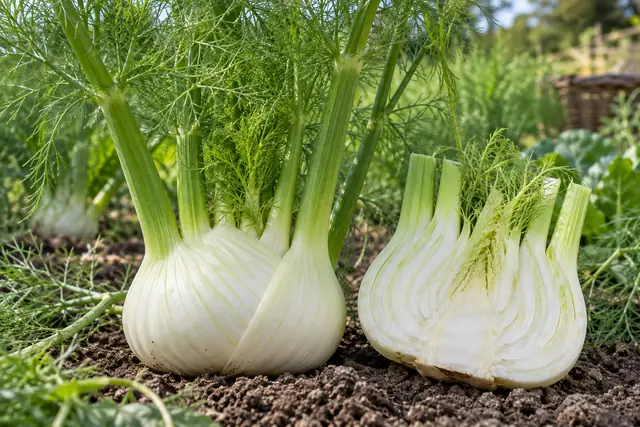
This image was created with AI from described plant characteristics and growing advice. It shows a possible situation and is not a photograph of a verified cultivar.
Soft early-summer type
An early offering with a flatter fennel bulb.
This offering type suits trying an earlier fennel harvest. The name is retained as a type because no separately established cultivar name is given.
Flavour, kitchen and growing
How does it taste?
The fresh anise aroma belongs to Florence fennel; a separate mild flavour score is not established. The flatter bulb shape and early use provide the concrete guidance for choosing here.
This flavour description applies to the crop; there is no separate tasting result for this variety.In the kitchen
Slice flattened bulbs thinly for salad or brief pan cooking. Use healthy foliage sparingly as an aromatic finish to the dish.
A space in the garden
The supplier mentions a sheltered spring start. Protect against frost, plant in good time with the root ball intact and maintain moist growth to limit stress.
Harvesting
Harvest once a usable bulb forms rather than waiting a long time for extra size. A flower stem signals that the fine bulb texture may be lost.
Read the source notes →Choose your way to grow
From a garden bed to a suitable pot or support: give your plant a place that suits your garden and the care you can provide.
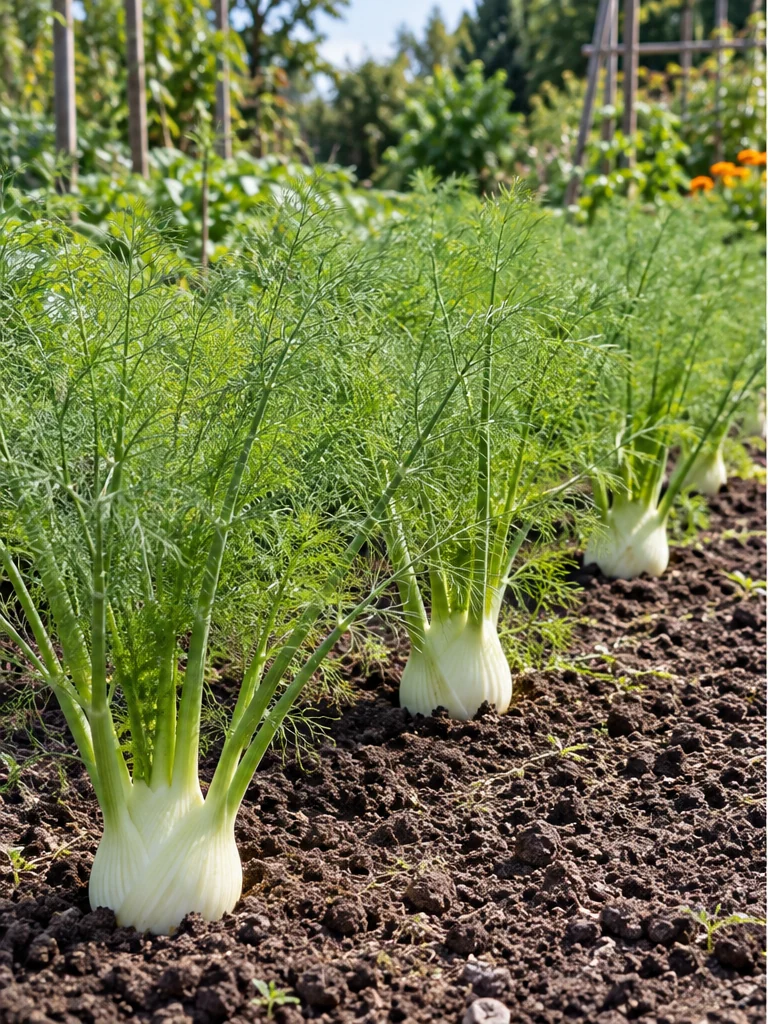
This image was created with AI from described plant characteristics and growing advice. It shows a possible situation and is not a photograph of a verified cultivar.
Direct sowing after an early crop
A vacated bed allows a steady summer start.
- Make the surface fine and check moisture deeper down too.
- Sow thinly in the final position and keep the sowing strip moist.
- Thin to approximately 30 cm, or closer for deliberately smaller bulbs.
For a bed after early potatoes, for example, with room for summer care.
Tick off your supplies →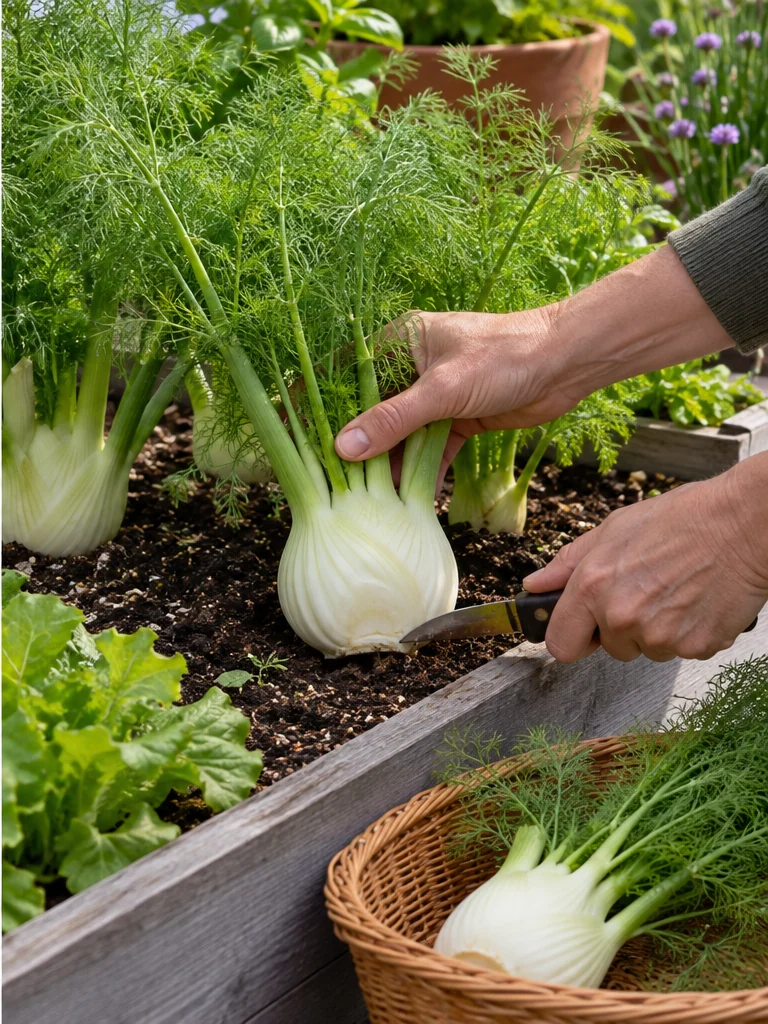
This image was created with AI from described plant characteristics and growing advice. It shows a possible situation and is not a photograph of a verified cultivar.
Compact Florence fennel in a container
A compact selection and even moisture make a small fennel crop possible.
- Choose a large container with drainage and sow in place or use undamaged module rootballs.
- Give plants space according to variety and intended harvest size.
- Harvest a few young bulbs to give the remaining plants space.
For a sunny patio where you can check watering daily.
Tick off your supplies →Explore the varieties
See the confirmed differences. Characteristics without supporting evidence are left blank.
2 of 2 varieties
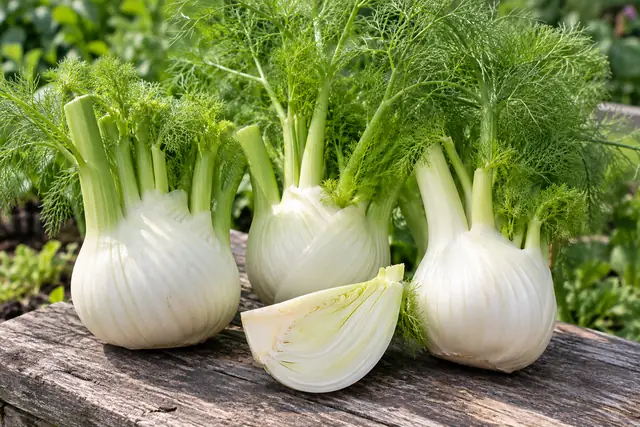
This image was created with AI from described plant characteristics and growing advice. It shows a possible situation and is not a photograph of a verified cultivar.
Dragon
Explore this variety and use the growing guide to choose a place for your plant.
View variety →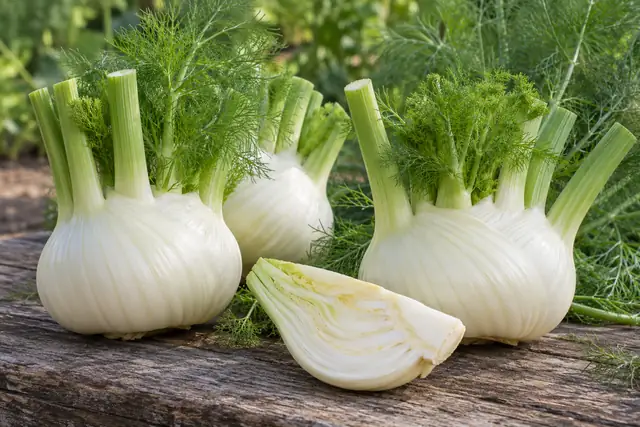
This image was created with AI from described plant characteristics and growing advice. It shows a possible situation and is not a photograph of a verified cultivar.
Rondo
Explore this variety and use the growing guide to choose a place for your plant.
View variety →Choose two to four varieties to compare their source data side by side.
Choose by flavour, shape and use
Fino: Bulb fennel for sheltered and outdoor growing with enough moisture. Slice thinly for a salad with citrus or braise wedges with a little water. A little finely chopped foliage can add fennel aroma just before serving.
Fino has the fresh anise aroma of Florence fennel. Raw slices are crisp; braising softens the texture and rounds out the aroma.
Doux de Florence: White, swollen leaf base with a fresh aniseed flavour. Use thinly sliced white parts raw or grill equal wedges. Retain the base when cutting so each wedge holds together during cooking.
This Florence fennel is described as having a fresh anise flavour. That is the crop’s character; the cultivar name Doux does not mean it is demonstrably sweeter than Fino.
Zacht zomervroegse: Early offering type with a flatter fennel bulb. Slice flattened bulbs thinly for salad or brief pan cooking. Use healthy foliage sparingly as an aromatic finish to the dish.
The fresh anise aroma belongs to Florence fennel; a separate mild flavour score is not established. The flatter bulb shape and early use provide the concrete guidance for choosing here.
Start with the right fennel type
Herb and bulb fennel foliage looks similar. For thick, tender leaf bases, choose a bulb variety and check its sowing season. Some suit earlier growing. A general packet name alone gives no certainty of bulb formation in your garden.
A summer start reduces the risk of bolting
Bulb fennel responds to conditions and may flower before bulbs are usable. June and July offer many Dutch gardens a practical later-harvest start. Early growing needs a suitable variety and more care. Do not use American dates as a fixed Dutch calendar.
Let the root grow in place
Direct sowing avoids transplant damage to young roots. Prepare fine soil, sow thinly and water gently. If using modules, provide root room and plant entire root balls. Do not leave plants too long in undersized cells; steady establishment helps.
Thin with your harvest aim in mind
Large bulbs need more room than mini fennel. Around 30 cm between plants is a useful starting point for full-sized bulb fennel; young small bulbs allow closer spacing. Carefully cut or remove extras rather than hoping crowding yields larger bulbs later.
Keep the leaf base visible and the soil moist
Choose a sunny spot with fertile, well-drained soil. The swollen leaf bases develop at the surface. Water regularly when the soil becomes dry, especially in a container. Check below the top layer before deciding. A loose mulch layer may help, without burying the growing point under wet material.
Recognise a stem trying to grow upwards
Elongation with firm flower stems differs from steadily widening bulbs. Harvest bolting plants early and use usable parts. Next round, seek better timing, less drying and gentler transplanting. Extra feed does not turn bolted plants back into bulb fennel.
Cut when the swollen stem is firm and usable
Harvest bulbs at desired size before toughness or elongation. Hold the plant and cut at the base. Young bulbs suit small meals; large ones need more cutting. Keep fine foliage separately as a herb. Compare two harvest sizes of the same variety.
Use the crop as an attractive second round
Start a small fennel row after clearing a bed. Record sowing, first harvest and bolters to discover whether an early or late round suits your position. In containers, note watering frequency too so the next crop fits your week better.
What you need
Tick what you already have. The extras depend on how you grow.
0 of 6 ticked off
Your ticks are saved in this browser.
Discover and grow more
More background, sources and image information
SeedSteps editorial team · updated on 11 October 2026. The AI images illustrate species and practical growing situations; they do not prove an exact cultivar, observations from your own garden or yield.
Britse gewasadviezen worden gecombineerd met Nederlandse en Vlaamse informatie waar beschikbaar. Amerikaanse Extension-bronnen ondersteunen plantprincipes en herkenning; hun kalenderdata, lokale plaagdruk, bestrijdingsmiddelen en mestdoseringen worden niet rechtstreeks op Nederland of Vlaanderen toegepast. Vorst, bodemwarmte, standplaats en expliciete rasinformatie blijven de lokale controle. Commerciële bronnen onderbouwen uitsluitend benoemde ras- en plantkenmerken; zij zijn geen affiliate-aanbeveling.
- World Checklist of Vascular Plants — 4 juni 2026Royal Botanic Gardens, Kew · accessed 2026-10-07
- Knolvenkel 'Fino' BiologischFeggies · accessed 2026-10-11
- Venkel doux de florence – biologische groentezaden (anijssmaak)Feggies · accessed 2026-10-11
- Venkel zacht zomervroegse zadenFeggies · accessed 2026-10-11
- How to grow Florence FennelRoyal Horticultural Society · accessed 2026-10-11
- Knolvenkel kwekenRoyal Horticultural Society · accessed 2026-10-10
- Fennel in the gardenUtah State University Extension · accessed 2026-10-10
Supporting evidence by chapter: Choose by flavour, shape and use: Feggies, Royal Horticultural Society, Feggies, Feggies. Start with the right fennel type: Royal Horticultural Society, Utah State University Extension. A summer start reduces the risk of bolting: Royal Horticultural Society, Utah State University Extension. Let the root grow in place: Royal Horticultural Society, Utah State University Extension. Thin with your harvest aim in mind: Royal Horticultural Society, Utah State University Extension. Keep the leaf base visible and the soil moist: Royal Horticultural Society, Utah State University Extension. Recognise a stem trying to grow upwards: Royal Horticultural Society, Utah State University Extension. Cut when the swollen stem is firm and usable: Royal Horticultural Society, Utah State University Extension. Use the crop as an attractive second round: Royal Horticultural Society, Utah State University Extension.