
Growing melons: warm growth, gentle support
A ripe melon from your own garden starts with a warm spot and a variety that fits your season. Let vines run over the ground or grow vertically with separate supports for the fruits. In the Netherlands, a hobby greenhouse generally gives more certainty than an open bed.
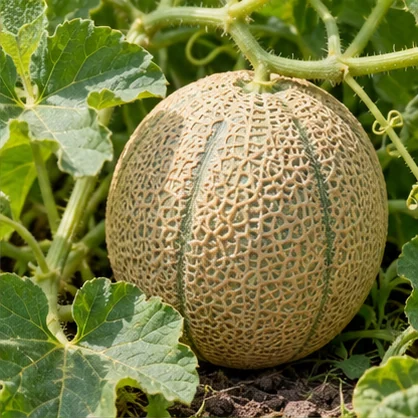
This image was created with AI from described plant characteristics and growing advice. It shows a possible situation and is not a photograph of a verified cultivar.
- Heat
- Greenhouse or very warm sheltered position
- Pot
- A large pot, approximately 40 cm wide and deep
- Vertical
- Support each growing fruit individually
This growing advice helps you choose. Your variety, growth stage, weather and conditions in your space determine the actual timing.
Sowing under cover and raising seedlings
Start under cover in warmth · Melon
Mid-April–mid-MayStart indoors in warmth and reserve enough bright space for raising plants.
- Germination and temperature
- Germinate in warmth; for melon, at least about 18 °C. Follow the packet for watermelon and cucumber melon.
- After emergence
- Give seedlings light immediately after emergence. A dark loft needs suitable grow lights; warmth alone is insufficient. Ventilate and keep the compost moist without saturating it.
- Pricking out and potting on
- Sow in individual pots or deep modules. Do not prick out bare-rooted; move the whole root ball before the roots become restricted.
- Hardening off and planting out
- Gradually acclimatise indoor-raised plants to sun, wind and outdoor temperatures; shelter them again on cold nights. In a warm greenhouse or very sheltered warm position, with the root ball intact. Plant out only once cold nights are over.
Dutch outdoor growing is uncertain in a cool summer. Choose a suitable early type; do not confuse cucumber melon with an ordinary cucumber.
Sources and use
Royal Horticultural Society · Meloenen kweken ↗Soort- of productgebonden bron; buitenlandse perioden zijn geen vaste Nederlandse zaaidatum.
Utah State University Extension · Cantaloupe in the garden ↗Soort- of productgebonden bron; buitenlandse perioden zijn geen vaste Nederlandse zaaidatum.
Guideline periods for the Netherlands and Flanders. Check the variety, available light, soil and measured temperatures. Greenhouse heating does not guarantee enough winter light.
Choose your way to grow
From a garden bed to a suitable pot or support: give your plant a place that suits your garden and the care you can provide.
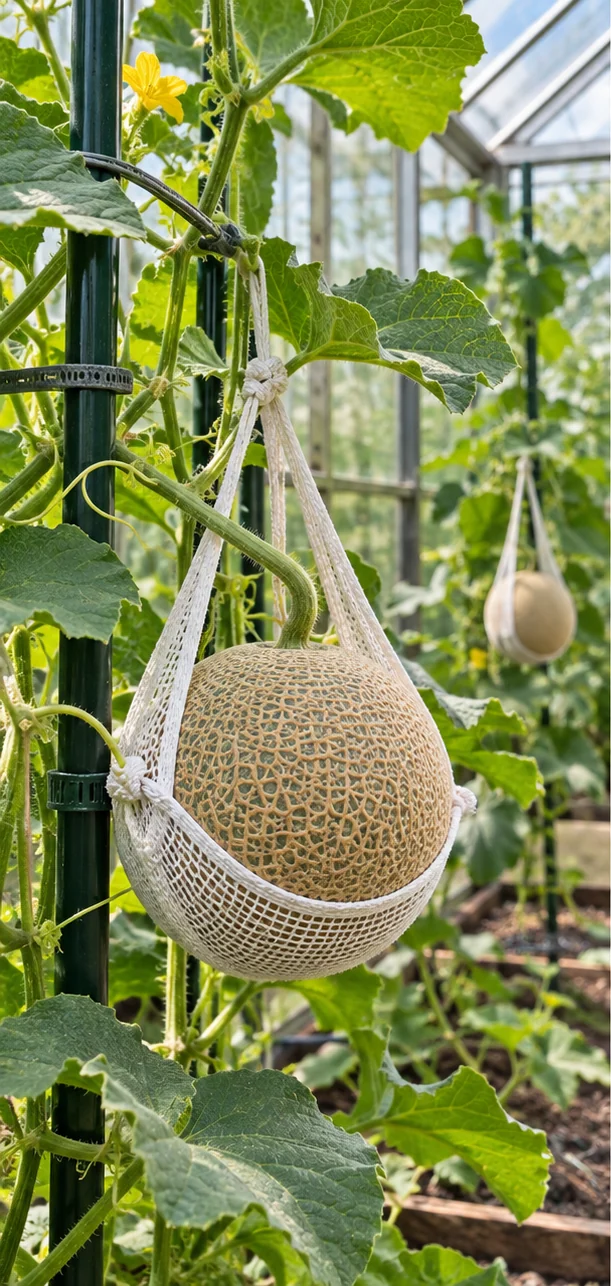
This image was created with AI from described plant characteristics and growing advice. It shows a possible situation and is not a photograph of a verified cultivar.
Train vines upwards in the greenhouse
A sturdy frame provides air and visibility; a fruit also needs its own support net.
- Choose a variety for your position and plant only when the greenhouse is warm enough.
- Train vines along the frame and tie with loose, soft loops where needed.
- Hang a wide support net beneath a fruit and attach it to the structure.
For greenhouse varieties and smaller fruits with a sturdy, well-anchored structure.
Tick off your supplies →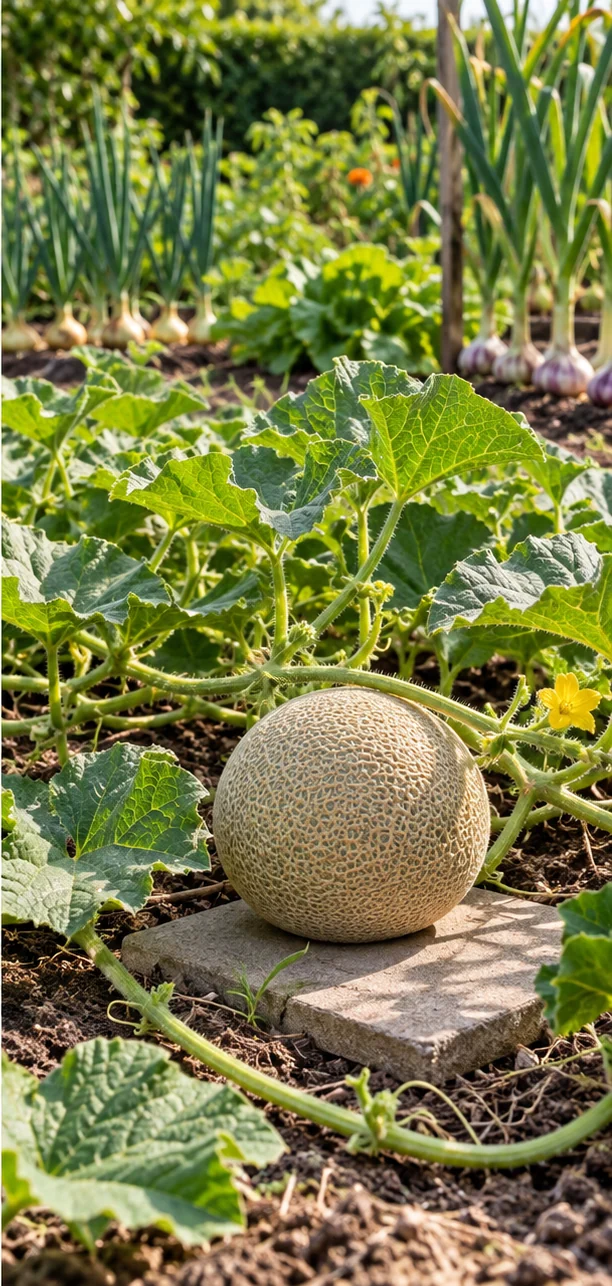
This image was created with AI from described plant characteristics and growing advice. It shows a possible situation and is not a photograph of a verified cultivar.
Across a warm bed or from a large pot
A free bed lets vines spread widely without suspending the fruit.
- Choose sun, shelter and enough room for the variety's growth.
- Guide vines across the bed and prevent fruits resting continually on wet soil.
- Check water, flowers and ripening signals through summer.
For outdoor-suited varieties in a warm summer or low training under glass.
Tick off your supplies →Explore the varieties
See the confirmed differences. Characteristics without supporting evidence are left blank.
2 of 2 varieties
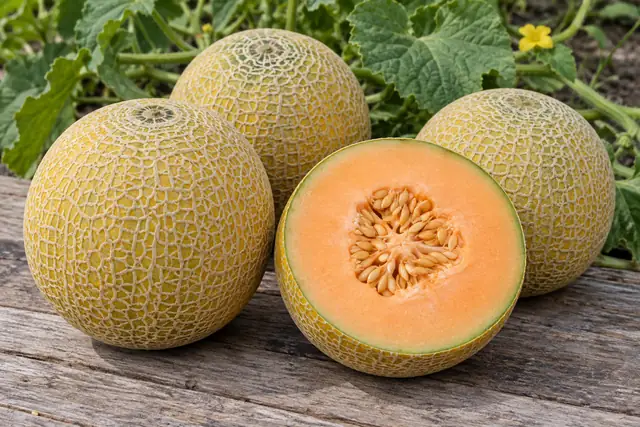
This image was created with AI from described plant characteristics and growing advice. It shows a possible situation and is not a photograph of a verified cultivar.
Emir
Explore this variety and use the growing guide to choose a place for your plant.
View variety →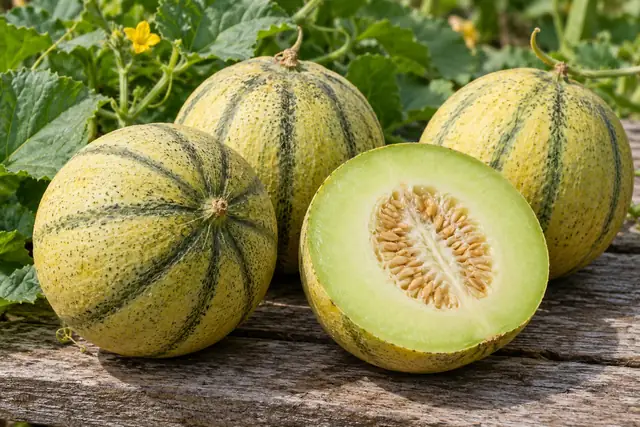
This image was created with AI from described plant characteristics and growing advice. It shows a possible situation and is not a photograph of a verified cultivar.
Ogen
Explore this variety and use the growing guide to choose a place for your plant.
View variety →Choose two to four varieties to compare their source data side by side.
Choose a melon that suits your position
Netted, sweet and other melon types ripen differently and form different fruits. Read full descriptions. Small projects suit appropriate early choices over maximum plants. Watermelon is another crop; its methods and ripeness signals do not transfer directly.
Sow in warmth, but not unnecessarily early
Sow in separate pots in spring and provide light after emergence. RHS gives mid-April to mid-May as a practical British start; also check when your Dutch greenhouse or outdoor site warms. Large weakened indoor plants are no advantage over healthy young ones.
Wait for warm nights
Melons cannot tolerate frost and cold nights slow growth. Harden off gradually and transplant intact root balls. British advice uses consistently warm nights as a threshold; test this against your garden. Late May guarantees nothing; open sites may be ready later than greenhouses.
The vine and fruit need different support
Vines can climb supports, but heavy fruit must not pull on stems alone. Put broad slings beneath fruit and attach to structure. Allow growth and inspect regularly. Large or heavy varieties often suit ground growing better than light balcony supports.
Check the root zone beneath the large leaves
Water regularly without constant saturation. Greenhouse soil stays dry during outdoor rain; pots dry quickly in sunshine. Water at the base and ventilate. Match feeding to substrate, soil and chosen product.
Watch fruit set and pollinator access
Many melons show male flowers and flowers with small ovaries. Pollinators influence fruiting. In closed greenhouses with poor pollination, transfer pollen manually. Exact flower form varies by type. Remove flowers or prune vines only with suitable variety guidance.
Investigate dropping fruitlets and damaged leaves
Small fruits dropping off may relate to insufficient pollination or stress from heat and moisture. Check those conditions first. Also examine leaf undersides for problems and allow air between vines. Adjust any support pressing into a stem immediately. Solving problems starts with distinguishing a dry root ball from wet, poorly draining soil.
Assess ripeness using the right signals
For many netted melons, fragrance, colour and stalk changes help, but not every type detaches naturally. Use variety data and compare individually. Harvest carefully and keep ripe fruit cool. Record first flowers and harvest to adapt future crops to your season.
What you need
Tick what you already have. The extras depend on how you grow.
0 of 6 ticked off
Your ticks are saved in this browser.
Discover and grow more
More background, sources and image information
SeedSteps editorial team · updated on 11 October 2026. The AI images illustrate species and practical growing situations; they do not prove an exact cultivar, observations from your own garden or yield.
Britse gewasadviezen worden gecombineerd met Nederlandse en Vlaamse informatie waar beschikbaar. Amerikaanse Extension-bronnen ondersteunen plantprincipes en herkenning; hun kalenderdata, lokale plaagdruk, bestrijdingsmiddelen en mestdoseringen worden niet rechtstreeks op Nederland of Vlaanderen toegepast. Vorst, bodemwarmte, standplaats en expliciete rasinformatie blijven de lokale controle. Commerciële bronnen onderbouwen uitsluitend benoemde ras- en plantkenmerken; zij zijn geen affiliate-aanbeveling.
- World Checklist of Vascular Plants — 4 juni 2026Royal Botanic Gardens, Kew · accessed 2026-10-07
- Meloenen kwekenRoyal Horticultural Society · accessed 2026-10-10
- Cantaloupe in the gardenUtah State University Extension · accessed 2026-10-10
Supporting evidence by chapter: Choose a melon that suits your position: Royal Horticultural Society, Utah State University Extension. Sow in warmth, but not unnecessarily early: Royal Horticultural Society, Utah State University Extension. Wait for warm nights: Royal Horticultural Society, Utah State University Extension. The vine and fruit need different support: Royal Horticultural Society, Utah State University Extension. Check the root zone beneath the large leaves: Royal Horticultural Society, Utah State University Extension. Watch fruit set and pollinator access: Royal Horticultural Society, Utah State University Extension. Investigate dropping fruitlets and damaged leaves: Royal Horticultural Society, Utah State University Extension. Assess ripeness using the right signals: Royal Horticultural Society, Utah State University Extension.