
Watermelon: a warm summer experiment
Watermelon needs a long warm period and enough room for vines and fruit. In our climate, a greenhouse or warm tunnel helps; outdoors, it is an experiment for a truly sunny, sheltered spot. Choose an early variety with a suitable fruit size and use several signs to judge ripeness.
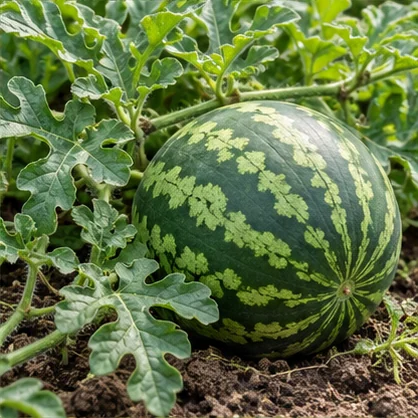
This image was created with AI from described plant characteristics and growing advice. It shows a possible situation and is not a photograph of a verified cultivar.
- Heat
- Plenty of warmth and sun; frost-sensitive
- Space
- Trailing growth, along the ground or on a sturdy trellis
- Pollination
- Male and female flowers; insect or hand pollination
- Harvest
- Fruit ripens on the plant; size or tapping alone is insufficient
This growing advice helps you choose. Your variety, growth stage, weather and conditions in your space determine the actual timing.
Sowing under cover and raising seedlings
Start under cover in warmth · Watermelon
Mid-April–mid-MayStart indoors in warmth and reserve enough bright space for raising plants.
- Germination and temperature
- Germinate in warmth; for melon, at least about 18 °C. Follow the packet for watermelon and cucumber melon.
- After emergence
- Give seedlings light immediately after emergence. A dark loft needs suitable grow lights; warmth alone is insufficient. Ventilate and keep the compost moist without saturating it.
- Pricking out and potting on
- Sow in individual pots or deep modules. Do not prick out bare-rooted; move the whole root ball before the roots become restricted.
- Hardening off and planting out
- Gradually acclimatise indoor-raised plants to sun, wind and outdoor temperatures; shelter them again on cold nights. In a warm greenhouse or very sheltered warm position, with the root ball intact. Plant out only once cold nights are over.
Dutch outdoor growing is uncertain in a cool summer. Choose a suitable early type; do not confuse cucumber melon with an ordinary cucumber.
Sources and use
RHS · meloen ↗Britse teeltrichtlijn voor een gematigd klimaat; de genoemde perioden zijn richtlijnen voor Nederland en Vlaanderen.
Utah State University Extension · USU Extension — watermeloen in de tuin ↗Soort- of productgebonden bron; buitenlandse perioden zijn geen vaste Nederlandse zaaidatum.
University of Maryland Extension · UMD Extension — meloenen en watermeloenen kweken ↗Soort- of productgebonden bron; buitenlandse perioden zijn geen vaste Nederlandse zaaidatum.
Guideline periods for the Netherlands and Flanders. Check the variety, available light, soil and measured temperatures. Greenhouse heating does not guarantee enough winter light.
Choose your way to grow
From a garden bed to a suitable pot or support: give your plant a place that suits your garden and the care you can provide.
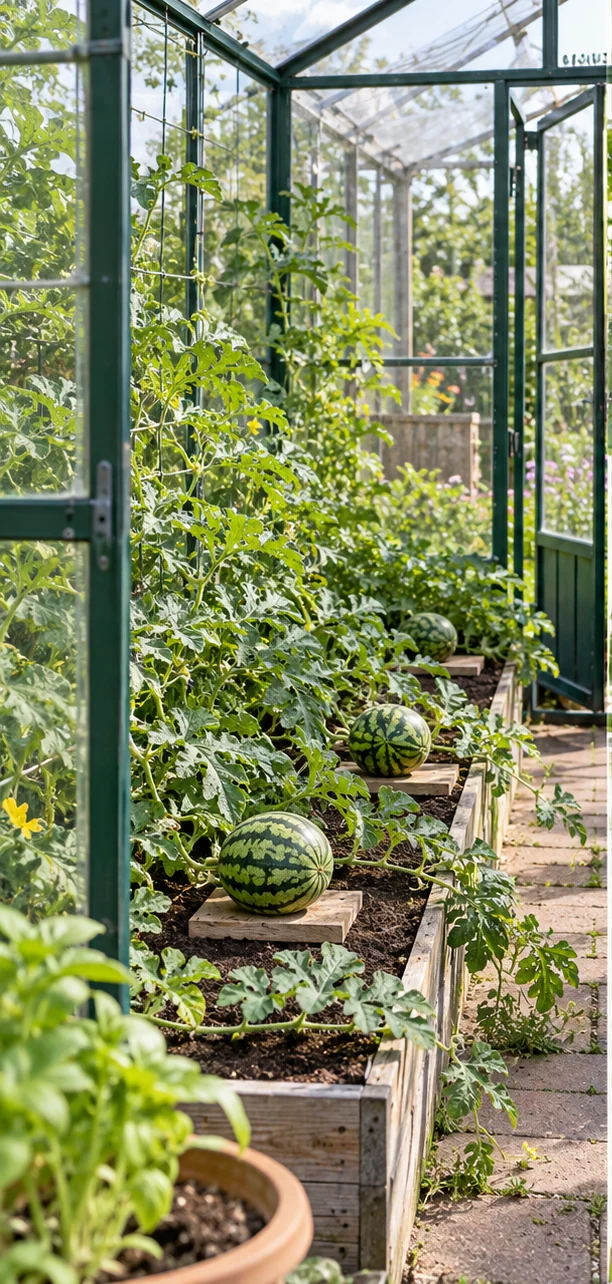
This image was created with AI from described plant characteristics and growing advice. It shows a possible situation and is not a photograph of a verified cultivar.
Vines across a warm greenhouse bed
The vines can run along the ground while the greenhouse retains warmth. Give each plant its own area and keep fruit off persistently wet soil.
- Start in warmth in separate pots and give plenty of light after emergence.
- Plant in warm greenhouse soil once the greenhouse stays warm enough.
- Let vines spread over the bed and rest fruits on a dry, supportive surface.
- Ventilate and provide pollination during flowering.
For a warm greenhouse or tunnel with sufficient free soil space.
Tick off your supplies →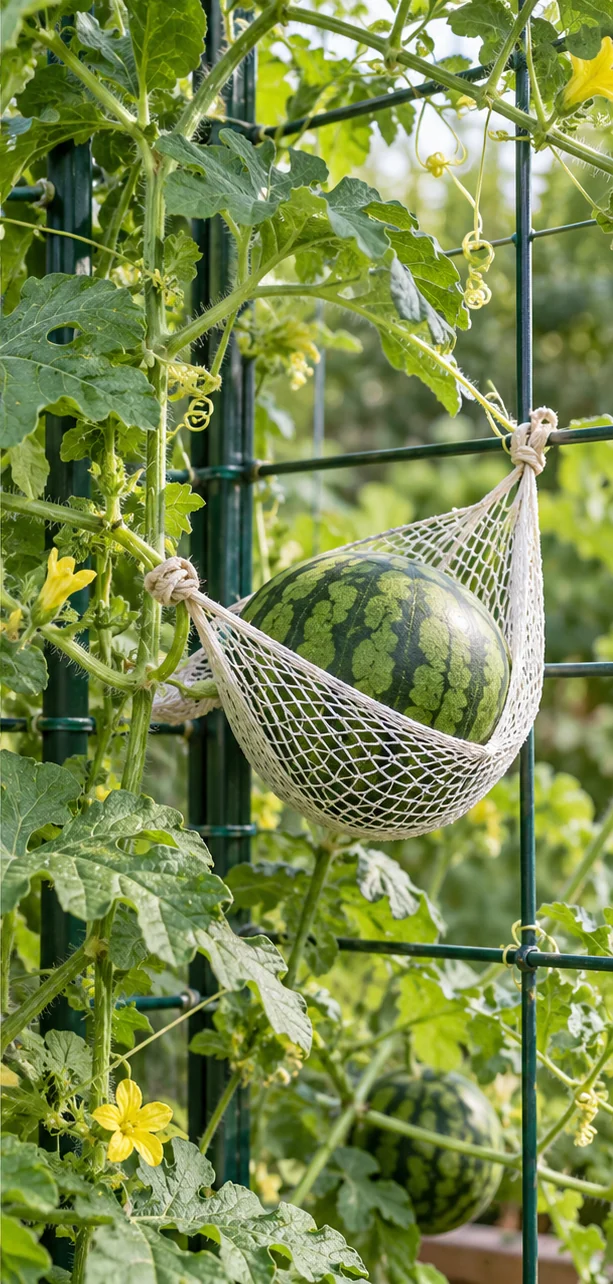
This image was created with AI from described plant characteristics and growing advice. It shows a possible situation and is not a photograph of a verified cultivar.
A small-fruited variety on a sturdy frame
Vertical growing keeps a path clear, but each increasingly heavy fruit needs its own support net. The vine alone cannot safely support a full melon.
- Choose an early, small-fruited variety and build a firmly anchored frame.
- Plant in warm greenhouse soil or a very large container.
- Train vines with soft, loose ties and keep flowers accessible.
- Support growing fruits with wide nets on the frame without loading the fruit stalk.
For a greenhouse with safe, strong support, not a light decorative stake.
Tick off your supplies →Choose a crop that suits the summer
Watermelon is not a certain outdoor crop in every Dutch or Flemish garden. Early varieties and warmth improve chances, but cool summers can limit ripening. Warm American regional calendars promise no fixed harvest for your greenhouse or bed.
Start seeds in warmth and grow on in light
Start in spring warmth, allowing enough time until a genuinely warm planting position is available. Use separate pots and packet depth. Light and controlled growth matter after emergence; long, weak seedlings are a poor head start.
Keep the rootball intact
Watermelon roots dislike unnecessary disturbance. Plant sturdy young plants with intact root balls into warm soil and water in. Outdoors, wait until local frost risk passes. Greenhouses are not automatically warm enough at night; measure actual temperature.
Make room for the vines
The plant can occupy much bed space. Keep a harvest and care path clear and match spacing to variety and system. Guide vines towards empty space early. Sturdy vertical supports help, but do not reduce root space too.
Recognise the flower with a small fruit
Male flowers provide pollen; female flowers have an ovary behind the flower. Insects normally transfer pollen. Hand-pollinating with a male flower can help in closed greenhouses. Do not leave open flowers behind closed protection all day.
Consistent moisture during growth
Check soil and water the root zone sufficiently during growth and fruit development. Very small pots dry too quickly for this crop. Avoid persistently wet leaves and standing water. Feed appropriately; abundant foliage alone does not prove good fruit set.
The fruit stalk is not a lifting rope
Rest ground-grown fruit on dry material without twisting vines. Hanging fruit needs a broad sling attached to sturdy structure. Check growth regularly: small nets or tight string can cut in, while loose fixings can break vines.
Assess warmth, flowers and leaves together
No fruit may reflect limited pollination or unsuitable temperatures. Diseased spots, mildew or insect attack need separate assessment. Ventilate and avoid overcrowding. Extra fertiliser on small plants cannot turn insufficient warmth into a reliable ripe harvest.
Combine several ripeness signals
A drying tendril near fruit and discoloured ground spot can suggest ripeness; variety and growth affect signals. Size or hollow sound alone is insufficient. Watermelon does not grow sweeter after harvest. Cut off with a little stalk.
What you need
Tick what you already have. The extras depend on how you grow.
0 of 7 ticked off
Your ticks are saved in this browser.
Discover and grow more
More background, sources and image information
SeedSteps editorial team · updated on 11 October 2026. The AI images illustrate species and practical growing situations; they do not prove an exact cultivar, observations from your own garden or yield.
Britse gewasadviezen worden gecombineerd met Nederlandse en Vlaamse informatie waar beschikbaar. Amerikaanse Extension-bronnen ondersteunen plantprincipes en herkenning; hun kalenderdata, lokale plaagdruk, bestrijdingsmiddelen en mestdoseringen worden niet rechtstreeks op Nederland of Vlaanderen toegepast. Vorst, bodemwarmte, standplaats en expliciete rasinformatie blijven de lokale controle. Commerciële bronnen onderbouwen uitsluitend benoemde ras- en plantkenmerken; zij zijn geen affiliate-aanbeveling.
- World Checklist of Vascular Plants — 4 juni 2026Royal Botanic Gardens, Kew · accessed 2026-10-07
- UMD Extension — meloenen en watermeloenen kwekenUniversity of Maryland Extension · accessed 2026-10-10
- USU Extension — watermeloen in de tuinUtah State University Extension · accessed 2026-10-10
Supporting evidence by chapter: Choose a crop that suits the summer: Utah State University Extension, University of Maryland Extension. Start seeds in warmth and grow on in light: Utah State University Extension, University of Maryland Extension. Keep the rootball intact: Utah State University Extension, University of Maryland Extension. Make room for the vines: Utah State University Extension, University of Maryland Extension. Recognise the flower with a small fruit: Utah State University Extension, University of Maryland Extension. Consistent moisture during growth: Utah State University Extension, University of Maryland Extension. The fruit stalk is not a lifting rope: Utah State University Extension, University of Maryland Extension. Assess warmth, flowers and leaves together: Utah State University Extension, University of Maryland Extension. Combine several ripeness signals: Utah State University Extension, University of Maryland Extension.