
New Zealand spinach
This leafy vegetable fills the warm season, when ordinary spinach can be difficult. Botanically it is a different species from Spinacia oleracea.
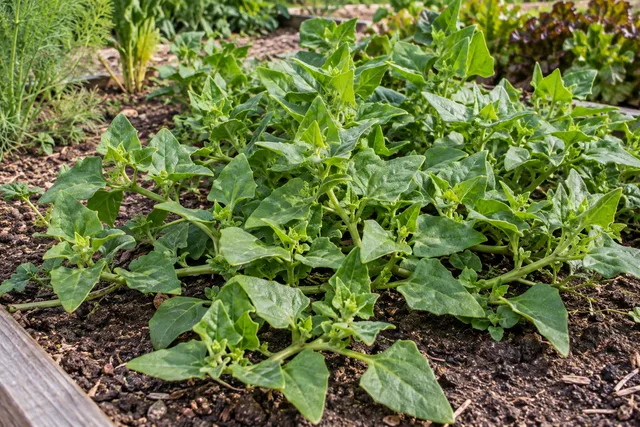
This image was created with AI from described plant characteristics and growing advice. It shows a possible situation and is not a photograph of a verified cultivar.
- Botanical name
- Tetragonia tetragonioides
- Lifespan
- Grown as an annual summer leafy vegetable
- Growth
- Broad, spreading stems
- Cold
- Frost-sensitive; only outdoors after the cold spring
This growing advice helps you choose. Your variety, growth stage, weather and conditions in your space determine the actual timing.
Sowing under cover and raising seedlings
Start under cover in warmth · New Zealand spinach
From AprilStart indoors in warmth and reserve enough bright space for raising plants.
- Germination and temperature
- Start in warmth according to the packet; germination can be slow.
- After emergence
- Give seedlings light immediately after emergence. A dark loft needs suitable grow lights; warmth alone is insufficient. Ventilate and keep the compost moist without saturating it.
- Pricking out and potting on
- Sow in individual pots or deep modules. Do not prick out bare-rooted; move the whole root ball before the roots become restricted.
- Hardening off and planting out
- Gradually acclimatise indoor-raised plants to sun, wind and outdoor temperatures; shelter them again on cold nights. After the cold spring, in warm soil with enough room for spreading growth.
This is a frost-sensitive summer leafy vegetable, not winter-hardy spinach.
Sources and use
De Bolster · Nieuw-Zeelandse spinazie ↗Nederlandse producent of teeltbron; de rasinstructie blijft leidend.
De Bolster · Nieuw-Zeelandse spinazie zaden en teelt ↗Nederlandse producent of teeltbron; de rasinstructie blijft leidend.
Guideline periods for the Netherlands and Flanders. Check the variety, available light, soil and measured temperatures. Greenhouse heating does not guarantee enough winter light.
A different flavour, a different harvest.
Choose by more than the name. Discover how these varieties and crop types taste, what you can use them for and what growing them involves.
1 of 1 choices · 0 named varieties
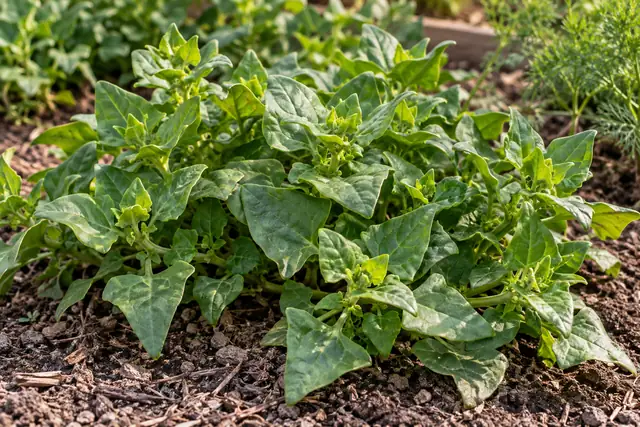
This image was created with AI from described plant characteristics and growing advice. It shows a possible situation and is not a photograph of a verified cultivar.
New Zealand spinach
This leafy vegetable fills the warm season, when ordinary spinach can be difficult. Botanically it is a different species from Spinacia oleracea.
Choose this species for summer leaves and repeated tip picking. Its spreading form needs more space than densely sown spinach.
Flavour, kitchen and growing
How does it taste?
The source gives no separate variety aroma. The name supports similar kitchen use, not botanical equivalence with ordinary spinach.
This flavour description applies to the crop; there is no separate tasting result for this variety.In the kitchen
Use leaves and tender tips in cooking. The spreading plant lets you gather a meal-sized picking.
A space in the garden
Start under cover in warm conditions and allow for slow, irregular germination. Plant outdoors only when frost is no immediate threat.
Harvesting
Pinch soft tips to encourage branching. Leave enough leaves for continued growth and avoid tough stem portions.
Read the source notes →Choose your way to grow
From a garden bed to a suitable pot or support: give your plant a place that suits your garden and the care you can provide.
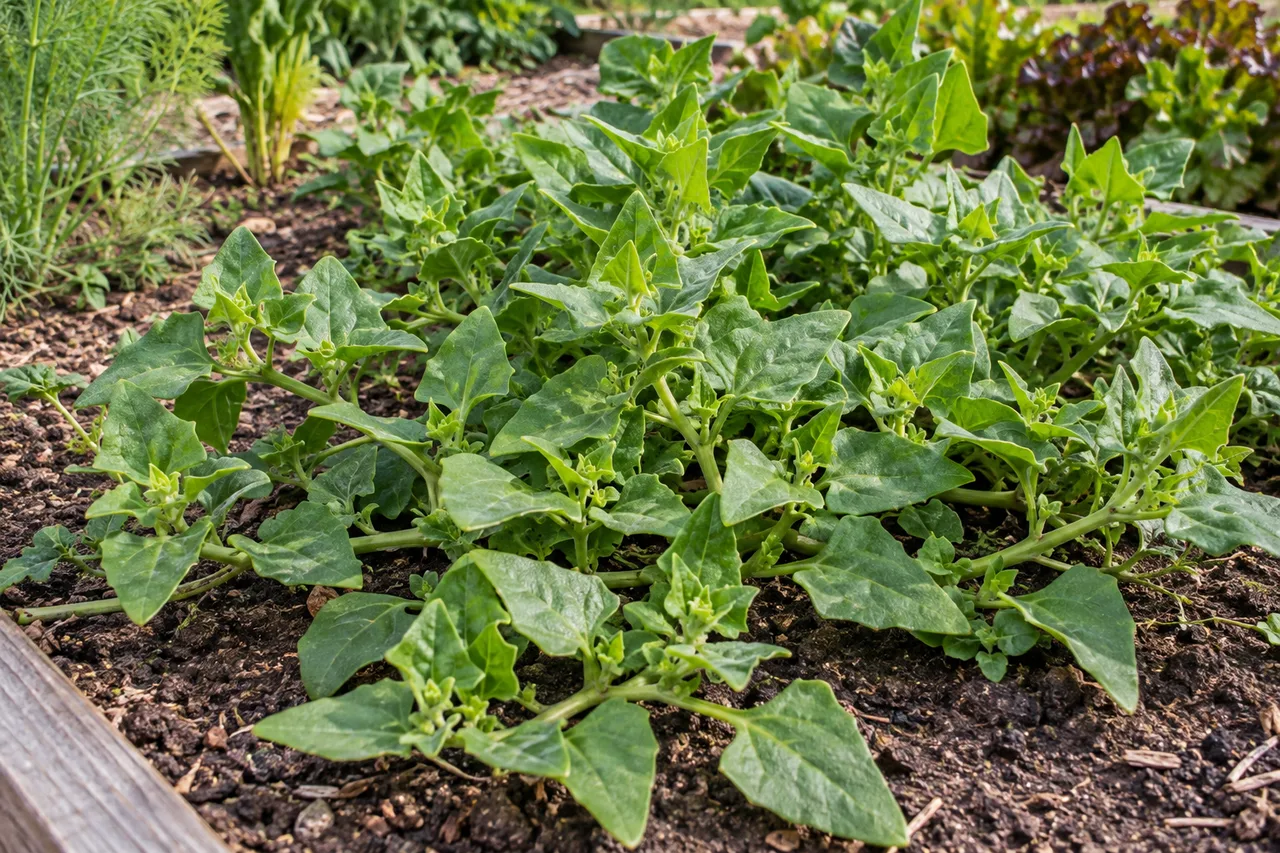
This image was created with AI from described plant characteristics and growing advice. It shows a possible situation and is not a photograph of a verified cultivar.
Spreading summer plants in a bed
Start in warmth; plant with space after frost risk; pinch soft tips for new branching.
- Start in warmth under cover.
- Plant with space once frost risk has passed.
- Pinch soft tips to encourage branching.
For a summer leaf crop with room for widely spreading stems.
Tick off your supplies →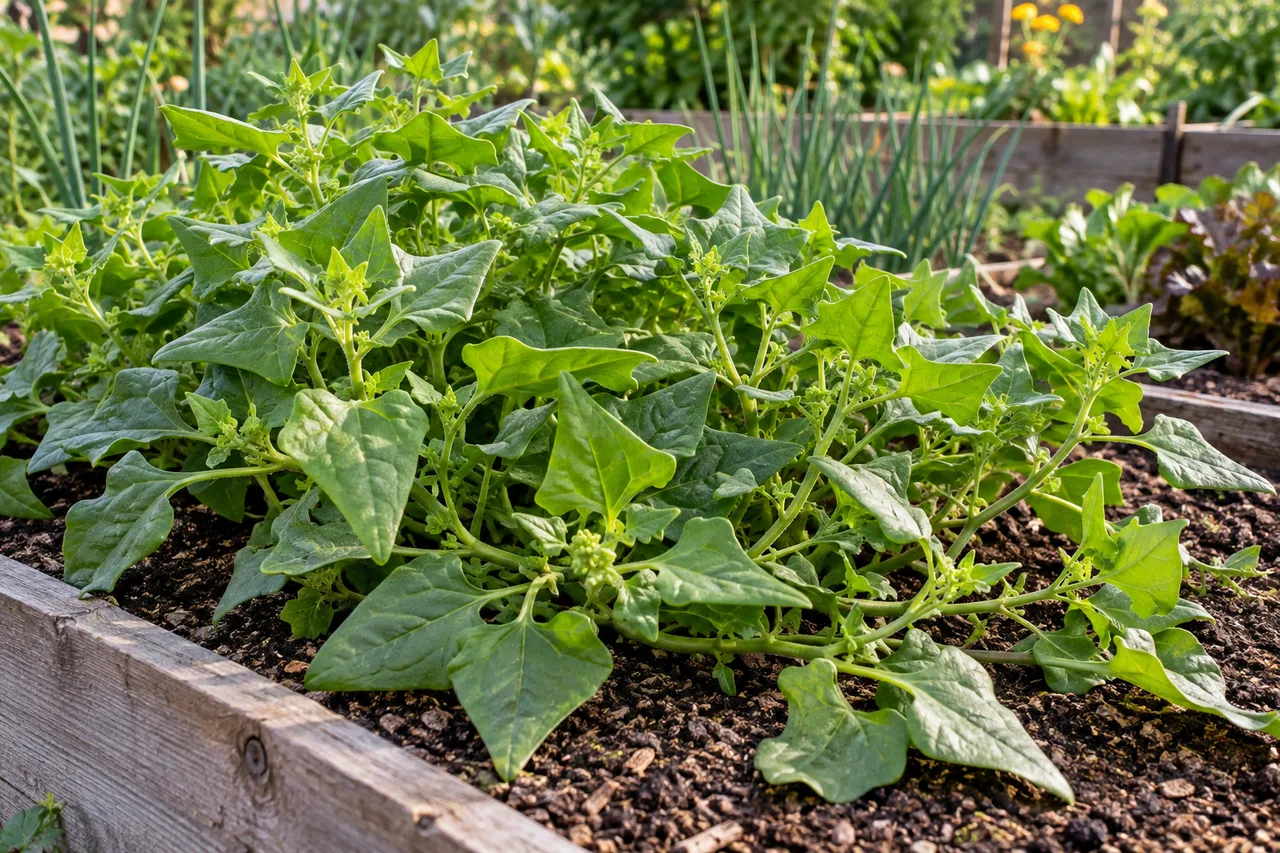
This image was created with AI from described plant characteristics and growing advice. It shows a possible situation and is not a photograph of a verified cultivar.
Summer leaves from a wide container
Choose a wide, free-draining container; give the spreading plant space; pick soft tips and keep moisture even.
- Choose a wide, free-draining container.
- Give the spreading plant space.
- Pick soft tips and keep moisture even.
For an accessible summer trial with shoots spreading around the rim.
Tick off your supplies →Choose by flavour, shape and use
New Zealand spinach: This leaf vegetable fills the warm season when ordinary spinach can struggle. Botanically different from Spinacia oleracea. Cook leaves and tender tips. The spreading plant lets you gather a meal-sized portion.
The source gives no separate variety aroma. The name supports similar kitchen use, not botanical equivalence with ordinary spinach.
A summer leafy vegetable with runners
New Zealand spinach is Tetragonia tetragonioides, not ordinary spinach. Broadly spreading stems carry fleshy triangular leaves. The name mainly describes leaf-vegetable use. Choose for summer leaves and visibly plan its spread from the beginning.
Warmth and room to spread
The species likes warmth and sun and is frost-sensitive. Broad beds or spacious containers allow runners. Do not confine it to a narrow gap because a seedling seems small. Consider neighbours and where stems may later spread.
A slow start can take time
De Bolster recommends warm starting from April and outdoor planting after cold spring weather. Germination can be slow. Label pots clearly and keep packets handy. Assess emergence before refilling everything. Calm, identifiable starts ease selecting good plants later.
A permanent root position, broad top growth
Spreading stems give most width. Containers need root space and drainage; beds need room around seedlings. The producer gives about fifty centimetres spacing. Use this to start, then observe how shoots actually cover available soil.
Assess tips and growth together
Picking young tips can encourage branching. Follow not just stem length but also where new leaves appear after harvest. In a container, root-zone moisture checks remain necessary even when long shoots cover the pot rim. Make an accessible watering point so you need not repeatedly work through the foliage.
Summer bed or wide container
A summer bed gives spreading stems a clear position; a broad container allows a smaller trial near home. In both, show growth across ground or edges. This illustrates the crop more honestly than a small upright seedling alone.
Young tips remain the starting point
Take young shoots and leaves in small portions and leave enough growth. For a first trial, place a young tip alongside older leaves to compare the fleshy texture. A harvest note of your own then records which stage you prefer. You need not promise a fixed yield to make growing it useful as a summer vegetable.
Firm leaves for cooking
The producer describes firm leaves for cooking. Briefly fry a first portion without many other vegetables obscuring taste. Spinach comparisons guide use but prove no variety difference. Record harvest stage and method to repeat the experience.
What you need
Tick what you already have. The extras depend on how you grow.
0 of 5 ticked off
Your ticks are saved in this browser.
Discover and grow more
More background, sources and image information
SeedSteps editorial team · updated on 11 October 2026. The AI images illustrate species and practical growing situations; they do not prove an exact cultivar, observations from your own garden or yield.
Britse gewasadviezen worden gecombineerd met Nederlandse en Vlaamse informatie waar beschikbaar. Amerikaanse Extension-bronnen ondersteunen plantprincipes en herkenning; hun kalenderdata, lokale plaagdruk, bestrijdingsmiddelen en mestdoseringen worden niet rechtstreeks op Nederland of Vlaanderen toegepast. Vorst, bodemwarmte, standplaats en expliciete rasinformatie blijven de lokale controle. Commerciële bronnen onderbouwen uitsluitend benoemde ras- en plantkenmerken; zij zijn geen affiliate-aanbeveling.
- Nieuwzeelandse spinazie zaden biologischFeggies · accessed 2026-10-11
- New Zealand spinachDe Bolster · accessed 2026-10-11
- Nieuw-Zeelandse spinazie zaden en teeltDe Bolster · accessed 2026-10-11
Supporting evidence by chapter: Choose by flavour, shape and use: Feggies. A summer leafy vegetable with runners: Feggies, De Bolster, De Bolster. Warmth and room to spread: Feggies, De Bolster, De Bolster. A slow start can take time: Feggies, De Bolster, De Bolster. A permanent root position, broad top growth: Feggies, De Bolster, De Bolster. Assess tips and growth together: Feggies, De Bolster, De Bolster. Summer bed or wide container: Feggies, De Bolster, De Bolster. Young tips remain the starting point: Feggies, De Bolster, De Bolster. Firm leaves for cooking: Feggies, De Bolster, De Bolster.