
Patience dock
Patience dock
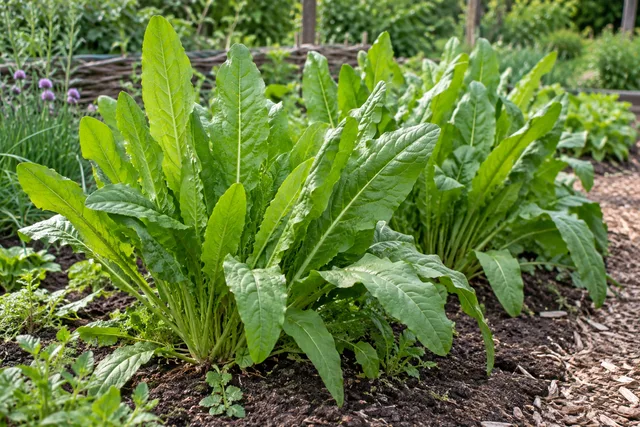
This image was created with AI from described plant characteristics and growing advice. It shows a possible situation and is not a photograph of a verified cultivar.
- Botanical name
- Rumex patientia
- Lifespan
- Perennial
- Other name
- Patience
- Botanical distinction
- Rumex patientia; not ordinary spinach or red-veined sorrel
This growing advice helps you choose. Your variety, growth stage, weather and conditions in your space determine the actual timing.
Sowing under cover and raising seedlings
Perennial growing: young plants, divisions or seed · Patience dock
Spring for suitable planting stock; follow species and supplierPlant suitable stock, crowns or divisions in workable soil. This is not a general sowing route.
- Germination and temperature
- Germination requirements differ by species. Follow the packet; germination of Good King Henry can be slow and irregular.
- After emergence
- Give emerged plants light, prevent drying out and allow a healthy root ball to develop.
- Pricking out and potting on
- Prick out seedlings only when manageable. Plant bought stock or divisions with roots intact.
- Hardening off and planting out
- Gradually acclimatise indoor-raised plants to sun, wind and outdoor temperatures; shelter them again on cold nights. Choose a suitable permanent position. Plant asparagus crowns and rhubarb divisions according to their own planting guidance.
Not all perennial plants yield a harvest in their first year. Choose healthy planting stock for a predictable start; seedlings can vary.
Sources and use
RHS · asperge ↗Britse teeltrichtlijn voor een gematigd klimaat; de genoemde perioden zijn richtlijnen voor Nederland en Vlaanderen.
De Bolster · Spinaziezuring Green Blade (Rumex patientia) ↗Nederlandse producent of teeltbron; de rasinstructie blijft leidend.
Feggies · Spinaziezuring / meerjarig zaden ↗Nederlandse producent of teeltbron; de rasinstructie blijft leidend.
Guideline periods for the Netherlands and Flanders. Check the variety, available light, soil and measured temperatures. Greenhouse heating does not guarantee enough winter light.
A different flavour, a different harvest.
Choose by more than the name. Discover how these varieties and crop types taste, what you can use them for and what growing them involves.
1 of 1 choices · 0 named varieties
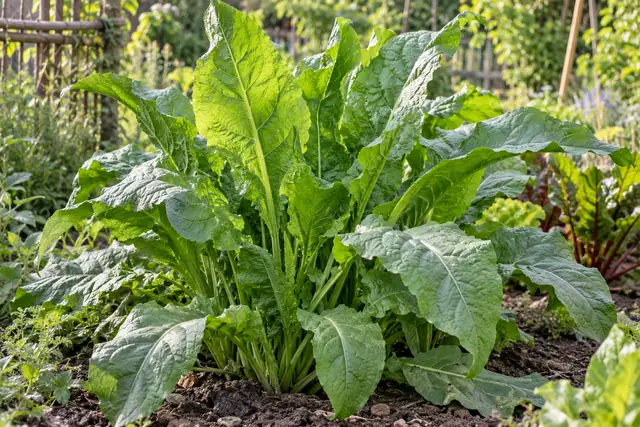
This image was created with AI from described plant characteristics and growing advice. It shows a possible situation and is not a photograph of a verified cultivar.
Perennial
Patience dock is a perennial Rumex, not ordinary spinach. Its large elongated leaves provide repeated leafy harvests in a permanent spot.
Choose spinach sorrel for perennial, relatively mild sorrel leaves. The botanical name avoids confusion with Spinacia and red-veined sorrel.
Flavour, kitchen and growing
How does it taste?
The source describes this type as much less acidic than other sorrel. The difference concerns the species, not a named cultivar.
This flavour description applies to the crop; there is no separate tasting result for this variety.In the kitchen
Cook the leaves as a leafy vegetable. The product source specifically describes this use rather than small raw acidic accents.
A space in the garden
Give the perennial root space and a well-drained position. Retain enough foliage to continue growing after picking.
Harvesting
Pick young, healthy leaves selectively and leave the growing heart intact. Heavy picking in the first year does not suit establishing a lasting plant.
Also listed as: Geduld, Spinaziezuring.
Read the source notes →Choose your way to grow
From a garden bed to a suitable pot or support: give your plant a place that suits your garden and the care you can provide.
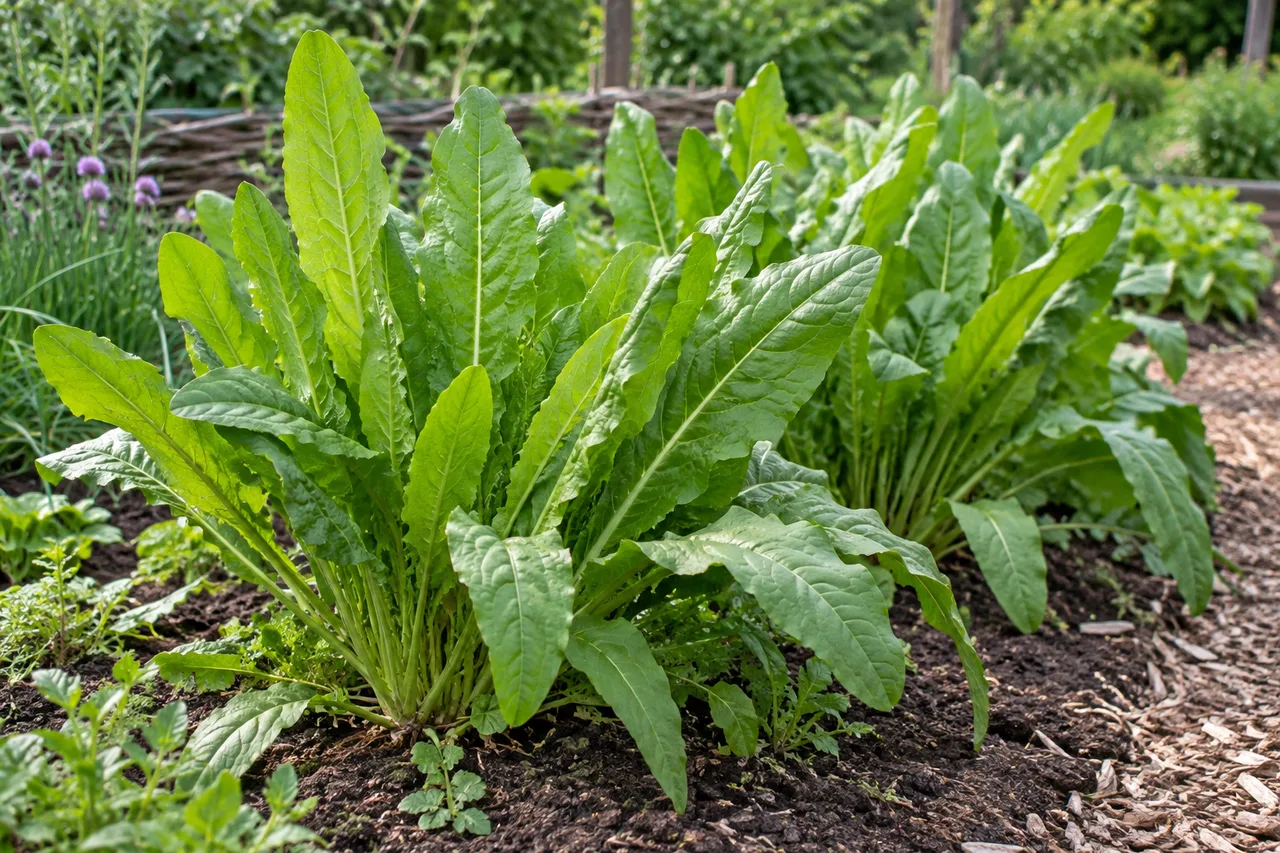
This image was created with AI from described plant characteristics and growing advice. It shows a possible situation and is not a photograph of a verified cultivar.
Perennial leaves in a permanent position
Sow or plant in a permanent, well-drained position; allow space for the large leaves; pick selectively and retain the young central leaves.
- Sow or plant in a permanent, well-drained position.
- Give large leaves space.
- Pick selectively and retain young central leaves.
For a permanent leafy plant that can keep its position over several seasons.
Tick off your supplies →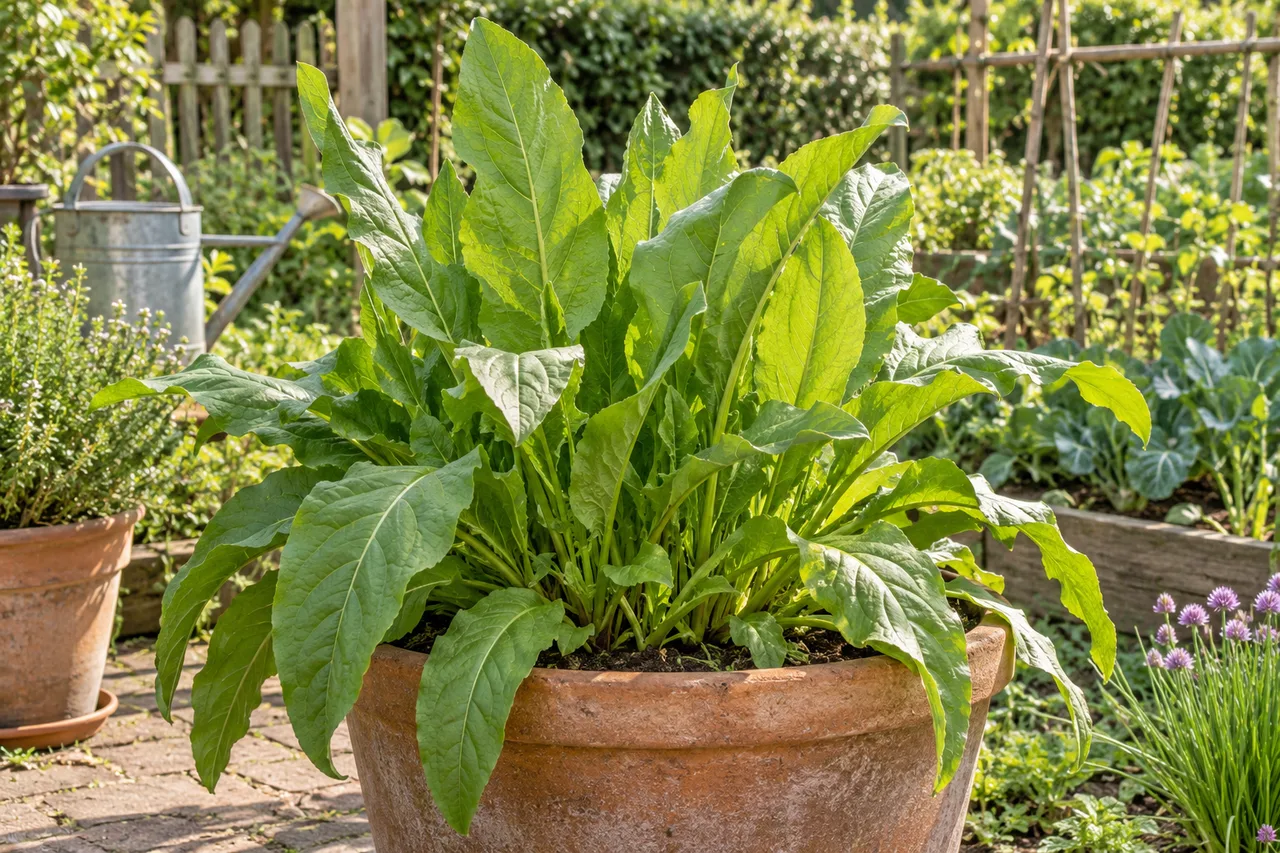
This image was created with AI from described plant characteristics and growing advice. It shows a possible situation and is not a photograph of a verified cultivar.
A perennial leafy plant in a container
Choose a large, deep, free-draining container; plant one Rumex patientia; harvest little and retain enough leaves for regrowth.
- Choose a large, deep, free-draining container.
- Plant one Rumex patientia.
- Harvest small amounts and retain enough foliage for regrowth.
For a small perennial trial with room for large green leaves.
Tick off your supplies →Choose by flavour, shape and use
Meerjarig: Spinach sorrel is a perennial Rumex, not ordinary spinach. Large, elongated leaves give recurring harvests in a fixed position. Cook as a leaf vegetable; the source describes this rather than small raw sour accents.
The source describes this type as much less acidic than other sorrel. The difference concerns the species, not a named cultivar.
A perennial Rumex species
Spinach sorrel is Rumex patientia, a perennial with substantial green leaves, also called patience dock. It differs from common and red-veined sorrel. Spinach describes leaf use, not Spinacia oleracea identity. Label correctly before setting its permanent place.
A permanent, accessible position
Sun or partial shade suits this crop. Reserve fixed space for larger leaves without closing routes. Spacious containers keep small trials manageable. Look ahead: young plants occupy little while mature foliage fills much more.
Separate product name from species
Follow the sowing time and starting instructions on the packet. De Bolster describes the species through its own selection, Green Blade; this does not confirm every general seed offering as the same cultivar. Record the offered name separately from Rumex patientia. This lets you use species information without later assigning an unproven cultivar identity to your plants.
Start the permanent position neatly
Remove persistent weeds and ensure rain or irrigation drains. Keep new plants accessible. Permanent containers need visible drainage and enough growth room. Do not crowd trials until a few large leaves hide soil and individual plants.
Monitor growth habit and accessibility
During care, inspect both new leaves and the space occupied by the plant. For perennial growing, occasionally take the same photo so change across a season becomes clear. A plant covering the whole container needs a different harvest routine from a small seedling. Use that observation to keep plant numbers appropriate.
Permanent leaf bed or planter
Permanent leaf beds suit multi-season sites; containers smaller accessible experiments. Both show the same large green leaf structure. Red-veined pictures show another sorrel species and misrepresent this article's spinach sorrel.
Young leaves in small portions
Take young leaves for a first trial and leave enough green growth on the plant. Compare the texture of a small and a larger leaf before picking a whole portion. Your preferred harvest stage is useful information for next time. This describes the kitchen experience more honestly than an unconfirmed story about special cultivar sweetness.
Sorrel as a distinct flavour direction
The producer gives salad and soup use and gently sour impressions for this type. This guides small tastings, not guaranteed flavour per plant. Spinach sorrel is not automatically neutral spinach replacement. Choose simple dishes allowing separate assessment of sorrel notes.
What you need
Tick what you already have. The extras depend on how you grow.
0 of 5 ticked off
Your ticks are saved in this browser.
Discover and grow more
More background, sources and image information
SeedSteps editorial team · updated on 11 October 2026. The AI images illustrate species and practical growing situations; they do not prove an exact cultivar, observations from your own garden or yield.
Britse gewasadviezen worden gecombineerd met Nederlandse en Vlaamse informatie waar beschikbaar. Amerikaanse Extension-bronnen ondersteunen plantprincipes en herkenning; hun kalenderdata, lokale plaagdruk, bestrijdingsmiddelen en mestdoseringen worden niet rechtstreeks op Nederland of Vlaanderen toegepast. Vorst, bodemwarmte, standplaats en expliciete rasinformatie blijven de lokale controle. Commerciële bronnen onderbouwen uitsluitend benoemde ras- en plantkenmerken; zij zijn geen affiliate-aanbeveling.
- Spinaziezuring / meerjarig zadenFeggies · accessed 2026-10-11
- Spinaziezuring Green Blade (Rumex patientia)De Bolster · accessed 2026-10-11
- Rumex patientia: plant detailsRoyal Horticultural Society · accessed 2026-10-11
Supporting evidence by chapter: Choose by flavour, shape and use: Feggies. A perennial Rumex species: Feggies, De Bolster, Royal Horticultural Society. A permanent, accessible position: Feggies, De Bolster, Royal Horticultural Society. Separate product name from species: Feggies, De Bolster, Royal Horticultural Society. Start the permanent position neatly: Feggies, De Bolster, Royal Horticultural Society. Monitor growth habit and accessibility: Feggies, De Bolster, Royal Horticultural Society. Permanent leaf bed or planter: Feggies, De Bolster, Royal Horticultural Society. Young leaves in small portions: Feggies, De Bolster, Royal Horticultural Society. Sorrel as a distinct flavour direction: Feggies, De Bolster, Royal Horticultural Society.