
Giant Atlantic: discover its flavour and how to grow it
A trailing selection for very large, orange, flattened squash: mainly a growing project for space and size. Choose Giant Atlantic to experiment with large fruits, not because size automatically means more flavour.
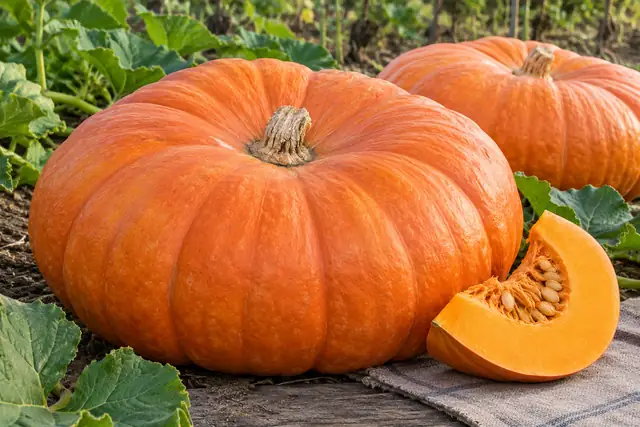
This image was created with AI from described plant characteristics and growing advice. It shows a possible situation and is not a photograph of a verified cultivar.
- Group
- Pumpkins include several Cucurbita species
- Location
- Warm, sunny and spacious enough for the variety
- Save
- Only suitable, ripe and undamaged fruits
This growing advice helps you choose. Your variety, growth stage, weather and conditions in your space determine the actual timing.
Sowing under cover and raising seedlings
Start under cover in warmth · Pumpkin
Mid–late AprilStart indoors in warmth and reserve enough bright space for raising plants.
- Germination and temperature
- Germinate in warmth: at least about 18 °C.
- After emergence
- Give seedlings light immediately after emergence. A dark loft needs suitable grow lights; warmth alone is insufficient. Ventilate and keep the compost moist without saturating it.
- Pricking out and potting on
- Sow in individual pots or deep modules. Do not prick out bare-rooted; move the whole root ball before the roots become restricted.
- Hardening off and planting out
- Gradually acclimatise indoor-raised plants to sun, wind and outdoor temperatures; shelter them again on cold nights. After the last frost in warm soil. Keep the root ball intact and give the cultivar enough space.
Plan around six weeks of bright propagation space. Winter types then still need enough time to grow and mature.
Sources and use
Royal Horticultural Society · Pompoenen kweken ↗Soort- of productgebonden bron; buitenlandse perioden zijn geen vaste Nederlandse zaaidatum.
Utah State University Extension · Pompoenen kweken ↗Soort- of productgebonden bron; buitenlandse perioden zijn geen vaste Nederlandse zaaidatum.
Guideline periods for the Netherlands and Flanders. Check the variety, available light, soil and measured temperatures. Greenhouse heating does not guarantee enough winter light.
What makes Giant Atlantic different?
- Fruit shape
- very large, flattened
- Main colour
- orange
- Flavour
- The source states thick flesh with moderate kitchen quality. For flavour, this differs from choosing Honeynut or Blue Ballet.
- Texture
- thick
The source context and any limitations are in the background information at the bottom.
Compare with another varietyFlavour and kitchen
The source states thick flesh with moderate kitchen quality. For flavour, this differs from choosing Honeynut or Blue Ballet.
Use healthy, usable flesh in soup and plan plenty of portions. Do not let record size become the sole reason to keep the harvest.
Why choose it? Choose Giant Atlantic to experiment with large fruits, not because size automatically means more flavour.
How to grow pumpkin
The options below belong to the plant. From these, choose the method that suits your variety's growth habit.
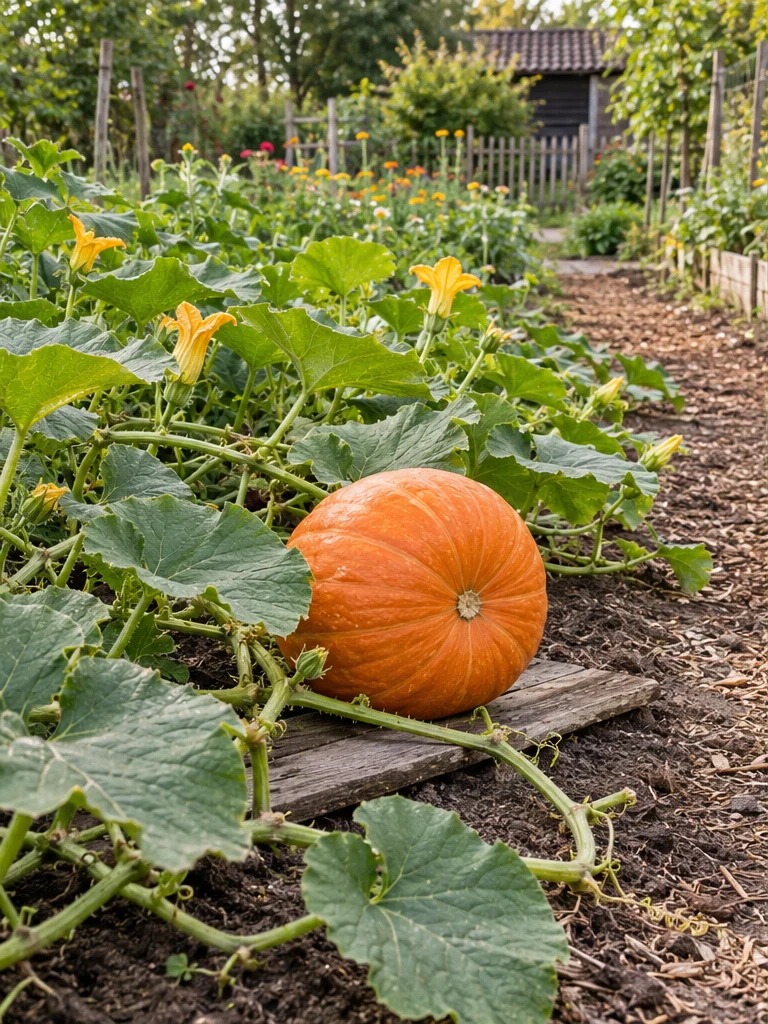
This image was created with AI from described plant characteristics and growing advice. It shows a possible situation and is not a photograph of a verified cultivar.
Vines along the ground
A trailing variety gets its own bed area and dry support beneath fruits.
- Choose an edible variety and draw expected growth on your planting plan.
- Plant an intact rootball in warmed soil only after frost.
- Guide vines within available space and rest ripening fruits on a dry tile or board.
For climbing types and those with heavy fruits; keep the harvest path accessible.
Tick off your supplies →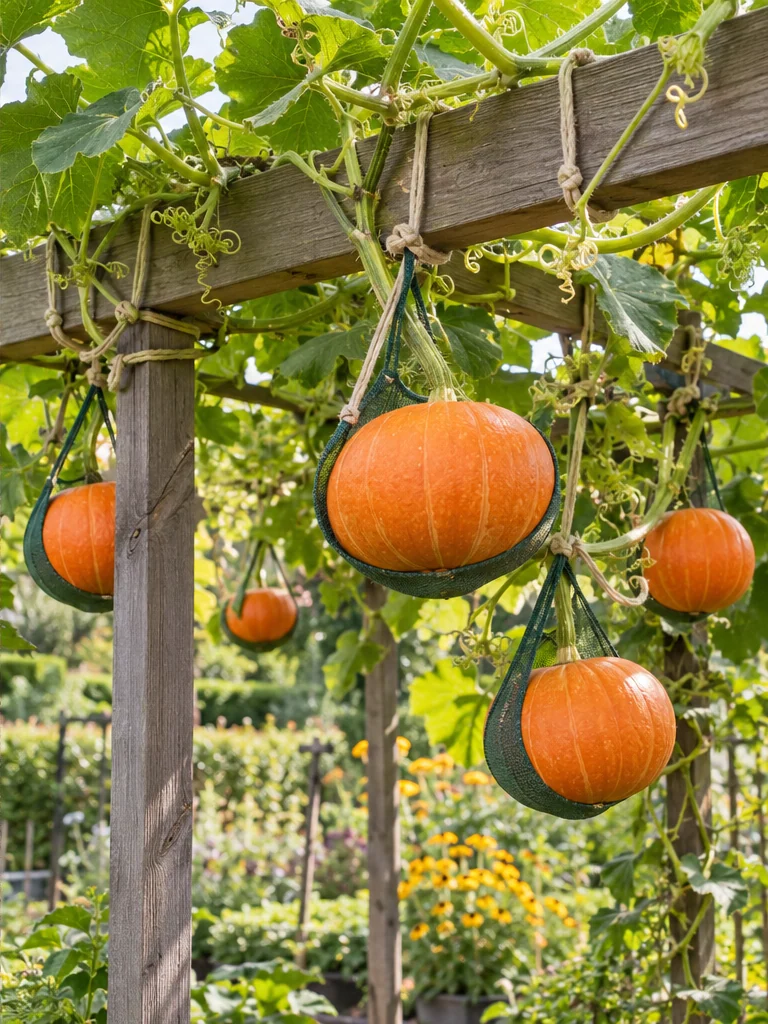
This image was created with AI from described plant characteristics and growing advice. It shows a possible situation and is not a photograph of a verified cultivar.
Small fruits along a sturdy frame
A suitable small-fruited trailing variety can grow upwards with separate fruit support.
- Anchor a large, strong structure before the plant grows.
- Guide vines carefully and use loose, soft ties where needed.
- Support fruits individually with wide nets and check the total weight.
Only for suitable small fruits; large squash grow better on the ground.
Tick off your supplies →Why grow Giant Atlantic?
A trailing selection for very large, orange, flattened squash: mainly a growing project for space and size.
Choose Giant Atlantic to experiment with large fruits, not because size automatically means more flavour.
How this choice tastes
The source states thick flesh with moderate kitchen quality. For flavour, this differs from choosing Honeynut or Blue Ballet.
From harvest to kitchen
Use healthy, usable flesh in soup and plan plenty of portions. Do not let record size become the sole reason to keep the harvest.
What needs attention when growing
Provide a very spacious, warm bed with plenty of feed and water. Large fruits do not suit a light frame or small balcony container.
Harvest before frost and arrange moving it in advance. Old record and average weights in offering texts are not a current guarantee for your garden.
Choose by flavour, shape and use
Albenga: Long, strongly curved Italian squashes can develop a trombone-like shape, with light green skin that later turns ochre. Cut the long neck into even pieces for the oven or a stew. The unusual shape gives different portions from a round pumpkin.
A separate flavour profile for the ripe fruit is not described. The light orange flesh offers the general pumpkin base for a cooked meal.
Sonca Orange: A Hungarian butternut selection with fruits of about 1.5–2 kg and firm orange flesh. Roast slices to bring out the nutty aroma, or use pieces in a creamy mash.
The source describes a pronounced hazelnut aroma. This aromatic profile gives the cultivar more identity than its butternut shape alone.
Dickinson Moschata: Large, round, lightly ribbed fruits with ochre skin and orange flesh: a pumpkin for many portions at once. Make a large pan of soup or bake the flesh for mash. When cutting it open, plan several uses for the large fruit straight away.
The described profile is mild. This makes the flesh suitable as a base for seasoning, rather than a distinctly nutty tasting selection.
Futsu Black: Small, flattened Japanese pumpkins with deep ribs change from dark green to ochre: a cultivar with a clear colour change during ripening. Roast rib-shaped wedges or use cooked flesh in mash. The deep grooves need a little more attention when peeling and cleaning.
Thick orange-yellow flesh with a hazelnut-like flavour is described. This is a focused choice for anyone wanting to compare nutty pumpkins.
Pumpkins are a group with different purposes
The name pumpkin covers several Cucurbita species and cultivar groups. A storage pumpkin, ornamental gourd and young summer squash are not equivalent kitchen choices. Buy clearly identified edible seed and check fruit size, growth habit and ripening. For a small household, a smaller fruit can be easier than one large harvest that needs processing immediately.
Make room for the mature plant
Vining types can grow several metres; compact bush types still need plenty of space for leaves. The RHS uses about 90 cm for bush forms and more for vining types as a general starting spacing. The cultivar may need different space. Do not place the plant solely where a small growing-on pot happens to fit now.
Sow in warmth and keep the rootball intact
Starting indoors in spring gives time to raise a healthy young plant. Sow individually and provide good light after germination. Direct outdoor sowing is possible when the soil is warm enough and the remaining growing season is suitable. The American calendar is not a fixed Dutch date. Consider soil warmth, the frost forecast and your cultivar choice together.
Let the weather have the final say
Harden off plants raised under cover gradually. Plant outdoors only after the risk of frost and cold nights, in many gardens from late May or June. Avoid disturbing the roots and water after planting. Temporary protection may help during a short cold spell, but it does not guarantee a long season for a warmth-loving plant put out too early.
Find the plant base beneath the large leaves
Mark the position of the rootball at planting. Later, vines and leaves cover a large area, but water must reach the roots. Check the soil and water directly where needed during dry weather. Improve the soil beforehand and apply feed according to need. Filling the space with extra fertiliser does not lengthen a limited growing season.
Take your time checking fruit set and leaves
Male flowers may appear before female flowers with an immature fruit behind them. This is not immediately a problem. Poor weather and few pollinators can limit fruit set. If small fruits drop, also consider drought or cold. Check leaves for fungal disease or feeding damage, provide ventilation and protect young plants from slugs at first.
For storage, the fruit must ripen on the plant
For winter types, assess colour, hard skin and a maturing stalk according to the cultivar. Let ripening take place on the plant, but avoid frost damage. Cut with a piece of stalk and support the fruit from underneath when carrying it. Cure suitable fruits in a dry, airy place. Damaged or unripe specimens are a different choice for storage.
Give each fruit a suitable use
Store sound, suitable pumpkins in airy, frost-free conditions and check for soft patches. Storage life varies with cultivar and treatment; do not promise yourself a fixed winter supply. Use damaged fruits first if they are otherwise sound. Do not use an edible pumpkin that tastes unusually bitter. Keep the cultivar label with the harvest to inform your next choice.
What you need
Tick what you already have. The extras depend on how you grow.
0 of 6 ticked off
Your ticks are saved in this browser.
Discover and grow more
More background, sources and image information
SeedSteps editorial team · updated on 11 October 2026. The AI images illustrate species and practical growing situations; they do not prove an exact cultivar, observations from your own garden or yield.
Britse gewasadviezen worden gecombineerd met Nederlandse en Vlaamse informatie waar beschikbaar. Amerikaanse Extension-bronnen ondersteunen plantprincipes en herkenning; hun kalenderdata, lokale plaagdruk, bestrijdingsmiddelen en mestdoseringen worden niet rechtstreeks op Nederland of Vlaanderen toegepast. Vorst, bodemwarmte, standplaats en expliciete rasinformatie blijven de lokale controle. Commerciële bronnen onderbouwen uitsluitend benoemde ras- en plantkenmerken; zij zijn geen affiliate-aanbeveling.
- World Checklist of Vascular Plants — 4 juni 2026Royal Botanic Gardens, Kew · accessed 2026-10-07
- Pompoen Giant Atlantic — rasbeschrijvingFeggies · accessed 2026-10-11
- Uchiki Kuri — botanische soort en teeltvormDe Bolster · accessed 2026-10-11
- Pompoen Albenga — rasbeschrijvingFeggies · accessed 2026-10-11
- Pompoen Baby Boo — rasbeschrijvingFeggies · accessed 2026-10-11
- Pompoen Blue Ballet — rasbeschrijvingFeggies · accessed 2026-10-11
- Pompoen Butternut zonder nadere rasnaam — rasbeschrijvingFeggies · accessed 2026-10-11
- Pompoen Dickinson Moschata — rasbeschrijvingFeggies · accessed 2026-10-11
- Pompoen Futsu Black — rasbeschrijvingFeggies · accessed 2026-10-11
- Pompoen Galleux d’Eysines — rasbeschrijvingFeggies · accessed 2026-10-11
- Pompoen Giraumon Turban Turc — rasbeschrijvingFeggies · accessed 2026-10-11
- Pompoen Hiver de Provance — rasbeschrijvingFeggies · accessed 2026-10-11
- Pompoen Honeynut — rasbeschrijvingFeggies · accessed 2026-10-11
- Pompoen Hubbard blauw — rasbeschrijvingFeggies · accessed 2026-10-11
- Pompoen Jack O’Lanterne — rasbeschrijvingFeggies · accessed 2026-10-11
- Pompoen Marina di Chiogga — rasbeschrijvingFeggies · accessed 2026-10-11
- Pompoen Musquée de Provence — rasbeschrijvingFeggies · accessed 2026-10-11
- Pompoen Pink Jumbo Banana — rasbeschrijvingFeggies · accessed 2026-10-11
- Pompoen Red Kuri — rasbeschrijvingFeggies · accessed 2026-10-11
- Pompoen Rouge vif d’Étampes — rasbeschrijvingFeggies · accessed 2026-10-11
- Pompoen Sonca Orange — rasbeschrijvingFeggies · accessed 2026-10-11
- Pompoen spaghettipompoen — rasbeschrijvingFeggies · accessed 2026-10-11
- Pompoen Uchiki Kuri — rasbeschrijvingFeggies · accessed 2026-10-11
- Pompoen Waltham Butternut — rasbeschrijvingFeggies · accessed 2026-10-11
- Tromba d’Albenga — botanische soort en synoniemenKokopelli · accessed 2026-10-11
- Catalogus 2025 — botanische indeling van rassenKokopelli · accessed 2026-10-11
- Butternut Sonca Orange — botanische soortKokopelli · accessed 2026-10-11
- Rouge d’Etampes — botanische indelingProSpecieRara · accessed 2026-10-11
- Vorsicht beim Verzehr von bitteren ZucchiniBundesinstitut für Risikobewertung · accessed 2026-10-10
- Pompoenen kwekenRoyal Horticultural Society · accessed 2026-10-10
- Pompoenen in de moestuinUniversity of Maryland Extension · accessed 2026-10-10
- Meloen en pompoen: rijping, oogst en bewaringUniversity of Minnesota Extension · accessed 2026-10-10
- Pompoenen kwekenUtah State University Extension · accessed 2026-10-10
Supporting evidence by chapter: Why grow Giant Atlantic?: Feggies. How this choice tastes: Feggies. From harvest to kitchen: Feggies. What needs attention when growing: Feggies. Choose by flavour, shape and use: Feggies, Kokopelli, Feggies, Kokopelli, Feggies, Kokopelli, Feggies. Pumpkins are a group with different purposes: Royal Horticultural Society, University of Minnesota Extension. Make room for the mature plant: Royal Horticultural Society. Sow in warmth and keep the rootball intact: Utah State University Extension, University of Maryland Extension. Let the weather have the final say: Royal Horticultural Society, University of Maryland Extension. Find the plant base beneath the large leaves: Royal Horticultural Society, Utah State University Extension. Take your time checking fruit set and leaves: University of Maryland Extension, Royal Horticultural Society. For storage, the fruit must ripen on the plant: University of Minnesota Extension, Royal Horticultural Society. Give each fruit a suitable use: University of Minnesota Extension, Bundesinstitut für Risikobewertung.
Fruit shape: very large, flattened Beschrijving van de genoemde rasbron; geen eigen tuinwaarneming. Feggies
Main colour: orange Beschrijving van de genoemde rasbron; geen eigen tuinwaarneming. Feggies
Flavour: The source states thick flesh with moderate kitchen quality. For flavour, this differs from choosing Honeynut or Blue Ballet. Smaakbeschrijving van de rasbron, vertaald naar eigen woorden. Rijpheid, teelt en bereiding beïnvloeden de smaak. Feggies
Texture: thick Beschrijving van de genoemde rasbron; geen eigen tuinwaarneming. Feggies