
Growing Cucurbita maxima: choose a trailing or compact type
Hokkaido-type culinary squash and giant pumpkins can both belong to Cucurbita maxima, but need very different plans. Choose deliberately by fruit size and growth habit. A trailing type needs ground space; a demonstrably compact type can make a smaller garden project without needing a large climbing frame.
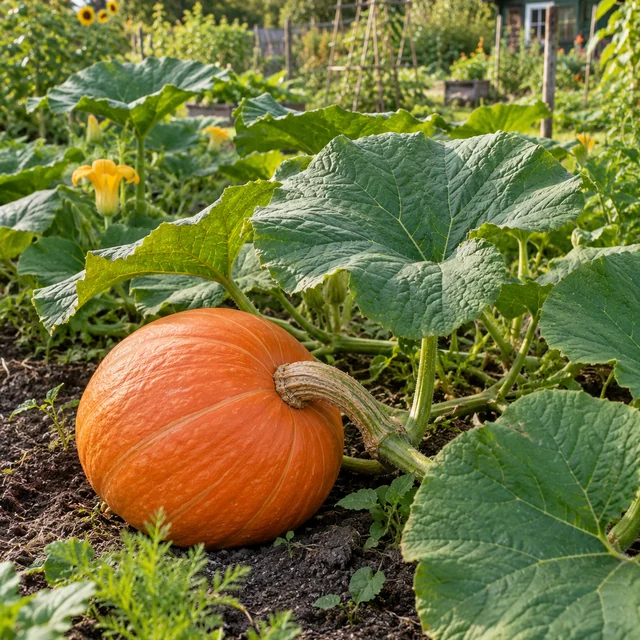
This image was created with AI from described plant characteristics and growing advice. It shows a possible situation and is not a photograph of a verified cultivar.
- Choice
- Species name alone does not predict fruit size or vine length
- Winter types
- Allow to ripen on the plant before storage
- Support
- Large heavy fruits on the ground
This growing advice helps you choose. Your variety, growth stage, weather and conditions in your space determine the actual timing.
Sowing under cover and raising seedlings
Start under cover in warmth · Squash (Cucurbita maxima)
Mid–late AprilStart indoors in warmth and reserve enough bright space for raising plants.
- Germination and temperature
- Germinate in warmth: at least about 18 °C.
- After emergence
- Give seedlings light immediately after emergence. A dark loft needs suitable grow lights; warmth alone is insufficient. Ventilate and keep the compost moist without saturating it.
- Pricking out and potting on
- Sow in individual pots or deep modules. Do not prick out bare-rooted; move the whole root ball before the roots become restricted.
- Hardening off and planting out
- Gradually acclimatise indoor-raised plants to sun, wind and outdoor temperatures; shelter them again on cold nights. After the last frost in warm soil. Keep the root ball intact and give the cultivar enough space.
Plan around six weeks of bright propagation space. Winter types then still need enough time to grow and mature.
Sources and use
RHS · pompoen ↗Britse teeltrichtlijn voor een gematigd klimaat; de genoemde perioden zijn richtlijnen voor Nederland en Vlaanderen.
De Bolster · Uchiki Kuri: een rankend Cucurbita maxima-type ↗Nederlandse producent of teeltbron; de rasinstructie blijft leidend.
De Bolster · Meteor F1: een compact Cucurbita maxima-type ↗Nederlandse producent of teeltbron; de rasinstructie blijft leidend.
Guideline periods for the Netherlands and Flanders. Check the variety, available light, soil and measured temperatures. Greenhouse heating does not guarantee enough winter light.
A different flavour, a different harvest.
Choose by more than the name. Discover how these varieties and crop types taste, what you can use them for and what growing them involves.
10 of 10 choices · 10 named varieties
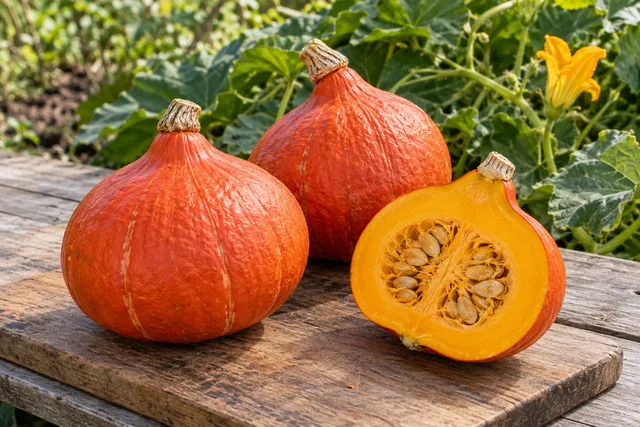
This image was created with AI from described plant characteristics and growing advice. It shows a possible situation and is not a photograph of a verified cultivar.
Uchiki Kuri
A trailing, orange-red Hokkaido squash with fruits more manageable than large French storage squash.
Choose Uchiki Kuri for a familiar orange-red culinary squash and a more manageable fruit size.
Flavour, kitchen and growing
How does it taste?
The supplier mentions sweet fruit. A fixed flavour ranking against Red Kuri is not given; seed selections can differ in practice.
In the kitchen
Make soup or roast wedges. Use the young, tender skin too if you wish, after assessing the texture of your own ripe fruit.
A space in the garden
Give the trailing plant a sunny, spacious bed and fertile soil. Only sow outdoors when the soil is warm and frost has passed.
Harvesting
Let fruits ripen and harvest before frost. Store undamaged fruits in a cool, dry place; use damaged fruits first.
Read the source notes →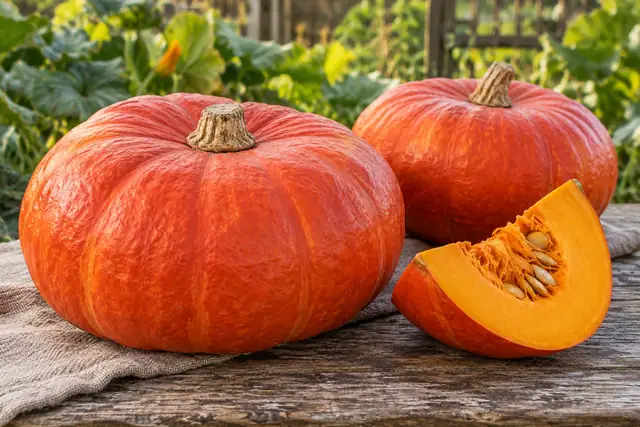
This image was created with AI from described plant characteristics and growing advice. It shows a possible situation and is not a photograph of a verified cultivar.
Rouge vif d’Étampes
A broad, flat, orange-red French squash with a fairy-tale autumn appearance and plenty of culinary flesh.
Choose this variety for a large, flat autumn squash. Mini or small kuri types are more practical for one meal's small portions.
Flavour, kitchen and growing
How does it taste?
The source describes a soft texture with a sweet, nutty flavour. A large decorative fruit therefore need not end up solely as an ornament.
In the kitchen
Use large wedges for soup, mash or gratin. Divide a cut fruit into portions straight away so that the whole harvest remains usable.
A space in the garden
Provide plenty of sun and room for the vines. Rest heavy fruits on a dry surface and protect young plants from slugs and snails.
Harvesting
Harvest when the stalk begins to turn corky and the fruit is fully ripe, before frost. Lift a heavy fruit with support underneath, rather than by the stalk.
Read the source notes →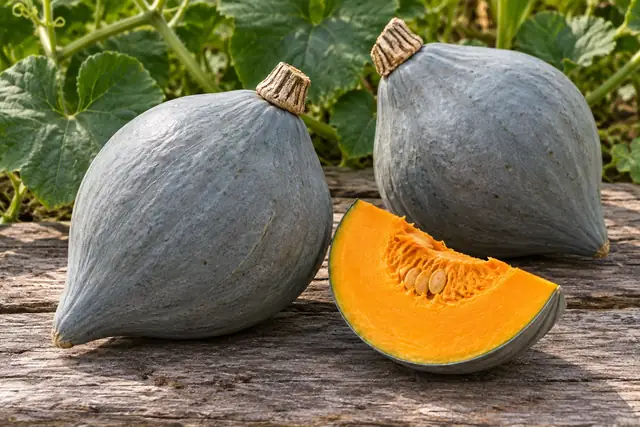
This image was created with AI from described plant characteristics and growing advice. It shows a possible situation and is not a photograph of a verified cultivar.
Blue Ballet
Grey-green fruits with firm, orange-yellow flesh: a restrained exterior with a distinctive culinary profile.
Choose Blue Ballet for chestnut-like aroma and firm flesh alongside orange kuri squash.
Flavour, kitchen and growing
How does it taste?
A clear chestnut flavour is described. This makes Blue Ballet an attractive comparison with hazelnut-like Futsu Black.
In the kitchen
Roast wedges or make a firm mash in which the chestnut note remains recognisable. Start with simple seasoning to get to know the variety.
A space in the garden
The plant trails and needs warm, fertile soil. Allow room for growth and do not let the fruit rest in a wet layer of leaves.
Harvesting
Harvest fully mature before frost and store only undamaged fruits. Grey-green is normal; do not wait for uniformly orange skin.
Read the source notes →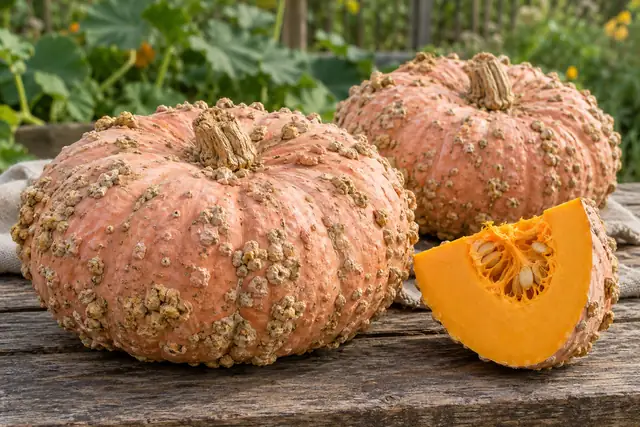
This image was created with AI from described plant characteristics and growing advice. It shows a possible situation and is not a photograph of a verified cultivar.
Galleux d’Eysines
Salmon-coloured, flattened fruits develop corky protrusions: a striking skin characteristic of this variety.
Choose Galleux d’Eysines for sweet flesh and a highly recognisable autumn appearance. The normal corky patches are no reason to avoid the variety.
Flavour, kitchen and growing
How does it taste?
Thick orange-yellow flesh is described as fine, firm, tender and sweet. The corky exterior is separate from that kitchen quality.
In the kitchen
Cut the fruit into wedges and remove the skin where needed. Use cooked flesh for purée or soup.
A space in the garden
The plant trails strongly. Give plenty of space, a warm bed and a dry place beneath ripening fruits.
Harvesting
The skin remains relatively soft according to the source. Harvest carefully before frost and distinguish normal corky protrusions from wet, soft rot patches.
Read the source notes →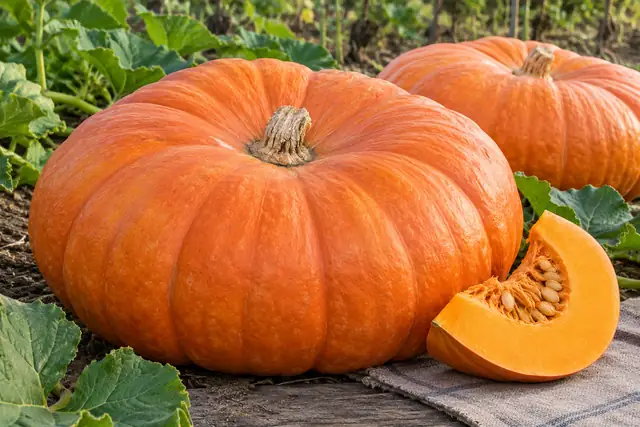
This image was created with AI from described plant characteristics and growing advice. It shows a possible situation and is not a photograph of a verified cultivar.
Giant Atlantic
A trailing selection for very large, orange, flattened squash: mainly a growing project for space and size.
Choose Giant Atlantic to experiment with large fruits, not because size automatically means more flavour.
Flavour, kitchen and growing
How does it taste?
The source states thick flesh with moderate kitchen quality. For flavour, this differs from choosing Honeynut or Blue Ballet.
In the kitchen
Use healthy, usable flesh in soup and plan plenty of portions. Do not let record size become the sole reason to keep the harvest.
A space in the garden
Provide a very spacious, warm bed with plenty of feed and water. Large fruits do not suit a light frame or small balcony container.
Harvesting
Harvest before frost and arrange moving it in advance. Old record and average weights in offering texts are not a current guarantee for your garden.
Read the source notes →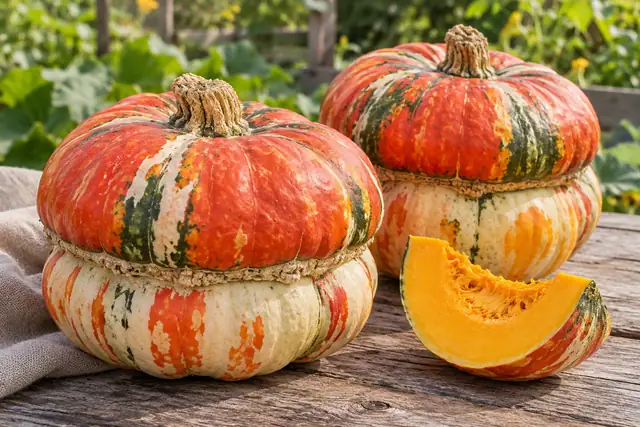
This image was created with AI from described plant characteristics and growing advice. It shows a possible situation and is not a photograph of a verified cultivar.
Giraumon Turban Turc
A coloured turban shape in red, yellow, green and white: each fruit is a striking autumn object with edible flesh too.
Choose this variety when unusual fruit shape matters and you enjoy using a decorative harvest in the kitchen too.
Flavour, kitchen and growing
How does it taste?
The light orange flesh is described as very firm. A separate aroma is not given; shape and texture are the established points of reference.
This flavour description applies to the crop; there is no separate tasting result for this variety.In the kitchen
Cut the fruit open carefully and use the fleshy part in a cooked dish. Most of the thick flesh is on the turban side.
A space in the garden
Provide a spacious, warm bed and enough nutrients. Allow the distinctive shape to develop freely without becoming trapped between slats or stones.
Harvesting
Harvest fully mature fruits before frost. Combine ornamental use and eating by processing an undamaged fruit promptly, before damage or rot develops.
Read the source notes →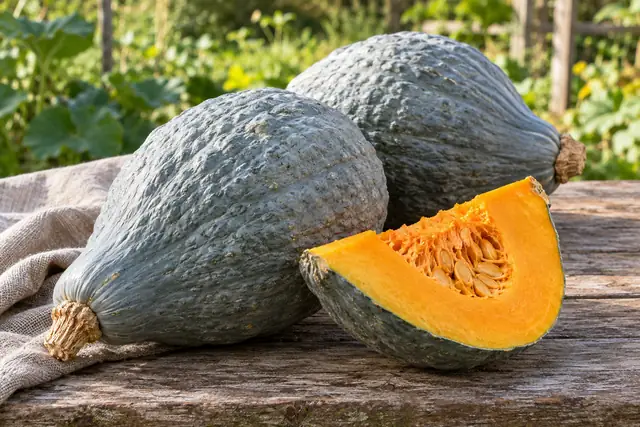
This image was created with AI from described plant characteristics and growing advice. It shows a possible situation and is not a photograph of a verified cultivar.
Hubbard blauw
Blue-grey, elongated, spindle-shaped fruits with rough, thick skin and excellent culinary flesh inside.
Choose Hubbard blauw for blue skin and plenty of flesh per fruit. The large size is less convenient for small individual portions.
Flavour, kitchen and growing
How does it taste?
Soft orange-yellow flesh is described. The thick, dry skin contrasts clearly with the soft interior.
In the kitchen
Carefully cut into larger pieces and cook the flesh for purée or soup. A sturdy chopping board and safe knife technique are practical.
A space in the garden
Give a warm, spacious bed and support ripening fruits on a dry surface. The selection mentions fruits weighing several kilos.
Harvesting
Harvest ripe fruit before frost with its stalk intact. Check the thick skin for damage; treat a cut fruit as food to be used, not as a whole storage pumpkin.
Read the source notes →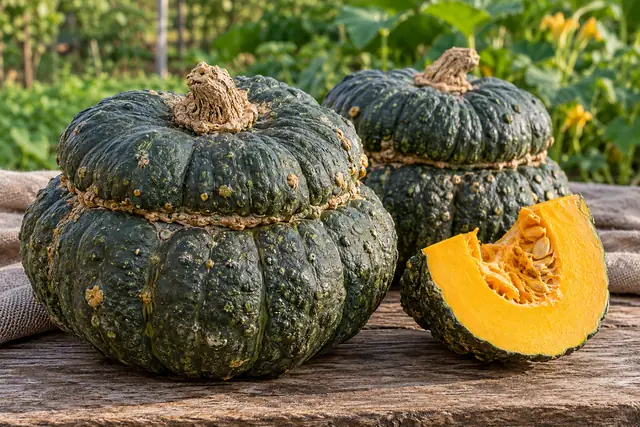
This image was created with AI from described plant characteristics and growing advice. It shows a possible situation and is not a photograph of a verified cultivar.
Marina di Chiogga
Dark green-blue, ribbed squash with warty skin and a turban-like top: an unusual Italian autumn shape.
Choose Marina di Chiogga for a heavy, decorative shape and storage harvest, with room for fruits weighing several kilos.
Flavour, kitchen and growing
How does it taste?
The source mentions tasty flesh without a precise aroma comparison. Shape and described storage suitability give the variety its own place.
This flavour description applies to the crop; there is no separate tasting result for this variety.In the kitchen
Roast pieces or use cooked flesh in purée. The warty skin needs care during cleaning and cutting.
A space in the garden
Provide a spacious, warm bed and let the fruit ripen on a dry, clean surface. Avoid damaging the rough skin when moving it.
Harvesting
Harvest ripe fruit before frost with its stalk intact. Good storage suitability applies to undamaged, ripe fruit; check this variety regularly in storage too.
Read the source notes →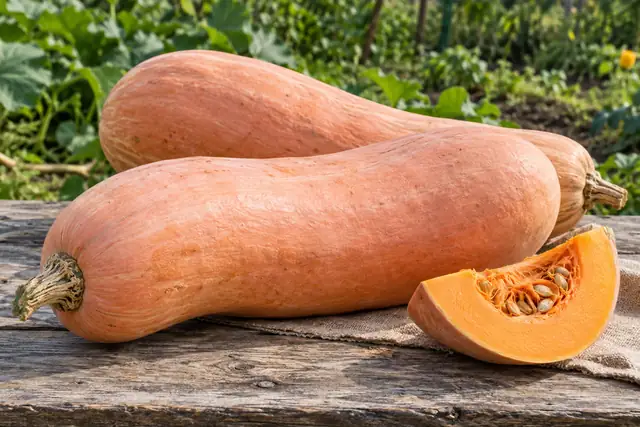
This image was created with AI from described plant characteristics and growing advice. It shows a possible situation and is not a photograph of a verified cultivar.
Pink Jumbo Banana
Large, salmon-coloured, cylindrical fruits have a long, banana-like shape: a squash capable of filling a large bed.
Choose Pink Jumbo Banana for long, salmon-coloured fruits and many portions rather than small culinary fruits.
Flavour, kitchen and growing
How does it taste?
The source praises flavour without naming a specific aroma. Banana refers to shape, not an established banana profile.
This flavour description applies to the crop; there is no separate tasting result for this variety.In the kitchen
Slice some for roasting and portion the rest for other meals. The large shape needs a plan once cut.
A space in the garden
Provide plenty of space, warmth and nutrients. The exceptional weights in the source are possibilities under good conditions, not a target for every garden.
Harvesting
Harvest ripe before frost and move large fruits with support beneath their whole weight. Never lift a heavy squash by its stalk.
Read the source notes →Discover all 10 choices
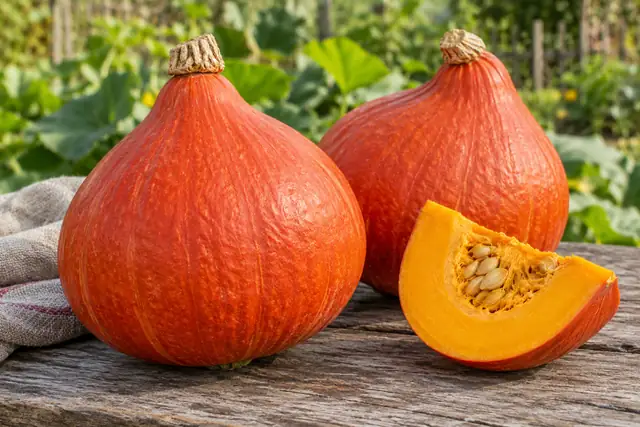
This image was created with AI from described plant characteristics and growing advice. It shows a possible situation and is not a photograph of a verified cultivar.
Red Kuri
Orange-red, medium-sized, fig- or top-shaped squash with fine, delicate skin: a recognisable small kuri selection.
Choose Red Kuri for the described chestnut profile and more manageable fruit. Different kuri names are not automatically the same seed line without selection data.
Flavour, kitchen and growing
How does it taste?
Sweet, dark yellow flesh with a chestnut-like flavour is described. This makes the offering a targeted choice for a nutty autumn dish.
In the kitchen
Roast wedges or make purée with few extra flavourings to discover the chestnut note first.
A space in the garden
Provide warmth and vine space. Keep young fruits clean and protect fine skin from damage during ripening.
Harvesting
Harvest ripe fruit before frost and store undamaged fruit in dry conditions. Handle the delicate skin carefully, even if storage suitability is good.
Read the source notes →Choose your way to grow
From a garden bed to a suitable pot or support: give your plant a place that suits your garden and the care you can provide.
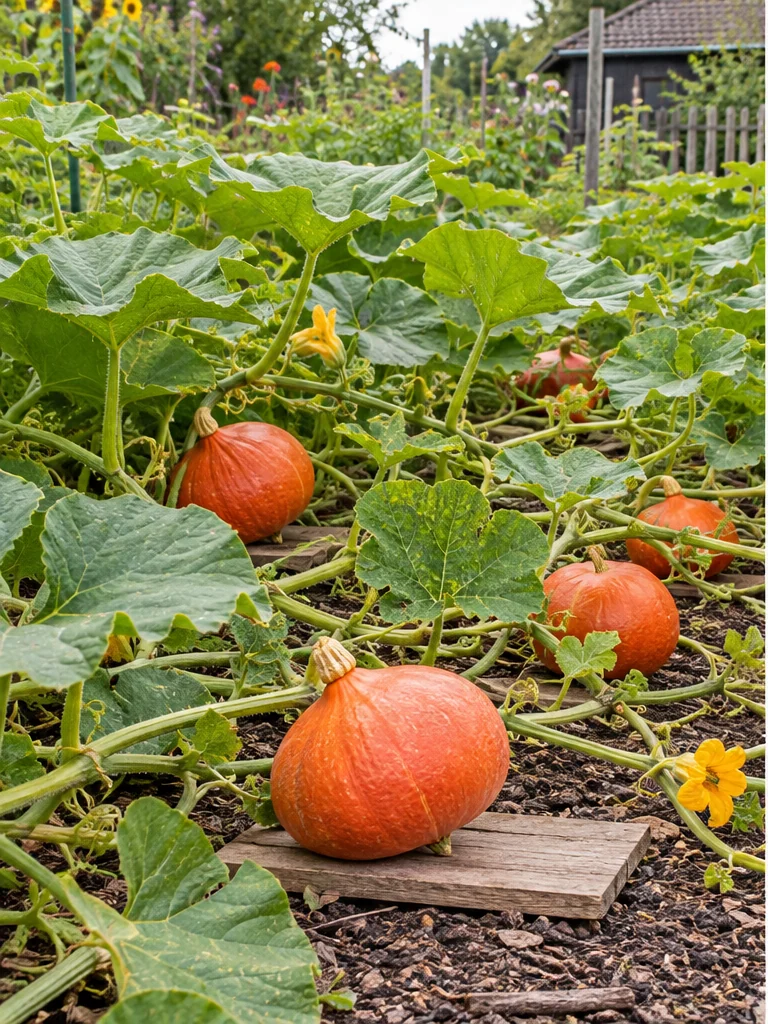
This image was created with AI from described plant characteristics and growing advice. It shows a possible situation and is not a photograph of a verified cultivar.
A trailing culinary type across the bed
A trailing variety such as Uchiki Kuri gets room to cover the surface.
- Choose an identifiable trailing edible type and check its specified space.
- Plant in a sunny, prepared bed after cold nights.
- Guide vines according to the planting plan and keep fruits on a dry surface.
For trailing culinary types; the variety name belongs in the space plan.
Tick off your supplies →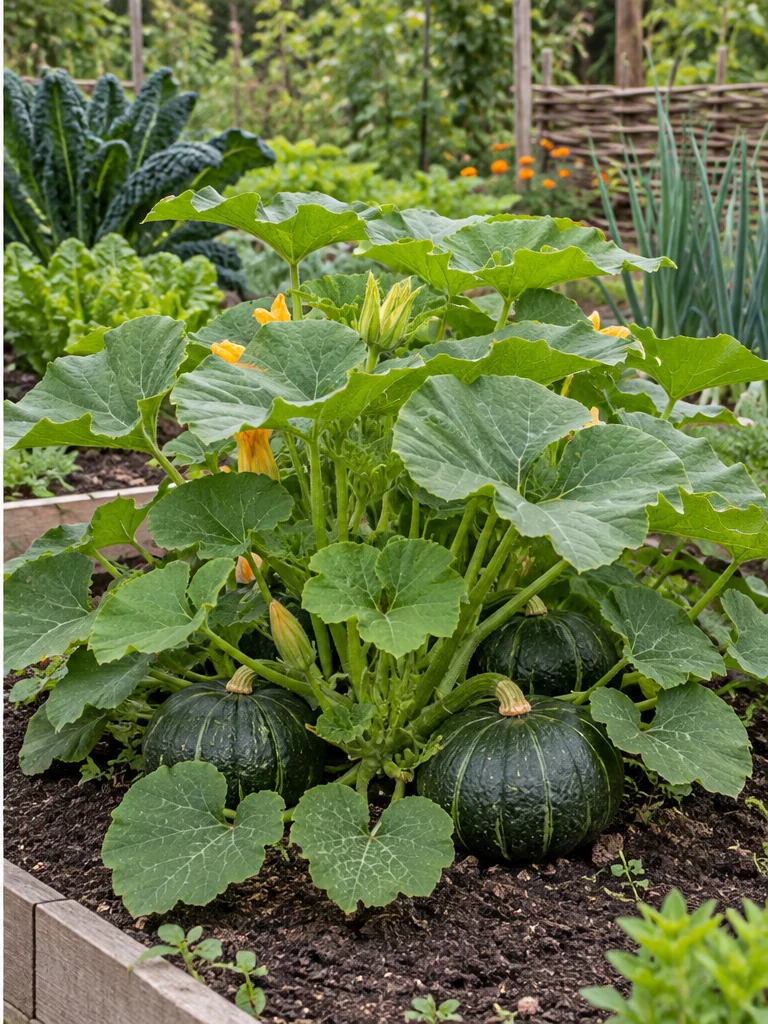
This image was created with AI from described plant characteristics and growing advice. It shows a possible situation and is not a photograph of a verified cultivar.
A compact type in a smaller garden
A proven bush type such as Meteor F1 needs a different plan from a metres-long trailer.
- Choose a variety explicitly described as bush or compact.
- Maintain variety spacing and room to examine leaves and fruits.
- Check moisture and harvest winter fruits ripe with an intact stalk.
For a small bed with a suitable compact variety, not automatically for every maxima squash.
Tick off your supplies →Explore the varieties
See the confirmed differences. Characteristics without supporting evidence are left blank.
2 of 2 varieties
This image was created with AI from described plant characteristics and growing advice. It shows a possible situation and is not a photograph of a verified cultivar.
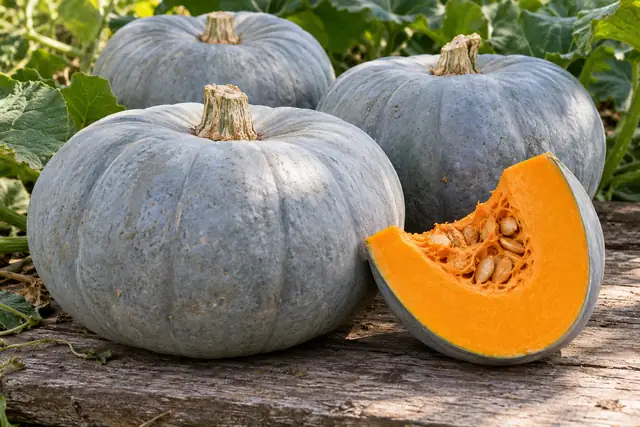
Crown Prince
Explore this variety and use the growing guide to choose a place for your plant.
View variety →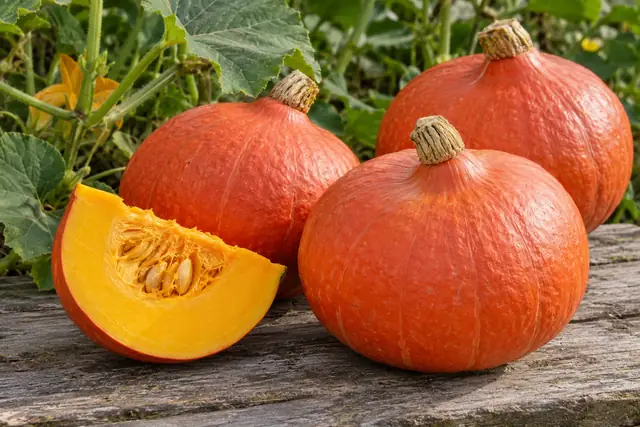
This image was created with AI from described plant characteristics and growing advice. It shows a possible situation and is not a photograph of a verified cultivar.
Sunshine
Explore this variety and use the growing guide to choose a place for your plant.
View variety →Choose two to four varieties to compare their source data side by side.
Maxima does not mean every fruit grows enormous
Cucurbita maxima includes diverse varieties, from practical kitchen sizes to giants, with differing habits. De Bolster calls Uchiki Kuri trailing and Meteor F1 compact bush, for example. Do not apply one variety's traits to the whole species.
Make fruit size a choice for the kitchen
Decide how much squash you want to use per meal or batch. A small type may fit more easily into your week; a giant-growing project needs lots of room and a plan for the harvest. The species name does not promise a fixed flavour or storage life. Also check whether your chosen type is grown ripe for storage or has another use.
Sow separately in warmth
Sow in separate spring pots and give light after emergence. Avoid unnecessary root restriction. Direct outdoors needs warm soil and slows on cold wet sites. Dutch seed advice helps variety plans; soil and remaining season determine suitability.
Build the bed for the mature plant
Harden young plants off and await frost-free warmth. Plant intact root balls in sunny, fertile, draining beds. Compact Meteor F1 spacing is no standard for vines or giant pumpkins. Allow foliage, vines and later fruit access for each variety.
Monitor growth, root moisture and fruit position
Water directly at the plant base and keep soil sufficiently moist during growth. Place fruit on a dry surface before it becomes heavy. Do not pull or twist a full fruit to move it far; the stalk may be damaged. Feed according to soil and product. More feed does not guarantee a larger usable harvest.
A giant variety needs its own plan
For giant fruit, first choose a suitable giant variety and extensive soil space. Limiting fruit numbers may belong to that focused project, not automatically to ordinary kitchen plants. Grow large fruit on ground; light frames or thin ties are unsuitable supports.
Monitor flowers and the first fruits
Male flowers may appear first; female flowers carry a small immature fruit. If fruit set is poor, consider pollination, weather and moisture. Also check young plants for slugs and older leaves for fungal disease or feeding damage. Do not use an edible squash that tastes distinctly bitter. Reliably identified seed helps start the next crop correctly.
Follow ripening signals for the chosen variety
For a winter type, look for firm skin, cultivar-specific colour and a maturing stalk. For Uchiki Kuri, the producer names corking of the stalk as a signal. Harvest before frost damage, cut with the stalk attached and carry from beneath the fruit. Store sound, suitable fruit with good airflow and check regularly. Storage time and curing depend on type and treatment.
What you need
Tick what you already have. The extras depend on how you grow.
0 of 6 ticked off
Your ticks are saved in this browser.
Discover and grow more
More background, sources and image information
SeedSteps editorial team · updated on 11 October 2026. The AI images illustrate species and practical growing situations; they do not prove an exact cultivar, observations from your own garden or yield.
Britse gewasadviezen worden gecombineerd met Nederlandse en Vlaamse informatie waar beschikbaar. Amerikaanse Extension-bronnen ondersteunen plantprincipes en herkenning; hun kalenderdata, lokale plaagdruk, bestrijdingsmiddelen en mestdoseringen worden niet rechtstreeks op Nederland of Vlaanderen toegepast. Vorst, bodemwarmte, standplaats en expliciete rasinformatie blijven de lokale controle. Commerciële bronnen onderbouwen uitsluitend benoemde ras- en plantkenmerken; zij zijn geen affiliate-aanbeveling.
Alleen Meteor F1 als expliciet compact voorbeeld; geen eigenschap van alle maxima-rassen.
Alleen Uchiki Kuri als expliciet rankend voorbeeld; geen eigenschap van alle maxima-rassen.
- World Checklist of Vascular Plants — 4 juni 2026Royal Botanic Gardens, Kew · accessed 2026-10-07
- Uchiki Kuri — botanische soort en teeltvormDe Bolster · accessed 2026-10-11
- Pompoen Blue Ballet — rasbeschrijvingFeggies · accessed 2026-10-11
- Pompoen Galleux d’Eysines — rasbeschrijvingFeggies · accessed 2026-10-11
- Pompoen Giant Atlantic — rasbeschrijvingFeggies · accessed 2026-10-11
- Pompoen Giraumon Turban Turc — rasbeschrijvingFeggies · accessed 2026-10-11
- Pompoen Hubbard blauw — rasbeschrijvingFeggies · accessed 2026-10-11
- Pompoen Marina di Chiogga — rasbeschrijvingFeggies · accessed 2026-10-11
- Pompoen Pink Jumbo Banana — rasbeschrijvingFeggies · accessed 2026-10-11
- Pompoen Red Kuri — rasbeschrijvingFeggies · accessed 2026-10-11
- Pompoen Rouge vif d’Étampes — rasbeschrijvingFeggies · accessed 2026-10-11
- Pompoen Uchiki Kuri — rasbeschrijvingFeggies · accessed 2026-10-11
- Rouge d’Etampes — botanische indelingProSpecieRara · accessed 2026-10-11
- Vorsicht beim Verzehr von bitteren ZucchiniBundesinstitut für Risikobewertung · accessed 2026-10-10
- Meteor F1: een compact Cucurbita maxima-typeDe Bolster · accessed 2026-10-10
- Uchiki Kuri: een rankend Cucurbita maxima-typeDe Bolster · accessed 2026-10-10
- Pompoenen kwekenRoyal Horticultural Society · accessed 2026-10-10
- Pompoenen in de moestuinUniversity of Maryland Extension · accessed 2026-10-10
- Meloen en pompoen: rijping, oogst en bewaringUniversity of Minnesota Extension · accessed 2026-10-10
Supporting evidence by chapter: Maxima does not mean every fruit grows enormous: De Bolster, De Bolster. Make fruit size a choice for the kitchen: Royal Horticultural Society, University of Minnesota Extension. Sow separately in warmth: De Bolster, Royal Horticultural Society. Build the bed for the mature plant: De Bolster, De Bolster, University of Maryland Extension. Monitor growth, root moisture and fruit position: Royal Horticultural Society, University of Maryland Extension. A giant variety needs its own plan: Royal Horticultural Society, University of Maryland Extension. Monitor flowers and the first fruits: Royal Horticultural Society, University of Maryland Extension, Bundesinstitut für Risikobewertung. Follow ripening signals for the chosen variety: De Bolster, University of Minnesota Extension.