
Rouge de Vérone: discover its flavour and how to grow it
Rouge de Vérone forms a firm, dark red radicchio head. Its retail grouping under endive does not change its botanical identity as chicory. Choose this variety for a compact, red chicory heart and crisp leaves. Head shape does not mean sweet lettuce.
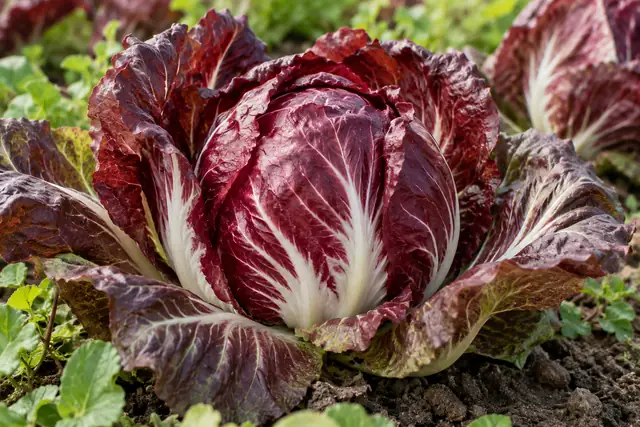
This image was created with AI from described plant characteristics and growing advice. It shows a possible situation and is not a photograph of a verified cultivar.
- Sowing
- Late spring and summer, according to variety
- Harvesting
- Young leaves or autumn heads
- Location
- Sun and consistent moisture
- Type
- Leaf chicory; no witloof forcing needed
This growing advice helps you choose. Your variety, growth stage, weather and conditions in your space determine the actual timing.
Sowing under cover and raising seedlings
Start under cover in cool conditions or sow directly · Radicchio
June–July for many autumn typesSow thinly in modules and follow the specific cultivar period.
- Germination and temperature
- Allow even germination; avoid cold stress during early propagation.
- After emergence
- Keep emerged lettuce bright and well ventilated; prevent high greenhouse temperatures and drying out.
- Pricking out and potting on
- Sow in modules or prick out manageable seedlings into individual cells. Keep the root ball intact when planting out.
- Hardening off and planting out
- Gradually acclimatise indoor-raised plants to sun, wind and outdoor temperatures; shelter them again on cold nights. Plant out sturdy young plants; keep the growing point clear and protect against slugs and snails.
These types have different cultivar windows. Early cold can encourage bolting; summer sowing is the usual route for many autumn types.
Sources and use
Royal Horticultural Society · RHS — cichorei kweken ↗Soort- of productgebonden bron; buitenlandse perioden zijn geen vaste Nederlandse zaaidatum.
Utah State University Extension · USU Extension — cichorei in de tuin ↗Soort- of productgebonden bron; buitenlandse perioden zijn geen vaste Nederlandse zaaidatum.
Guideline periods for the Netherlands and Flanders. Check the variety, available light, soil and measured temperatures. Greenhouse heating does not guarantee enough winter light.
What makes Rouge de Vérone different?
- Fruit shape
- Firm, compact head
- Main colour
- Dark red
The source context and any limitations are in the background information at the bottom.
Compare with another varietyFlavour and kitchen
The usual slight bitterness of radicchio applies at crop level. A separate aroma ranking for Rouge de Vérone is not substantiated.
This flavour description applies to the crop; a separate taste test for this variety is not supported by evidence.Finely slice the head for a salad or roast wedges for a hot dish. The firm texture suits both preparations.
Why choose it? Choose this variety for a compact, red chicory heart and crisp leaves. Head shape does not mean sweet lettuce.
How to grow radicchio
The options below belong to the plant. From these, choose the method that suits your variety's growth habit.
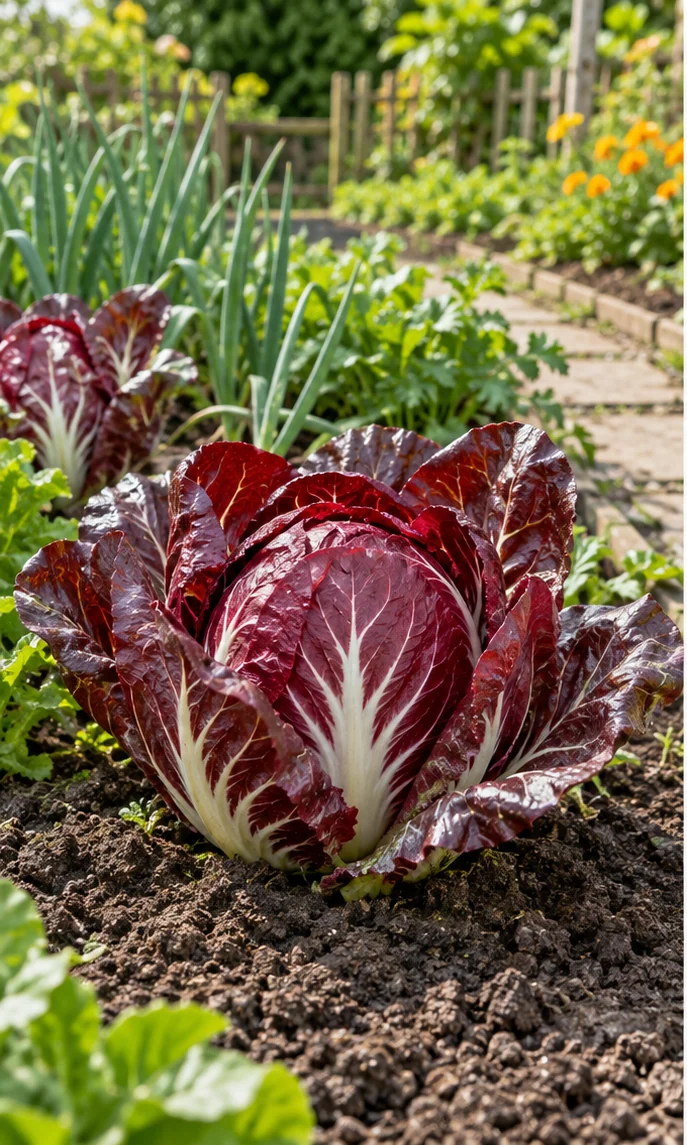
This image was created with AI from described plant characteristics and growing advice. It shows a possible situation and is not a photograph of a verified cultivar.
Short rows in a garden bed
A small radicchio row makes care manageable. Choose the right season, keep weeds away and follow leaves. Plan another batch once you see how much you actually use.
- Prepare a fine soil surface and remove weeds.
- Sow or plant at the spacing for the chosen type.
- Keep the germination and root zones moist and harvest according to leaf quality.
For anyone with a small bed or a space available after another harvest.
Tick off your supplies →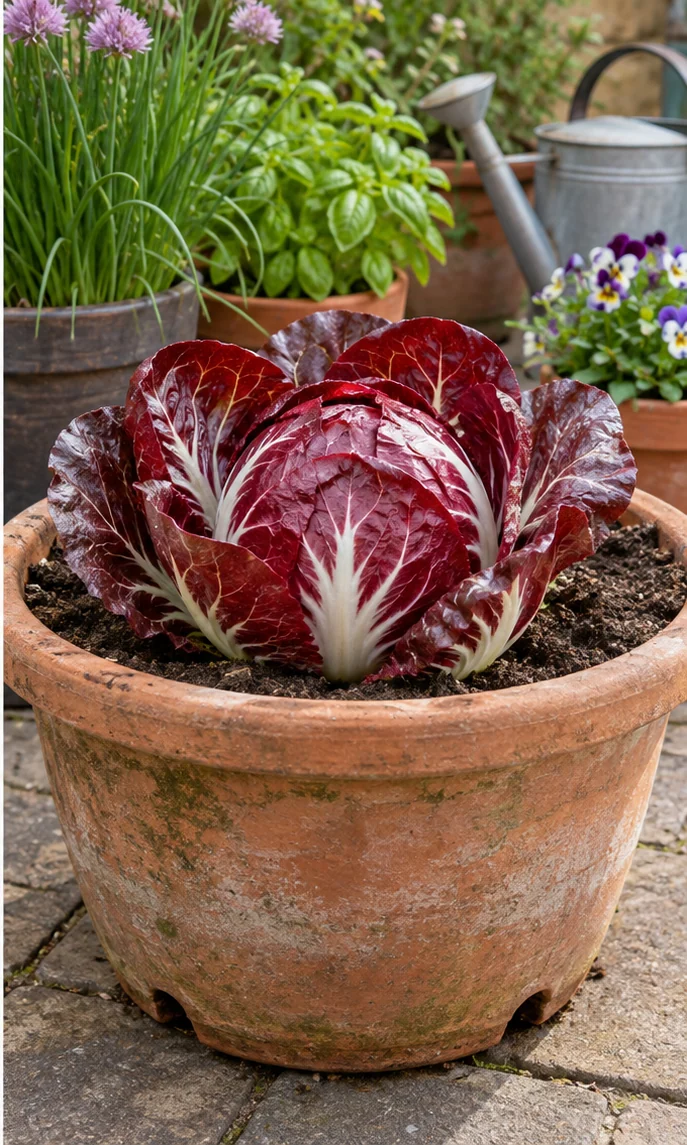
This image was created with AI from described plant characteristics and growing advice. It shows a possible situation and is not a photograph of a verified cultivar.
A few compact heads in a pot
A compact variety in a spacious pot lets you follow colour close to home. Leave enough space between plants and keep compost evenly moist; a balcony pot dries faster than a bed.
- Choose a suitable, compact radicchio type.
- Use a large pot with drainage holes and spacing according to variety.
- Harvest the heart when closed and usable.
For limited space or a smaller, more accessible leaf crop.
Tick off your supplies →Why grow Rouge de Vérone?
Rouge de Vérone forms a firm, dark red radicchio head. Its retail grouping under endive does not change its botanical identity as chicory.
Choose this variety for a compact, red chicory heart and crisp leaves. Head shape does not mean sweet lettuce.
How this choice tastes
The usual slight bitterness of radicchio applies at crop level. A separate aroma ranking for Rouge de Vérone is not substantiated.
From harvest to kitchen
Finely slice the head for a salad or roast wedges for a hot dish. The firm texture suits both preparations.
What needs attention when growing
Let the plant form a head with enough room and even growth. Assess colour and closure through the season.
Harvest the compact head while leaves remain healthy. Consider firmness and plant condition as well as colour.
Choose by flavour, shape and use
Rouge de Vérone: Rouge de Vérone forms a firm, dark red radicchio head. Its retail grouping under endive does not change its botanical identity as chicory. Slice finely for salad or roast wedges. Firmness supports both preparations.
The usual slight bitterness of radicchio applies at crop level. A separate aroma ranking for Rouge de Vérone is not substantiated.
Choose the type to suit your harvest
Radicchio belongs to leaf chicory. Varieties differ in head shape and closing time. Choose for your desired harvest season. Forcing chicory is a different method and does not automatically apply to a red radicchio head.
A small, sound start
Sow small batches within the recommended variety window. Modules make separate planting manageable. Very early cold and later heat can encourage bolting; take advice for summer or autumn growing seriously.
Light and soil that can drain
Choose a bright spot and prepare a fine enough surface for the small seeds or young rootballs. Water must be able to drain away after rain. In a pot, check that the drainage holes are clear; a layer of wet soil does not help produce a healthy leaf harvest.
Care for the young leaves
Give space for a closed heart and avoid long drying during drought. Excess nitrogen promotes leaves without automatically producing a firm head. Assess moisture, light and season before extra feeding.
Harvest for quality
Harvest a head once the heart is well filled, or pick young loose leaves for a different use. Red colour may intensify in cooler weather. A green young plant is therefore not automatically a failed red radicchio.
Recognise what the leaves tell you
A flower stem means a different stage. Check sowing time, warmth and drought next round. With rotten outer leaves, give more air and remove damage; do not enclose wet heads under tight covering.
Fresh leaves start with a small picking
Harvest at a cool time and keep the leaves cool after picking. Wash them before use and remove damaged parts. A small fresh portion wastes less than harvesting a whole container when you only need a handful.
Make room for the next round
Record sowing and the first harvest so you can compare what works in your space next season. Do not leave an empty row unplanned for long. A new batch within a suitable window gives a better spread than hoping overmature leaves will become young again.
What you need
Tick what you already have. The extras depend on how you grow.
0 of 5 ticked off
Your ticks are saved in this browser.
Discover and grow more
More background, sources and image information
SeedSteps editorial team · updated on 11 October 2026. The AI images illustrate species and practical growing situations; they do not prove an exact cultivar, observations from your own garden or yield.
Britse gewasadviezen worden gecombineerd met Nederlandse en Vlaamse informatie waar beschikbaar. Amerikaanse Extension-bronnen ondersteunen plantprincipes en herkenning; hun kalenderdata, lokale plaagdruk, bestrijdingsmiddelen en mestdoseringen worden niet rechtstreeks op Nederland of Vlaanderen toegepast. Vorst, bodemwarmte, standplaats en expliciete rasinformatie blijven de lokale controle. Commerciële bronnen onderbouwen uitsluitend benoemde ras- en plantkenmerken; zij zijn geen affiliate-aanbeveling.
- World Checklist of Vascular Plants — 4 juni 2026Royal Botanic Gardens, Kew · accessed 2026-10-07
- Andijvie Radicchio Rouge de Vérone zaden biologischFeggies · accessed 2026-10-11
- Chicory: growing guideRoyal Horticultural Society · accessed 2026-10-11
- RHS — cichorei kwekenRoyal Horticultural Society · accessed 2026-10-10
- USU Extension — cichorei in de tuinUtah State University Extension · accessed 2026-10-10
Supporting evidence by chapter: Why grow Rouge de Vérone?: Feggies, Royal Horticultural Society. How this choice tastes: Feggies, Royal Horticultural Society. From harvest to kitchen: Feggies, Royal Horticultural Society. What needs attention when growing: Feggies, Royal Horticultural Society. Choose by flavour, shape and use: Feggies, Royal Horticultural Society. Choose the type to suit your harvest: Royal Horticultural Society, Utah State University Extension. A small, sound start: Royal Horticultural Society, Utah State University Extension. Light and soil that can drain: Royal Horticultural Society, Utah State University Extension. Care for the young leaves: Royal Horticultural Society, Utah State University Extension. Harvest for quality: Royal Horticultural Society, Utah State University Extension. Recognise what the leaves tell you: Royal Horticultural Society, Utah State University Extension. Fresh leaves start with a small picking: Royal Horticultural Society, Utah State University Extension. Make room for the next round: Royal Horticultural Society, Utah State University Extension.
Fruit shape: Firm, compact head Beschrijving van de genoemde rasbron; geen eigen tuinwaarneming. Feggies, Royal Horticultural Society
Main colour: Dark red Beschrijving van de genoemde rasbron; geen eigen tuinwaarneming. Feggies, Royal Horticultural Society