
Growing salsify: a fine winter root from deep, loose soil
Salsify produces pale, long roots for meals in the colder months. The crop is also called white scorzonera, but has its own botanical identity. Give the taproot an undisturbed start and enough depth; the real pleasure comes with careful lifting and a simple first tasting.
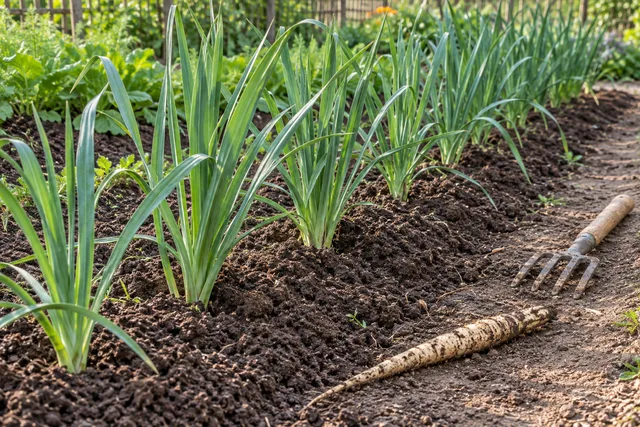
This image was created with AI from described plant characteristics and growing advice. It shows a possible situation and is not a photograph of a verified cultivar.
- Harvested part
- The pale taproot
- Start
- Direct sowing in spring
- Soil
- Deeply loosened, well-drained soil with few stones
- Harvest
- From autumn, while the soil remains workable
This growing advice helps you choose. Your variety, growth stage, weather and conditions in your space determine the actual timing.
Sowing under cover and raising seedlings
Sow directly · Salsify
March–April; follow species and cultivar guidanceSow in the final position in deeply workable soil. Wait during cold or waterlogging.
- Germination and temperature
- Wait for workable, warmed soil; follow the cultivar’s minimum sowing temperature.
- After emergence
- Keep the seed row evenly moist during emergence and identifiable with a label.
- Pricking out and potting on
- Do not prick out. Thin in place; transplanting can damage the taproot.
- Hardening off and planting out
- Stays where sown; hardening off and planting out are unnecessary for direct sowing.
This taproot crop stays where sown. Parsnip needs fresh seed and can germinate slowly; follow separate seed guidance for scorzonera, salsify and root parsley.
Sources and use
RHS · pastinaak ↗Britse teeltrichtlijn voor een gematigd klimaat; de genoemde perioden zijn richtlijnen voor Nederland en Vlaanderen.
Feggies · Schorseneer wit zaden ↗Nederlandse producent of teeltbron; de rasinstructie blijft leidend.
Royal Horticultural Society · How to grow Salsify ↗Soort- of productgebonden bron; buitenlandse perioden zijn geen vaste Nederlandse zaaidatum.
Guideline periods for the Netherlands and Flanders. Check the variety, available light, soil and measured temperatures. Greenhouse heating does not guarantee enough winter light.
A different flavour, a different harvest.
Choose by more than the name. Discover how these varieties and crop types taste, what you can use them for and what growing them involves.
1 of 1 choices · 0 named varieties
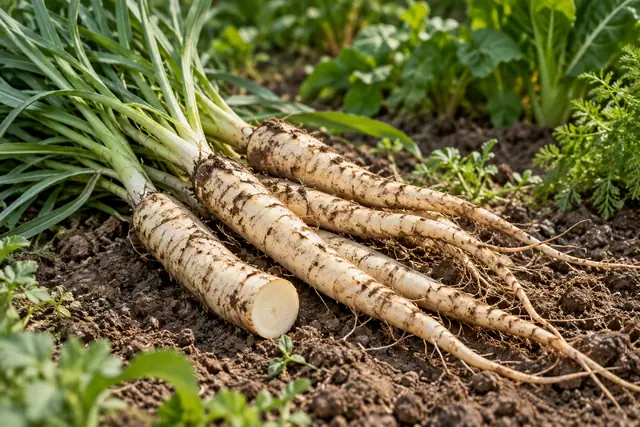
This image was created with AI from described plant characteristics and growing advice. It shows a possible situation and is not a photograph of a verified cultivar.
White
A pale salsify root, botanically Tragopogon porrifolius.
Choose this crop if you want to try a less familiar winter root. The retail name Schorseneer wit is retained here as an alias, with the correct botanical identity.
Flavour, kitchen and growing
How does it taste?
White salsify has a mild root aroma and soft texture after cooking. The white offering gets no flavour comparison with black salsify; they are different crops.
This flavour description applies to the crop; there is no separate tasting result for this variety.In the kitchen
Scrub or peel the long roots and cook equal pieces for soup or a creamy side dish. Put cut pieces straight into water with a little lemon to prevent discolouration.
A space in the garden
Sow directly in a deeply loosened, stone-free bed. Let the taproot develop in place and keep the slow young growth weed-free.
Harvesting
After a long growing season, lift with a fork well beside the root. Loosen the soil first so that the long, fragile roots come out intact.
Also listed as: Schorseneer wit.
Read the source notes →Choose your way to grow
From a garden bed to a suitable pot or support: give your plant a place that suits your garden and the care you can provide.
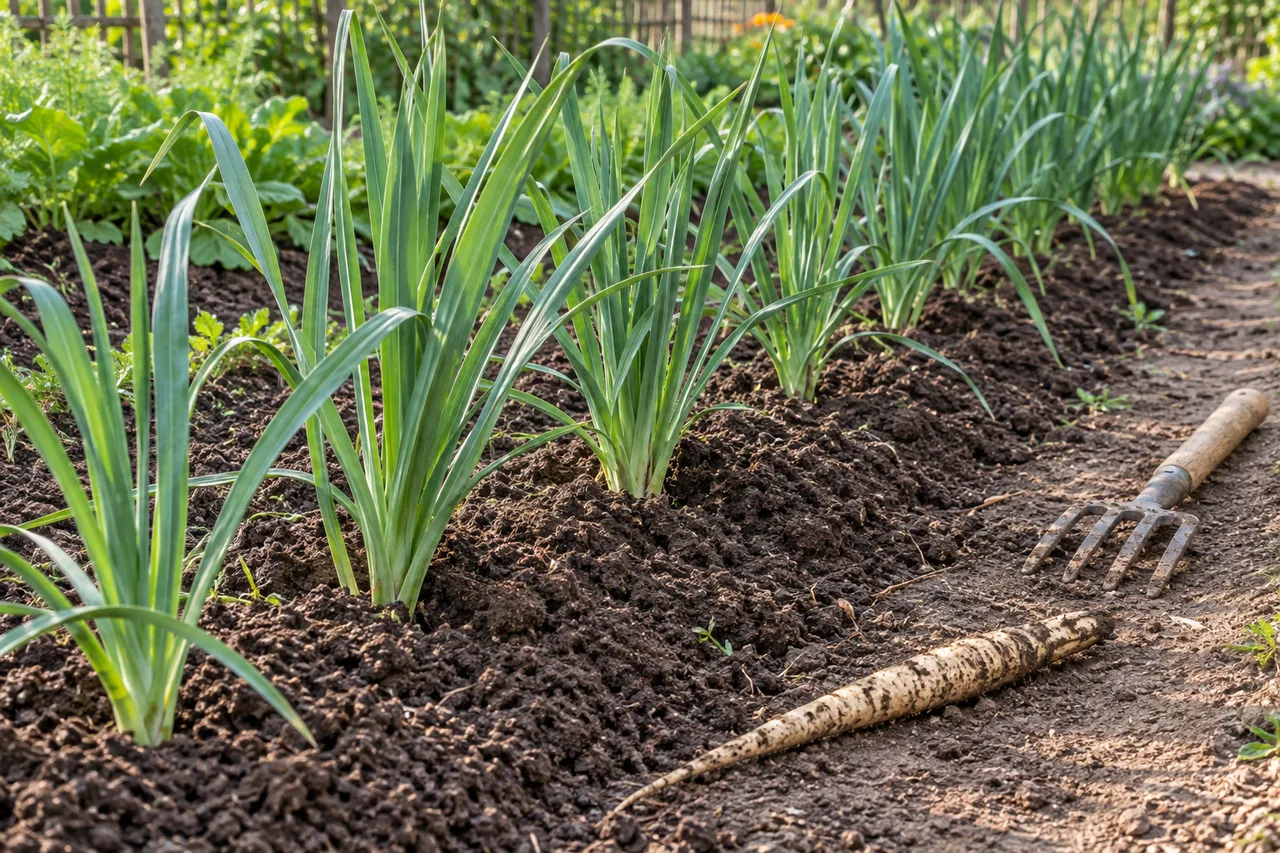
This image was created with AI from described plant characteristics and growing advice. It shows a possible situation and is not a photograph of a verified cultivar.
Deeply loosened bed
Let the long taproot grow in its own position.
- Loosen a sunny bed deeply and remove large stones.
- Sow thinly and directly; keep the germination layer moist and thin carefully.
- At harvest, lift soil with a fork well beside the root.
For a garden with sufficient loose soil depth.
Tick off your supplies →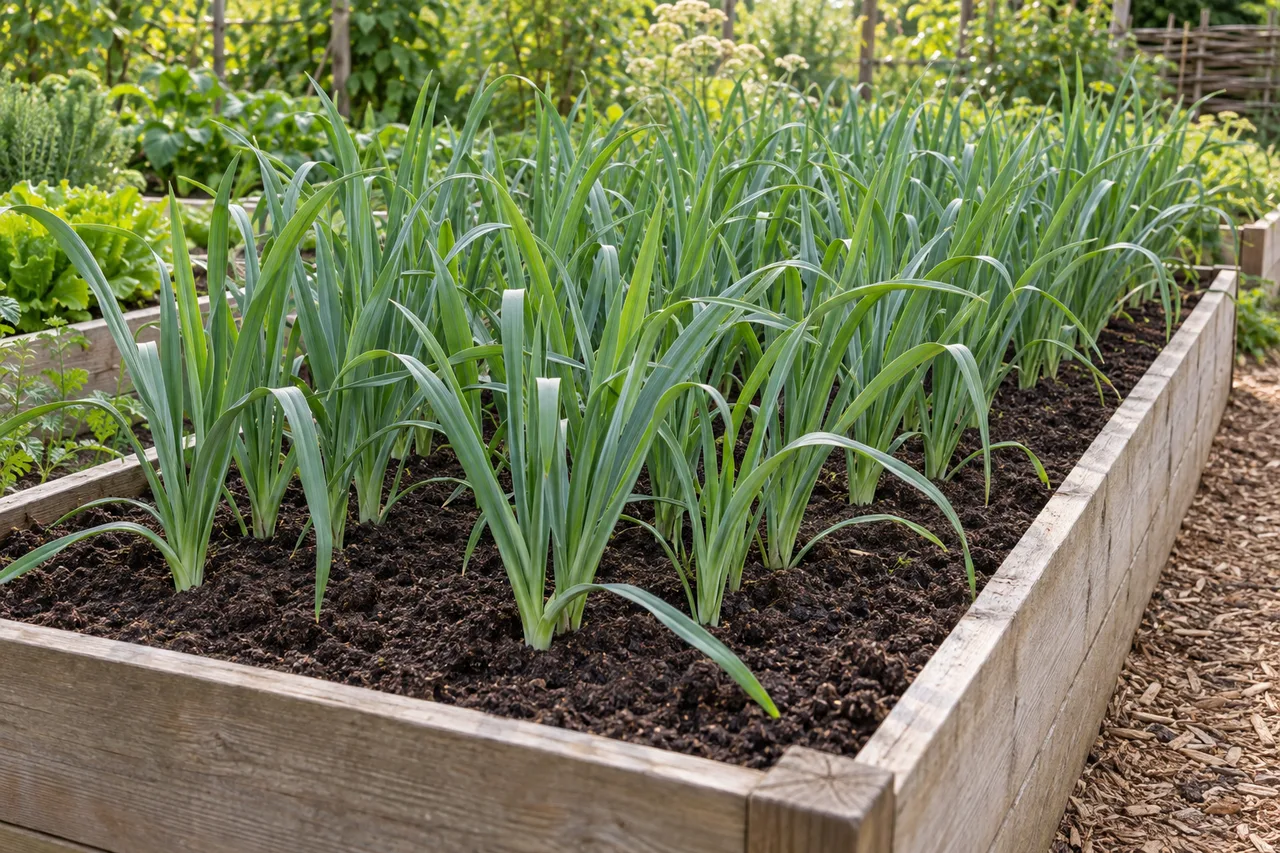
This image was created with AI from described plant characteristics and growing advice. It shows a possible situation and is not a photograph of a verified cultivar.
A deep raised bed
Provide extra root space where the original soil is compacted.
- Fill a raised bed with sufficiently deep, loose, free-draining soil.
- Sow directly in identifiable rows and let taproots develop undisturbed.
- Keep soil evenly moist and lift a fresh portion each time.
For heavy soil or a position needing extra soil depth.
Tick off your supplies →Choose by flavour, shape and use
Wit: Pale root of white salsify, botanically Tragopogon porrifolius. Scrub or peel long roots and cook equal pieces for soup or a creamy side dish. Put cut pieces straight into water with lemon to prevent discolouration.
White salsify has a mild root aroma and soft texture after cooking. The white offering gets no flavour comparison with black salsify; they are different crops.
A crop of its own
White salsify is Tragopogon porrifolius. The retail name white scorzonera can confuse: black salsify is Scorzonera hispanica. Check packets and label rows. Narrow foliage initially stays modest while long pale taproots develop for later harvest.
Start below ground
Choose sun and loosen soil deeply before sowing. Compacted layers or large stones can branch roots. Use soil previously improved with well-rotted organic matter; fresh coarse manure in the root zone is a poor start for straight kitchen roots.
Sow in the final position
Temperate spring sowing from British and Belgian sources guides Dutch gardens. Wait for workable soil and sow directly in a fine row. Keep moist through irregular emergence and leave roots in place; transplanting can disturb taproots.
Give every root space
Thin young plants once recognisable. Pull carefully to leave neighbours, or cut crowded seedlings off. Follow packet spacing. Clear rows enable early weeding without mistaking grass-like salsify leaves for weeds.
Let growth continue steadily
In dry weather, check below the surface too. Water at soil level rather than repeatedly wetting only the top few millimetres. Keep weeds small and do not hoe deeply immediately beside the row. A raised bed needs more frequent moisture checks because soil can dry faster.
Small signals, simple interventions
Empty rows first need moisture and germination checks before resowing. Inspect young plants for slugs. Branched or broken roots can still suit soup, but indicate depth, stones or lifting technique needing improvement next sowing.
Lift patiently
Give the crop a full season and try a first root in autumn. Insert the fork away from the root and loosen the soil deeply before pulling the foliage. Continue harvesting as needed while the soil is unfrozen; a winter harvest calendar still depends on local weather.
From root to a soft meal
The RHS describes a delicate, oyster-like aroma: a tasting direction, not a promise for everyone. Scrub or peel roots, cut evenly and prevent browning with lemon water. Steam or boil simply with butter. Keep lifted roots cool against drying and use broken ones first.
What you need
Tick what you already have. The extras depend on how you grow.
0 of 4 ticked off
Your ticks are saved in this browser.
Discover and grow more
More background, sources and image information
SeedSteps editorial team · updated on 11 October 2026. The AI images illustrate species and practical growing situations; they do not prove an exact cultivar, observations from your own garden or yield.
Britse gewasadviezen worden gecombineerd met Nederlandse en Vlaamse informatie waar beschikbaar. Amerikaanse Extension-bronnen ondersteunen plantprincipes en herkenning; hun kalenderdata, lokale plaagdruk, bestrijdingsmiddelen en mestdoseringen worden niet rechtstreeks op Nederland of Vlaanderen toegepast. Vorst, bodemwarmte, standplaats en expliciete rasinformatie blijven de lokale controle. Commerciële bronnen onderbouwen uitsluitend benoemde ras- en plantkenmerken; zij zijn geen affiliate-aanbeveling.
- Plants of the World Online — Tragopogon porrifolius L.Royal Botanic Gardens, Kew · accessed 2026-10-11
- Schorseneer wit zadenFeggies · accessed 2026-10-11
- How to grow SalsifyRoyal Horticultural Society · accessed 2026-10-11
- Salsifis Blanc amélioréSemailles · accessed 2026-10-11
Supporting evidence by chapter: Choose by flavour, shape and use: Feggies. A crop of its own: Feggies, Royal Horticultural Society. Start below ground: Royal Horticultural Society, Semailles. Sow in the final position: Royal Horticultural Society, Semailles. Give every root space: Semailles, Royal Horticultural Society. Let growth continue steadily: Royal Horticultural Society. Small signals, simple interventions: Royal Horticultural Society, Semailles. Lift patiently: Feggies, Royal Horticultural Society. From root to a soft meal: Royal Horticultural Society, Feggies.