
Growing edamame: pick the soya beans before they turn yellow
For edamame, you harvest soya beans at a different stage than for dried soya. The seeds are nicely plump, but the pod is still green. Choose a vegetable variety with a suitable growing season and reserve a sunny patch of bed for it.
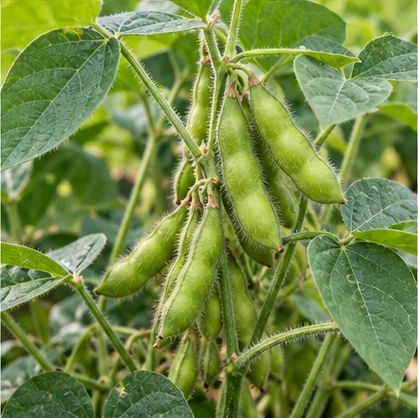
This image was created with AI from described plant characteristics and growing advice. It shows a possible situation and is not a photograph of a verified cultivar.
- Sowing
- Late spring, after frost, in warm soil
- Harvesting
- Full but still green pods
- Growth
- Upright, without a tall climbing frame
- Kitchen
- Cook the beans; the hairy pod is not eaten
This growing advice helps you choose. Your variety, growth stage, weather and conditions in your space determine the actual timing.
Sowing under cover and raising seedlings
Start briefly under cover or sow directly · Soya bean
Late April–MayStart briefly under cover in individual pots. Ensure you can plant out into warmth after a few weeks.
- Germination and temperature
- Sow in warmth; cold, persistently wet soil increases the risk of failure.
- After emergence
- Give seedlings light immediately after emergence. A dark loft needs suitable grow lights; warmth alone is insufficient. Ventilate and keep the compost moist without saturating it.
- Pricking out and potting on
- Sow in individual pots or deep modules. Do not prick out bare-rooted; move the whole root ball before the roots become restricted.
- Hardening off and planting out
- Gradually acclimatise indoor-raised plants to sun, wind and outdoor temperatures; shelter them again on cold nights. Plant out after the last frost with the whole root ball; install supports beforehand for climbing types.
Choose a cultivar suited to the short Dutch season. Lima beans need plenty of warmth; a cool summer can limit ripening.
Sources and use
RHS · bonen ↗Britse teeltrichtlijn voor een gematigd klimaat; de genoemde perioden zijn richtlijnen voor Nederland en Vlaanderen.
University of Minnesota Extension · UMN Extension — boon in de moestuin ↗Soort- of productgebonden bron; buitenlandse perioden zijn geen vaste Nederlandse zaaidatum.
University of Missouri Extension · MU Extension — edamame in de moestuin ↗Soort- of productgebonden bron; buitenlandse perioden zijn geen vaste Nederlandse zaaidatum.
Guideline periods for the Netherlands and Flanders. Check the variety, available light, soil and measured temperatures. Greenhouse heating does not guarantee enough winter light.
A different flavour, a different harvest.
Choose by more than the name. Discover how these varieties and crop types taste, what you can use them for and what growing them involves.
2 of 2 choices · 1 named varieties
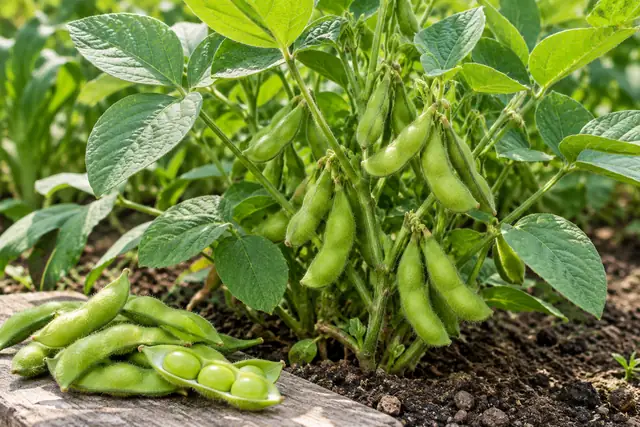
This image was created with AI from described plant characteristics and growing advice. It shows a possible situation and is not a photograph of a verified cultivar.
Chiba Green
Compact soya bean for green, well-filled edamame.
Choose Chiba Green for compact, upright plants and concentrated pod set. This needs an organised harvest round when several pods reach the correct green size together.
Flavour, kitchen and growing
How does it taste?
Young and cooked, soya has the mild, slightly nutty character of edamame. The producer describes Chiba Green as flavoursome and crisp; a separate sweetness ranking is not established.
This flavour description applies to the crop; there is no separate tasting result for this variety.In the kitchen
Boil the green, filled pods and push the cooked beans out. The pod wall is not eaten; use the beans loose in rice or serve pods for shelling.
A space in the garden
Sow after frost in warm soil and provide a sunny, sheltered position. The American days-to-maturity figure is a guide, rather than a guarantee in a cool Dutch season.
Harvesting
Harvest when the pods are plump but still bright green. For edamame, do not wait for yellow, dry pods; those have a different storage purpose.
Read the source notes →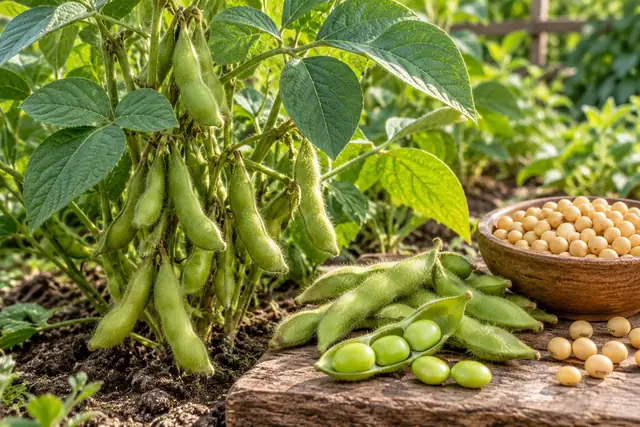
This image was created with AI from described plant characteristics and growing advice. It shows a possible situation and is not a photograph of a verified cultivar.
Yellow soya
A soya type for young green beans or ripe dry seeds.
Choose this offering type if you want to compare two harvest stages. No named cultivar is given, so compact growth or early ripening is not automatically promised.
Flavour, kitchen and growing
How does it taste?
Cooked young soya has a mild, slightly nutty flavour. Yellow refers to the dry seed type here; for edamame, harvest before pods turn yellow and dry.
This flavour description applies to the crop; there is no separate tasting result for this variety.In the kitchen
Cook young, filled pods and shell the cooked beans. Let a separate portion ripen if you want to try dry soya for cooking or further processing.
A space in the garden
Sow in warm soil after the last frost and choose a sunny, sheltered position. Allow enough season and keep the root zone moist during pod filling.
Harvesting
Harvest green, filled pods for edamame or fully ripe pods for dry seed. Keep the harvests separate and dry storage beans thoroughly before storing.
Read the source notes →Choose your way to grow
From a garden bed to a suitable pot or support: give your plant a place that suits your garden and the care you can provide.
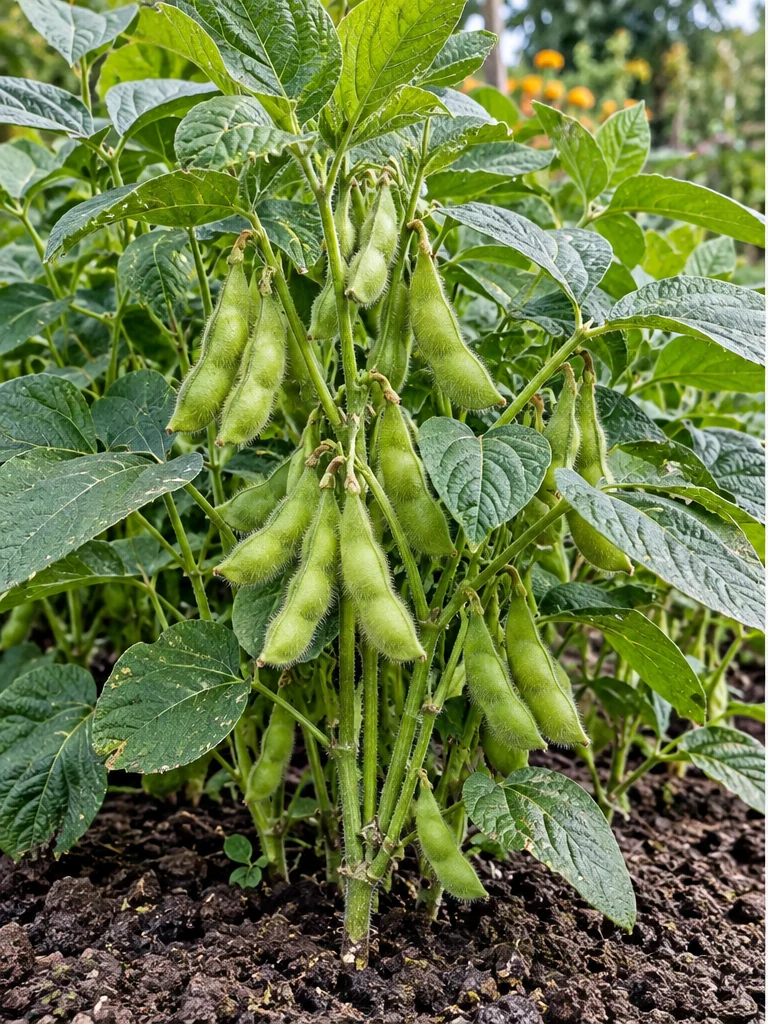
This image was created with AI from described plant characteristics and growing advice. It shows a possible situation and is not a photograph of a verified cultivar.
Edamame in a sunny bed
A row of edamame grows upright and needs no bean wigwam. Choose a vegetable variety and allow enough time for seeds to fill before cold autumn weather. Many plants can mature close together.
- Prepare a warm, weed-free bed.
- Sow at the vegetable variety's depth and spacing.
- Watch pods once the seeds start to swell.
For anyone with space for a small, fairly simultaneous harvest.
Tick off your supplies →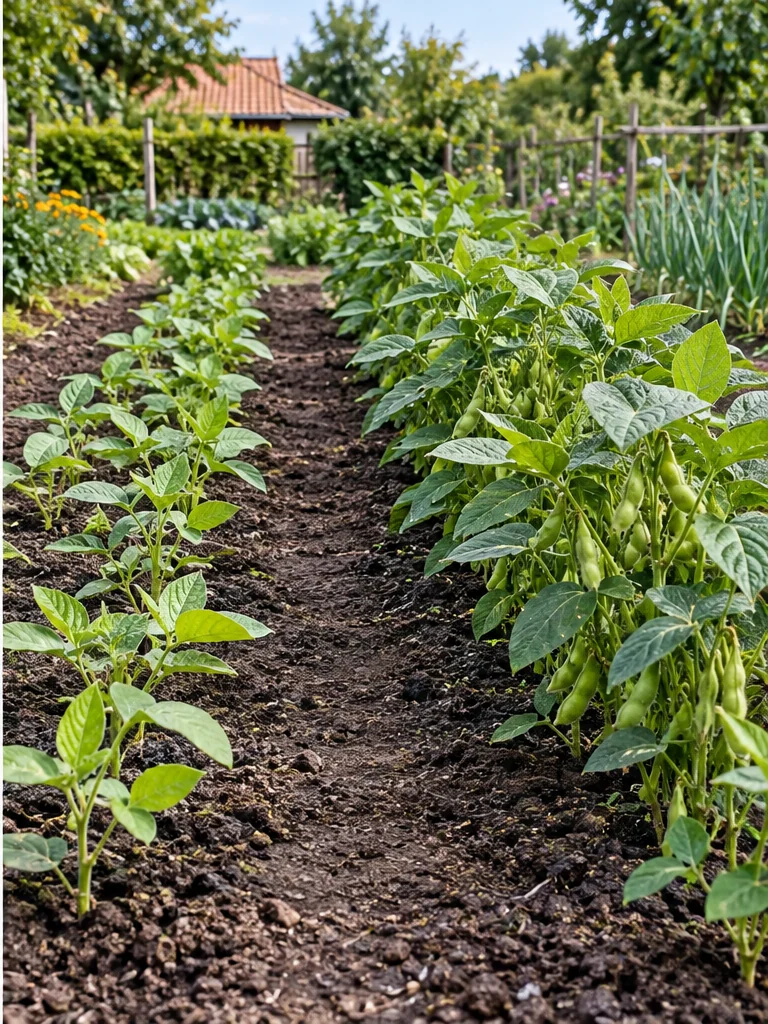
This image was created with AI from described plant characteristics and growing advice. It shows a possible situation and is not a photograph of a verified cultivar.
Two small rows for a staggered trial
A small trial sowing shows how a variety ripens in your position. A second sowing can spread picking if enough growing season remains. Note the date and compare harvests.
- Choose an early vegetable variety with known growing data.
- Sow a small first row and record emergence.
- Only plan a second row within the recommended sowing window.
For a first season with edamame without a major harvest peak.
Tick off your supplies →Explore the varieties
See the confirmed differences. Characteristics without supporting evidence are left blank.
0 of 0 varieties
No matching variety found. Try another name or clear the filters.
Choose two to four varieties to compare their source data side by side.
Choose by flavour, shape and use
Chiba Green: Compact soya bean for green, well-filled edamame. Boil the green, filled pods and push the cooked beans out. The pod wall is not eaten; use the beans loose in rice or serve pods for shelling.
Young and cooked, soya has the mild, slightly nutty character of edamame. The producer describes Chiba Green as flavoursome and crisp; a separate sweetness ranking is not established.
Gele soja: Soya type for young green beans or ripe dry seeds. Cook young filled pods and shell the cooked beans. Let a separate portion ripen if you want to try dry soya for cooking or further processing.
Cooked young soya has a mild, slightly nutty flavour. Yellow refers to the dry seed type here; for edamame, harvest before pods turn yellow and dry.
Vegetable soya is the right start
Edamame is a use type of soya bean. An agricultural dry-seed variety does not automatically give the same suitable fresh harvest. Choose seed explicitly intended for edamame and a maturity time suited to your position.
Sun and a warm seedbed
Soya is a warm-season crop. Wait for warm soil and a frost-free forecast. Choose an open, sunny spot with drainage. A sheltered bed helps, but a dark greenhouse corner does not replace the light needed.
Direct sowing keeps things manageable
Sow directly in the bed following variety advice and keep soil moist during emergence. Mark the row to avoid accidentally removing seedlings. With poor emergence, first assess cold, wet soil and feeding damage.
Let the bush support itself
Soya beans grow upright without typical twining bean vines. Give prescribed spacing rather than a tall support. Remove early weeds around small plants; later the crop fills more of the bed.
Full pods need root moisture
In dry weather, check soil moisture, especially during flowering and seed filling. Water the bed directly. Do not feed heavily on a guess: lush growth does not guarantee a good harvest.
The green harvest window
Harvest once seeds are clearly full and pods remain green. Yellowing pods indicate further ripening and a different product. Open a trial pod and check several times a week as harvest approaches.
Protect young plants selectively
Feeding damage can severely set back young soya. Look for evidence before choosing a measure and protect against animals actually feeding in your garden. Leave enough room beneath insect mesh so it does not press on the whole crop.
The pod does not go on the plate
Do not eat soya beans raw. Heat pods and remove cooked beans; do not eat the hairy exterior. Process the fresh harvest promptly or follow reliable freezing guidance. Separate eating harvests from fully dry seed ripening.
Make a small trial plot for your season
For a first edamame crop, a limited trial helps more than a long row of an unknown cultivar. Choose an early selection sold as vegetable soya and label it. Record sowing, first flowering and when green pods fill. This shows whether it fits your warm season. American maturity figures provide comparison, not a fixed Dutch harvest date; temperature and conditions can lengthen development.
What you need
Tick what you already have. The extras depend on how you grow.
0 of 4 ticked off
Your ticks are saved in this browser.
Discover and grow more
More background, sources and image information
SeedSteps editorial team · updated on 11 October 2026. The AI images illustrate species and practical growing situations; they do not prove an exact cultivar, observations from your own garden or yield.
Britse gewasadviezen worden gecombineerd met Nederlandse en Vlaamse informatie waar beschikbaar. Amerikaanse Extension-bronnen ondersteunen plantprincipes en herkenning; hun kalenderdata, lokale plaagdruk, bestrijdingsmiddelen en mestdoseringen worden niet rechtstreeks op Nederland of Vlaanderen toegepast. Vorst, bodemwarmte, standplaats en expliciete rasinformatie blijven de lokale controle. Commerciële bronnen onderbouwen uitsluitend benoemde ras- en plantkenmerken; zij zijn geen affiliate-aanbeveling.
- World Checklist of Vascular Plants — 4 juni 2026Royal Botanic Gardens, Kew · accessed 2026-10-07
- Edamame (gele soja boon) zaden biologischFeggies · accessed 2026-10-11
- Sojaboon / Edamame ‘Chiba Green’ (Glycine max) – biologische zadenFeggies · accessed 2026-10-11
- Chiba Green Organic Soybean SeedJohnny’s Selected Seeds · accessed 2026-10-11
- MU Extension — edamame in de moestuinUniversity of Missouri Extension · accessed 2026-10-10
- SDSU Extension — edamame oogsten en bewarenSouth Dakota State University Extension · accessed 2026-10-10
- UMN Extension — boon in de moestuinUniversity of Minnesota Extension · accessed 2026-10-10
Supporting evidence by chapter: Choose by flavour, shape and use: Feggies, Johnny’s Selected Seeds, Feggies. Vegetable soya is the right start: University of Minnesota Extension, University of Missouri Extension, South Dakota State University Extension. Sun and a warm seedbed: University of Minnesota Extension, University of Missouri Extension, South Dakota State University Extension. Direct sowing keeps things manageable: University of Minnesota Extension, University of Missouri Extension, South Dakota State University Extension. Let the bush support itself: University of Minnesota Extension, University of Missouri Extension, South Dakota State University Extension. Full pods need root moisture: University of Minnesota Extension, University of Missouri Extension, South Dakota State University Extension. The green harvest window: University of Minnesota Extension, University of Missouri Extension, South Dakota State University Extension. Protect young plants selectively: University of Minnesota Extension, University of Missouri Extension, South Dakota State University Extension. The pod does not go on the plate: University of Minnesota Extension, University of Missouri Extension, South Dakota State University Extension. Make a small trial plot for your season: University of Missouri Extension, South Dakota State University Extension.