
Strawberry spinach
A leafy vegetable with two faces: green leaves for the kitchen and red fruit clusters that look like small strawberries.
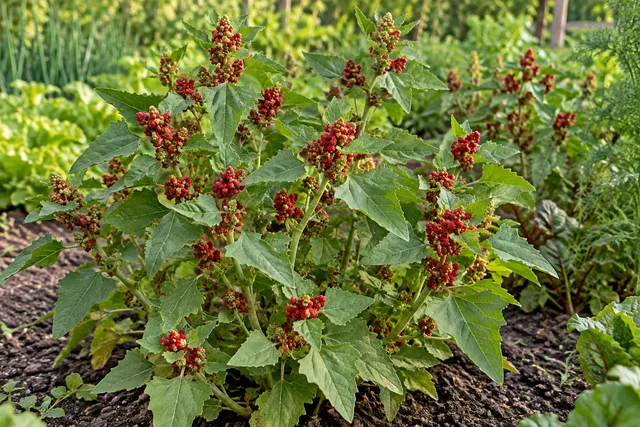
This image was created with AI from described plant characteristics and growing advice. It shows a possible situation and is not a photograph of a verified cultivar.
- Botanical name
- Blitum capitatum
- Lifespan
- Annual
- Position
- Sun; well-drained, moisture-retentive soil
- Harvest
- Young leaves and developed fruit clusters
This growing advice helps you choose. Your variety, growth stage, weather and conditions in your space determine the actual timing.
Sowing under cover and raising seedlings
Sow directly or start under cover according to species · Strawberry spinach
March–AprilSow according to product guidance and give seedlings light immediately.
- Germination and temperature
- Germination: around 15–20 °C; sow about 0.5 cm deep according to product guidance.
- After emergence
- Keep the seed row identifiable, moist and weed-free. Give any tray-grown seedlings enough light after emergence.
- Pricking out and potting on
- Thin a direct sowing according to the growing aim. For raising in pots, follow the supplier’s instructions and keep the root ball intact.
- Hardening off and planting out
- Direct-sown plants stay in place. If the packet says to start in pots, acclimatise them gradually before planting out.
According to the producer, strawberry spinach needs around 15–20 °C for germination. Decide beforehand whether you mainly want leaves or fruit clusters. The period shown follows the named producer; check your own cultivar and growing aim.
Sources and use
Magic Garden Seeds · Aardbeispinazie (Blitum capitatum) ↗Nederlandse producent of teeltbron; de rasinstructie blijft leidend.
Feggies · Aardbeispinazie zaden biologisch ↗Nederlandse producent of teeltbron; de rasinstructie blijft leidend.
Guideline periods for the Netherlands and Flanders. Check the variety, available light, soil and measured temperatures. Greenhouse heating does not guarantee enough winter light.
A different flavour, a different harvest.
Choose by more than the name. Discover how these varieties and crop types taste, what you can use them for and what growing them involves.
1 of 1 choices · 0 named varieties
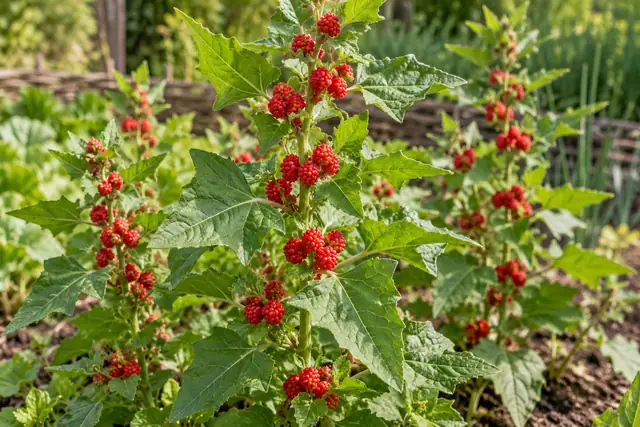
This image was created with AI from described plant characteristics and growing advice. It shows a possible situation and is not a photograph of a verified cultivar.
Strawberry spinach
A leafy vegetable with two faces: green leaves for the kitchen and red fruit clusters that look like small strawberries.
Choose this species as an edible feature among ordinary leaf vegetables. The selection has no separately named variety.
Flavour, kitchen and growing
How does it taste?
The resemblance to strawberry concerns appearance. The product source does not confirm strawberry flavour; assess leaves and fruit separately.
This flavour description applies to the crop; there is no separate tasting result for this variety.In the kitchen
Use young leaves in a mixed salad or cook larger leaves. The red clusters add a striking accent.
A space in the garden
Give the plants a clearly defined spot of their own, so that you can distinguish leaf plants from those left for fruit production.
Harvesting
Harvest young leaves selectively and leave other plants for red clusters; full leaf picking limits that second harvest.
Also listed as: Aardbeimelde.
Read the source notes →Choose your way to grow
From a garden bed to a suitable pot or support: give your plant a place that suits your garden and the care you can provide.
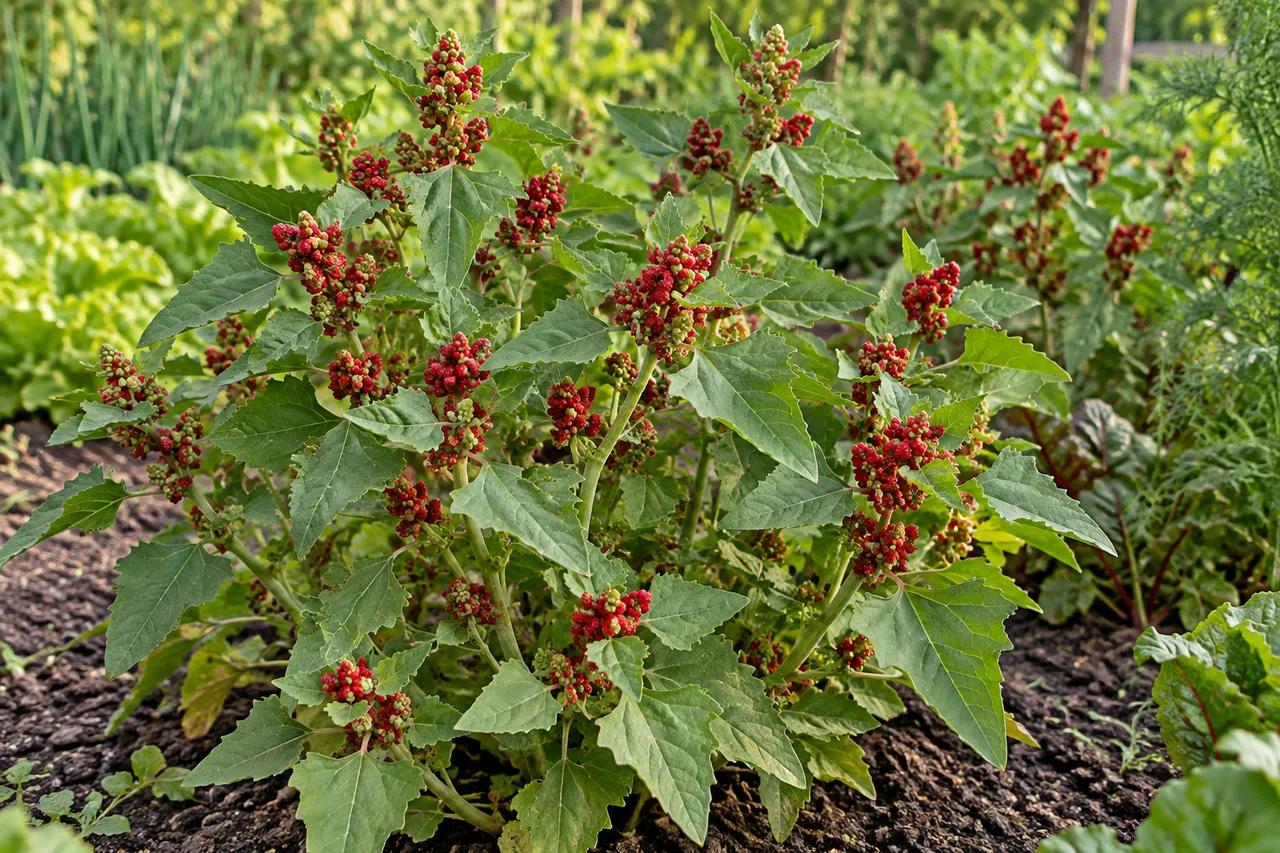
This image was created with AI from described plant characteristics and growing advice. It shows a possible situation and is not a photograph of a verified cultivar.
Leaves and fruit clusters in a bed
Sow thinly in a sunny bed; thin for separate plants; let some continue for red fruit clusters.
- Sow thinly in a sunny bed.
- Thin to leave separate plants.
- Let some plants continue for red fruit clusters.
For comparing young leaf harvests and red fruit clusters on separate plants.
Tick off your supplies →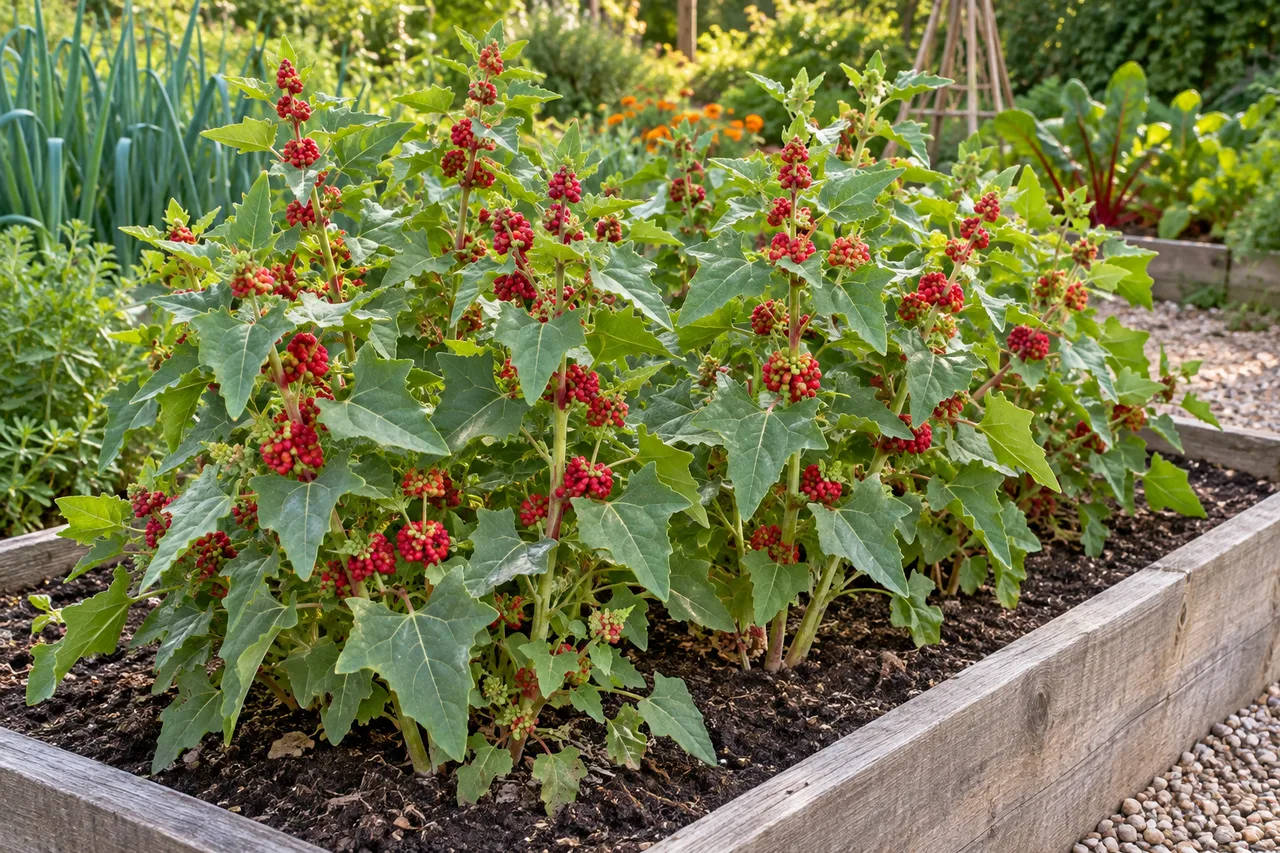
This image was created with AI from described plant characteristics and growing advice. It shows a possible situation and is not a photograph of a verified cultivar.
Manageable in a free-draining container
Sow in a free-draining container; give plants their own space; pick leaves selectively and retain fruiting plants.
- Sow in a free-draining container.
- Give plants their own space.
- Pick leaves selectively and keep fruiting plants intact.
For a small trial where you want to observe leaves and fruit clusters closely and often.
Tick off your supplies →Choose by flavour, shape and use
Strawberry spinach: A leaf vegetable with two faces: green kitchen leaves and red fruit clusters resembling small strawberries. Use young leaves in mixed salad or cook larger leaves. Red clusters provide a striking accent.
The resemblance to strawberry concerns appearance. The product source does not confirm strawberry flavour; assess leaves and fruit separately.
Leafy vegetable with red fruit clusters
Strawberry spinach is annual, with green leaves followed by red fruit clusters at stems. Current name is Blitum capitatum; packets also use Chenopodium capitatum. Strawberry-like appearance can mislead: plan leaves plus a second harvest part without expecting strawberry flavour.
An open, sunny position
Choose a sunny garden patch draining rain. Containers also work. Keep plants visible among neighbours to follow leaves and fruit clusters separately. A trial patch helps distinguish unknown seedlings from intentional sowings.
Start with a clearly marked sowing row
Sow small seed about half a centimetre deep and keep moist. The producer gives fifteen to twenty degrees for germination. Use a short labelled row or a few seeds in a container. Thin after emergence; crowding complicates targeted picking and comparison.
Moisture without waterlogged soil
Use draining soil staying evenly moist during establishment. For containers, check base holes before changing watering quantities. Feel beneath the surface first. Dry surfaces and wet pot bases can coexist and need different solutions.
Reserve plants for each harvesting aim
Decide in advance which plants should mainly provide leaves and which should form fruit clusters. This lets you pick young leaves without repeatedly affecting the whole trial. On fruiting plants, record when the first red clusters appear. This observation gives more useful guidance next season than a fixed calendar promise for every garden.
In a bed or container
A bed allows comparing several plants. A draining container suits a small trial near the kitchen, especially for observing both harvest parts regularly. Beds make leaving a few plants to a later stage easy.
Pick selectively and examine the clusters
Take young leaves as needed and leave enough foliage on the selected fruiting plants. Assess fruit clusters by their development, not just their striking colour. Put both harvest parts separately in a basket. This also keeps clear in the kitchen which part you want to taste and which to cook.
A small, honest taste test
Use young leaves as vegetables and taste fruit clusters separately. The name describes appearance more than flavour. Start small beside familiar ingredients so strong seasoning does not obscure observations. Note especially the part and stage used.
What you need
Tick what you already have. The extras depend on how you grow.
0 of 5 ticked off
Your ticks are saved in this browser.
Discover and grow more
More background, sources and image information
SeedSteps editorial team · updated on 11 October 2026. The AI images illustrate species and practical growing situations; they do not prove an exact cultivar, observations from your own garden or yield.
Britse gewasadviezen worden gecombineerd met Nederlandse en Vlaamse informatie waar beschikbaar. Amerikaanse Extension-bronnen ondersteunen plantprincipes en herkenning; hun kalenderdata, lokale plaagdruk, bestrijdingsmiddelen en mestdoseringen worden niet rechtstreeks op Nederland of Vlaanderen toegepast. Vorst, bodemwarmte, standplaats en expliciete rasinformatie blijven de lokale controle. Commerciële bronnen onderbouwen uitsluitend benoemde ras- en plantkenmerken; zij zijn geen affiliate-aanbeveling.
- Aardbeispinazie zaden biologischFeggies · accessed 2026-10-11
- Aardbeispinazie (Blitum capitatum)Magic Garden Seeds · accessed 2026-10-11
Supporting evidence by chapter: Choose by flavour, shape and use: Feggies. Leafy vegetable with red fruit clusters: Feggies, Magic Garden Seeds. An open, sunny position: Feggies, Magic Garden Seeds. Start with a clearly marked sowing row: Feggies, Magic Garden Seeds. Moisture without waterlogged soil: Feggies, Magic Garden Seeds. Reserve plants for each harvesting aim: Feggies, Magic Garden Seeds. In a bed or container: Feggies, Magic Garden Seeds. Pick selectively and examine the clusters: Feggies, Magic Garden Seeds. A small, honest taste test: Feggies, Magic Garden Seeds.