
Growing swedes: a summer start for the winter kitchen
Swede starts as a fine row of seedlings and ends as a firm autumn root. Give this brassica space and time. In a pot, you can deliberately harvest young roots; a full winter supply is better suited to a spacious bed.
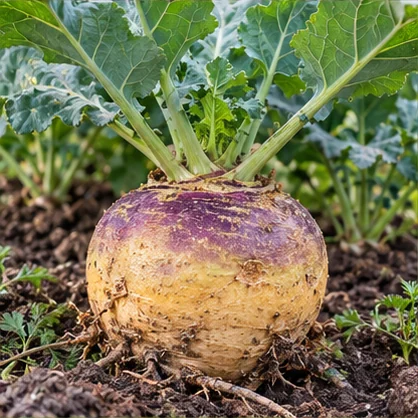
This image was created with AI from described plant characteristics and growing advice. It shows a possible situation and is not a photograph of a verified cultivar.
- Sowing
- Usually late spring or early summer
- Space
- Approximately 20–25 cm between mature plants
- Harvest
- Autumn and winter, before severe frost damage
This growing advice helps you choose. Your variety, growth stage, weather and conditions in your space determine the actual timing.
Sowing under cover and raising seedlings
Sow directly for young leaves or roots · Swede
May–JuneSow directly for an autumn or winter harvest.
- Germination and temperature
- Wait for workable, warmed soil; follow the cultivar’s minimum sowing temperature.
- After emergence
- Keep the seed row evenly moist during emergence and identifiable with a label.
- Pricking out and potting on
- Sow thinly and thin in the final position where needed. For cutting leaves, every seedling need not stand separately.
- Hardening off and planting out
- Stays where sown; hardening off and planting out are unnecessary for direct sowing.
Swede is a different crop from early turnip. Give the roots sufficient final spacing.
Sources and use
Royal Horticultural Society · Koolraap kweken ↗Soort- of productgebonden bron; buitenlandse perioden zijn geen vaste Nederlandse zaaidatum.
Utah State University Extension · Rutabagas and turnips in the garden ↗Soort- of productgebonden bron; buitenlandse perioden zijn geen vaste Nederlandse zaaidatum.
Guideline periods for the Netherlands and Flanders. Check the variety, available light, soil and measured temperatures. Greenhouse heating does not guarantee enough winter light.
Choose your way to grow
From a garden bed to a suitable pot or support: give your plant a place that suits your garden and the care you can provide.
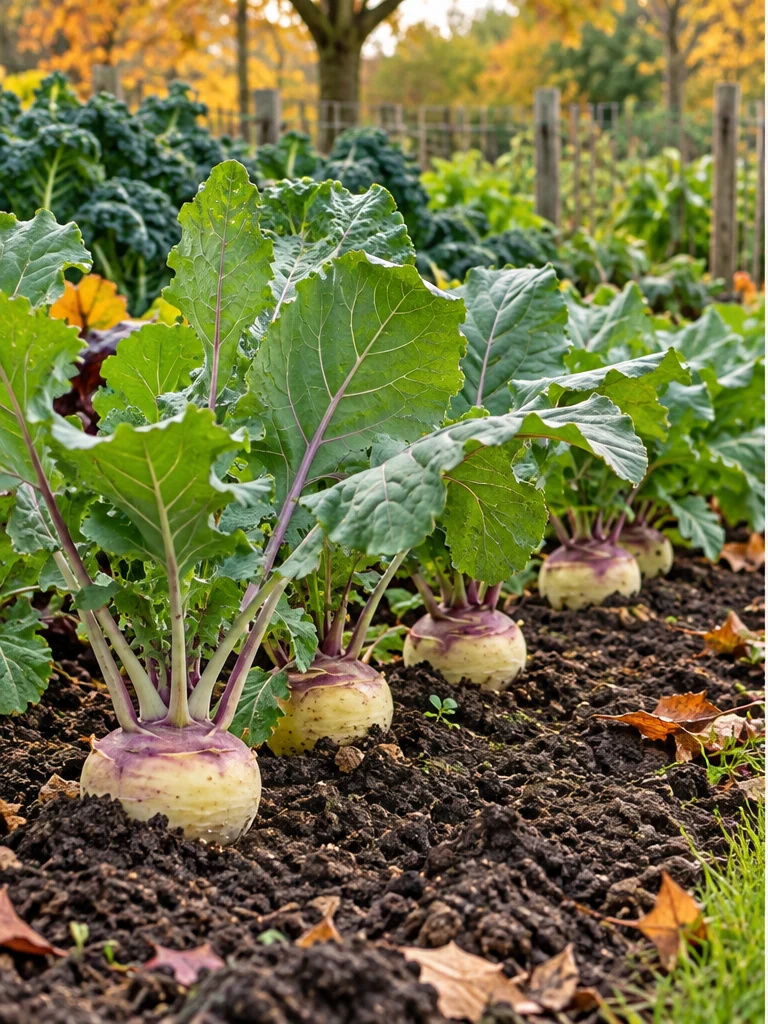
This image was created with AI from described plant characteristics and growing advice. It shows a possible situation and is not a photograph of a verified cultivar.
Directly in a spacious bed
A long row gives tubers room to develop into a winter harvest.
- Sow thinly in moist, finely prepared soil in the suitable variety window.
- Thin to leave approximately 20–25 cm between plants.
- Keep the bed moist in dry summers and lift a trial tuber in autumn.
For full-sized swollen roots and a larger harvest; choose a different bed from the previous brassica crop.
Tick off your supplies →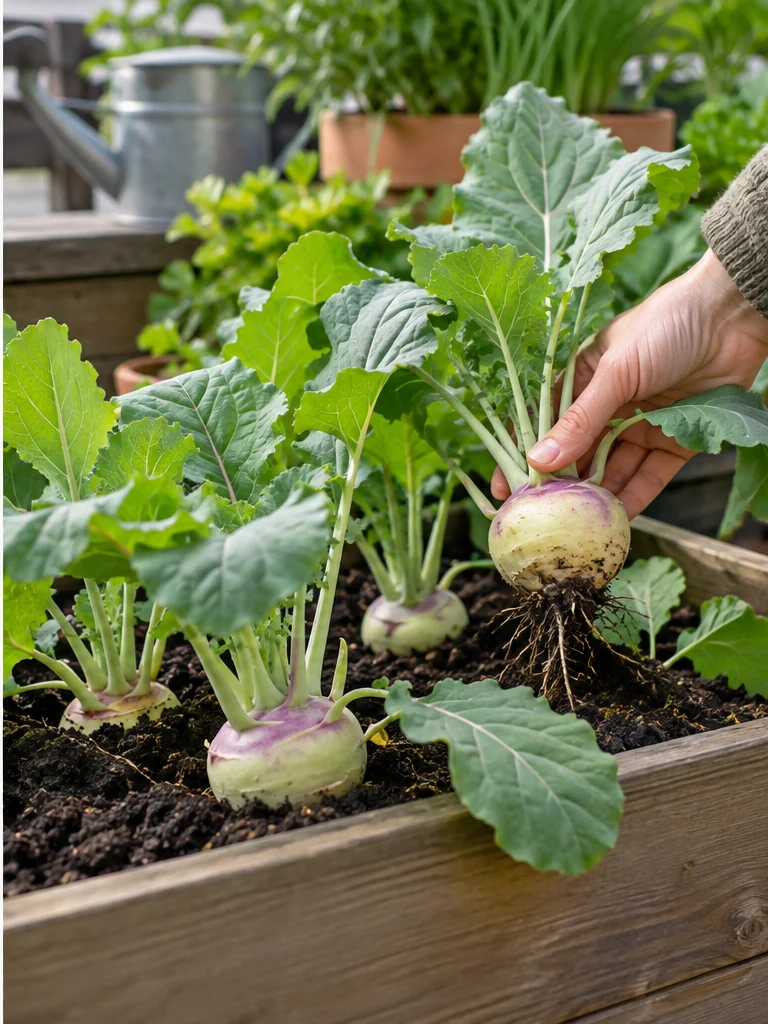
This image was created with AI from described plant characteristics and growing advice. It shows a possible situation and is not a photograph of a verified cultivar.
Young swedes from a wide pot
A wide container can give a small harvest of deliberately smaller swollen roots.
- Choose a pot or container at least approximately 40 cm wide with good drainage.
- Sow in place and thin for small swollen roots of the desired size.
- Check moisture and harvest young before the container overcrowds.
For a patio trial; expect fewer, smaller tubers than in a large bed.
Tick off your supplies →Swede is not the same as turnip
Swede generally grows longer and forms firm yellow- or pale-fleshed swollen roots by variety. Turnip is a different crop with different pace. Start from full packet names to avoid leaving quick crops for months or dismissing winter crops too early.
Use summer for a later harvest
Late spring to early summer usually makes sense for swede sowing. The window depends on variety and desired harvest. American sources describe different summer heat and frost dates; their months are no fixed instruction for your garden. Allow enough growth before prolonged winter cold.
Sow thinly and keep the surface moist
Prepare a fine strip and sow directly in the final position. Thin rows are easier to care for than dense carpets. Water with a fine rose while seeds and roots are shallow. Mark rows to recognise first cabbage seedlings while weeding.
Make room for the tubers early
Remove extra seedlings once manageable. For full-sized swollen roots, allow about 20–25 cm between plants with a wider path between rows. Container mini-harvests are another choice. Crowded plants do not automatically give more usable swede.
Keep the bed evenly moist
Water roots during drought and weed shallowly. Irregular swollen-root growth can reduce eating quality. Check a few centimetres down in warmth. Improve soil beforehand with suitable compost; base later feeding on bed condition and product labels.
Protect young cabbage and investigate stalled growth
Flea beetles perforate young leaves and caterpillars eat larger ones. Mesh works only with sealed edges and no trapped pests. With weak growth, inspect roots and drainage. Rotate cabbages; clubroot needs extra attention to clean, suitable cultivation.
Lift a trial tuber
Harvest when size and firmness suit your cooking. Loosen soil beside the swollen root and lift gently. Many can remain in mild cold, but severe frost or very wet soil reduces quality. Dry-day lifting eases processing.
Include the harvest in a winter plan
Use damaged roots first. Remove excess foliage and keep intact swollen roots cool without drying. Check soft spots occasionally. Cut a trial root to assess texture and flavour, choosing a size suited to your dishes next round.
What you need
Tick what you already have. The extras depend on how you grow.
0 of 6 ticked off
Your ticks are saved in this browser.
Discover and grow more
More background, sources and image information
SeedSteps editorial team · updated on 11 October 2026. The AI images illustrate species and practical growing situations; they do not prove an exact cultivar, observations from your own garden or yield.
Britse gewasadviezen worden gecombineerd met Nederlandse en Vlaamse informatie waar beschikbaar. Amerikaanse Extension-bronnen ondersteunen plantprincipes en herkenning; hun kalenderdata, lokale plaagdruk, bestrijdingsmiddelen en mestdoseringen worden niet rechtstreeks op Nederland of Vlaanderen toegepast. Vorst, bodemwarmte, standplaats en expliciete rasinformatie blijven de lokale controle. Commerciële bronnen onderbouwen uitsluitend benoemde ras- en plantkenmerken; zij zijn geen affiliate-aanbeveling.
- World Checklist of Vascular Plants — 4 juni 2026Royal Botanic Gardens, Kew · accessed 2026-10-07
- Koolraap kwekenRoyal Horticultural Society · accessed 2026-10-10
- Rutabagas and turnips in the gardenUtah State University Extension · accessed 2026-10-10
Supporting evidence by chapter: Swede is not the same as turnip: Royal Horticultural Society, Utah State University Extension. Use summer for a later harvest: Royal Horticultural Society, Utah State University Extension. Sow thinly and keep the surface moist: Royal Horticultural Society, Utah State University Extension. Make room for the tubers early: Royal Horticultural Society, Utah State University Extension. Keep the bed evenly moist: Royal Horticultural Society, Utah State University Extension. Protect young cabbage and investigate stalled growth: Royal Horticultural Society, Utah State University Extension. Lift a trial tuber: Royal Horticultural Society, Utah State University Extension. Include the harvest in a winter plan: Royal Horticultural Society, Utah State University Extension.