
Growing kohlrabi: a round stem above the soil
With kohlrabi, the harvest grows visibly above the soil: a round, swollen stem with leaves around it. Sow small batches for a quick kitchen portion. A bed, raised bed or large pot works as long as the plants have space and consistent moisture.
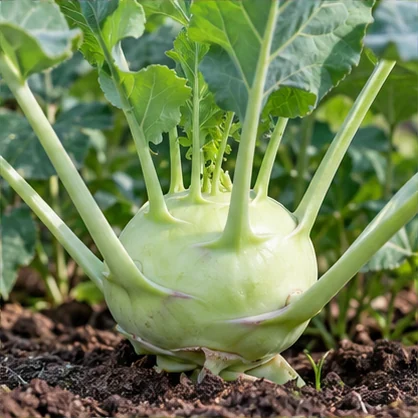
This image was created with AI from described plant characteristics and growing advice. It shows a possible situation and is not a photograph of a verified cultivar.
- Harvested part
- Swollen stem above ground
- Harvest size
- Usually young; follow cultivar information
- Growing location
- Sunny bed or roomy planter
This growing advice helps you choose. Your variety, growth stage, weather and conditions in your space determine the actual timing.
Sowing under cover and raising seedlings
Start under cover in cool conditions in modules or a seedbed · Kohlrabi
March–May, only for a suitable harvest typeSow somewhere cool and bright and avoid long, weak growth.
- Germination and temperature
- Germinate under cover, then grow on in cool, bright, well-ventilated conditions; avoid a hot growing space.
- After emergence
- Give seedlings light immediately after emergence. A dark loft needs suitable grow lights; warmth alone is insufficient. Ventilate and keep the compost moist without saturating it.
- Pricking out and potting on
- Sow in modules or prick out manageable young plants. Let the root ball firm up without a check in growth.
- Hardening off and planting out
- Gradually acclimatise indoor-raised plants to sun, wind and outdoor temperatures; shelter them again on cold nights. Plant out sturdy young brassicas and protect against cabbage root fly and caterpillars where needed.
Harvest young and prevent drought checks; repeat small sowings within the cultivar’s window.
Sources and use
RHS · koolrabi ↗Britse teeltrichtlijn voor een gematigd klimaat; de genoemde perioden zijn richtlijnen voor Nederland en Vlaanderen.
Royal Horticultural Society · Koolrabi kweken ↗Soort- of productgebonden bron; buitenlandse perioden zijn geen vaste Nederlandse zaaidatum.
Utah State University Extension · Kohlrabi in the garden ↗Soort- of productgebonden bron; buitenlandse perioden zijn geen vaste Nederlandse zaaidatum.
Guideline periods for the Netherlands and Flanders. Check the variety, available light, soil and measured temperatures. Greenhouse heating does not guarantee enough winter light.
A different flavour, a different harvest.
Choose by more than the name. Discover how these varieties and crop types taste, what you can use them for and what growing them involves.
3 of 3 choices · 3 named varieties
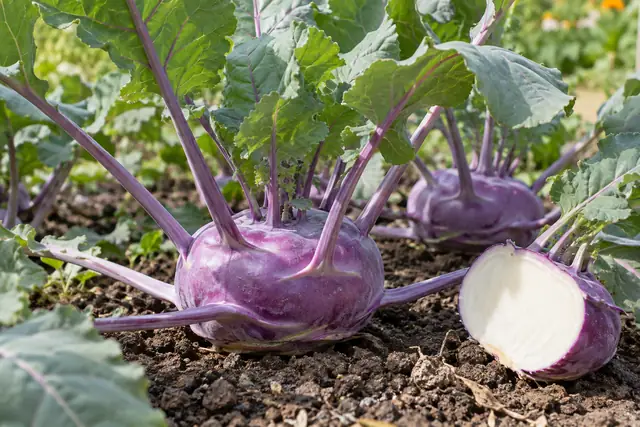
This image was created with AI from described plant characteristics and growing advice. It shows a possible situation and is not a photograph of a verified cultivar.
Azur Star
Azur Star is an early kohlrabi with a blue-purple exterior and white interior. The slightly flattened swollen stem grows above ground.
Choose Azur Star for earliness and a clear outer colour. It is not an underground swollen root.
Flavour, kitchen and growing
How does it taste?
The product source describes a mild, nutty flavour. This offers a concrete point of reference without making every growing result identical.
In the kitchen
Peel the swollen stem for raw strips or cut it into pieces for cooking. The coloured skin does not represent the whole interior.
A space in the garden
Plant with room for above-ground swelling and keep soil moist. Do not let drought stall growth for long.
Harvesting
Harvest while the swollen stem is still tender. Bigger is not automatically better here, as overmature material can become more fibrous.
Read the source notes →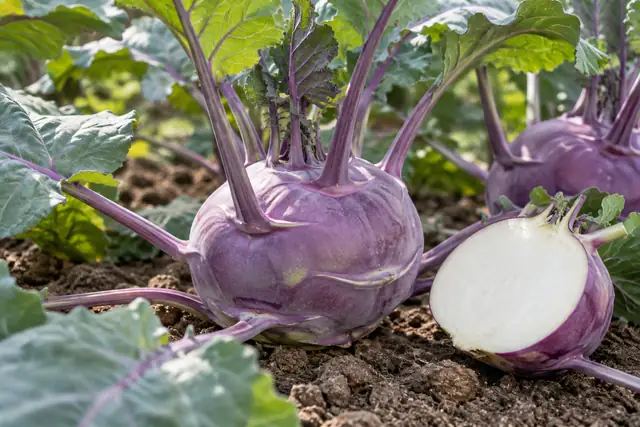
This image was created with AI from described plant characteristics and growing advice. It shows a possible situation and is not a photograph of a verified cultivar.
Delikatess blauw
Delikatess blauw has a blue swollen stem and purple-green leaves. The source describes later development than Delikatess wit.
Choose the blue selection when its colour and slightly later development fit your plans. Compare it with its white counterpart.
Flavour, kitchen and growing
How does it taste?
No separate aroma description is confirmed for this cultivar. General kohlrabi use is better supported than a distinctive flavour claim.
This flavour description applies to the crop; there is no separate tasting result for this variety.In the kitchen
Use peeled bulbs raw in a salad or cook in small pieces. Cut into an older bulb first to assess its texture.
A space in the garden
Provide regular moisture and space around the swollen stem. Avoid planting too closely in a container with limited root space.
Harvesting
Harvest once the swollen root develops well but remains tender. Do not treat described relative lateness as a fixed calendar date.
Read the source notes →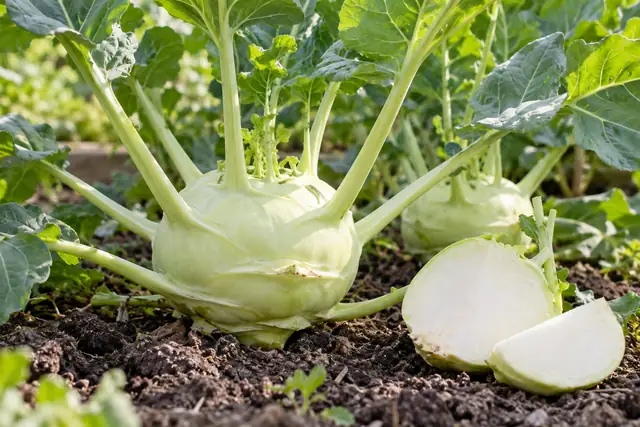
This image was created with AI from described plant characteristics and growing advice. It shows a possible situation and is not a photograph of a verified cultivar.
Delikatess wit
Delikatess wit is pale kohlrabi with edible swelling above soil. The source emphasises tender material.
Choose this selection for a pale swollen stem and comparison with Delikatess blauw. The colour does not name a root crop.
Flavour, kitchen and growing
How does it taste?
The product source describes a good flavour without a specific aroma profile. Tenderness is a texture characteristic and does not prove extra sweetness.
This flavour description applies to the crop; there is no separate tasting result for this variety.In the kitchen
Thinly slice the peeled swollen stem for raw use or add cubes to a stew. Harvesting young offers more flexibility in preparation.
A space in the garden
Keep the growing point above the soil and maintain even moisture and nutrients. Prolonged drought stress works against a pleasant swollen-stem texture.
Harvesting
Harvest by development and tenderness. If unsure, try one root before leaving every plant for greater size.
Read the source notes →Choose your way to grow
From a garden bed to a suitable pot or support: give your plant a place that suits your garden and the care you can provide.
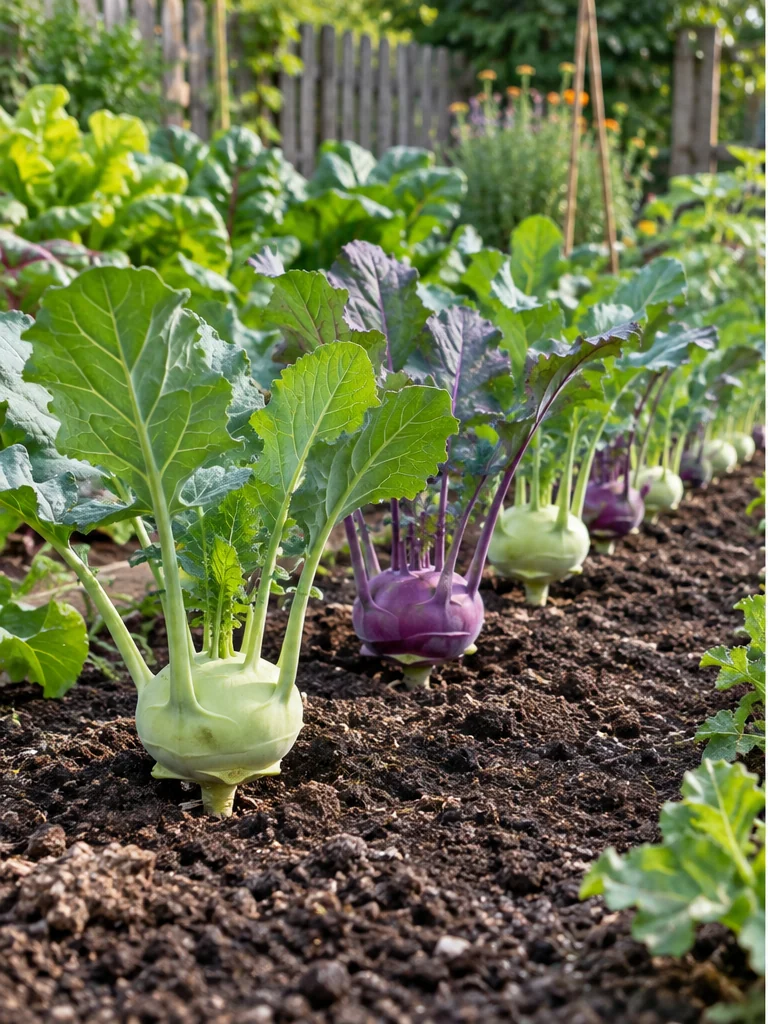
This image was created with AI from described plant characteristics and growing advice. It shows a possible situation and is not a photograph of a verified cultivar.
Small successive rows
A few short rows spread harvesting through the season.
- Sow thinly in the final position in the recommended variety window.
- Thin early and allow room for the swollen stem.
- Harvest young and start another round only if the season still suits.
For a small bed where you prefer regular harvesting to one large harvest.
Tick off your supplies →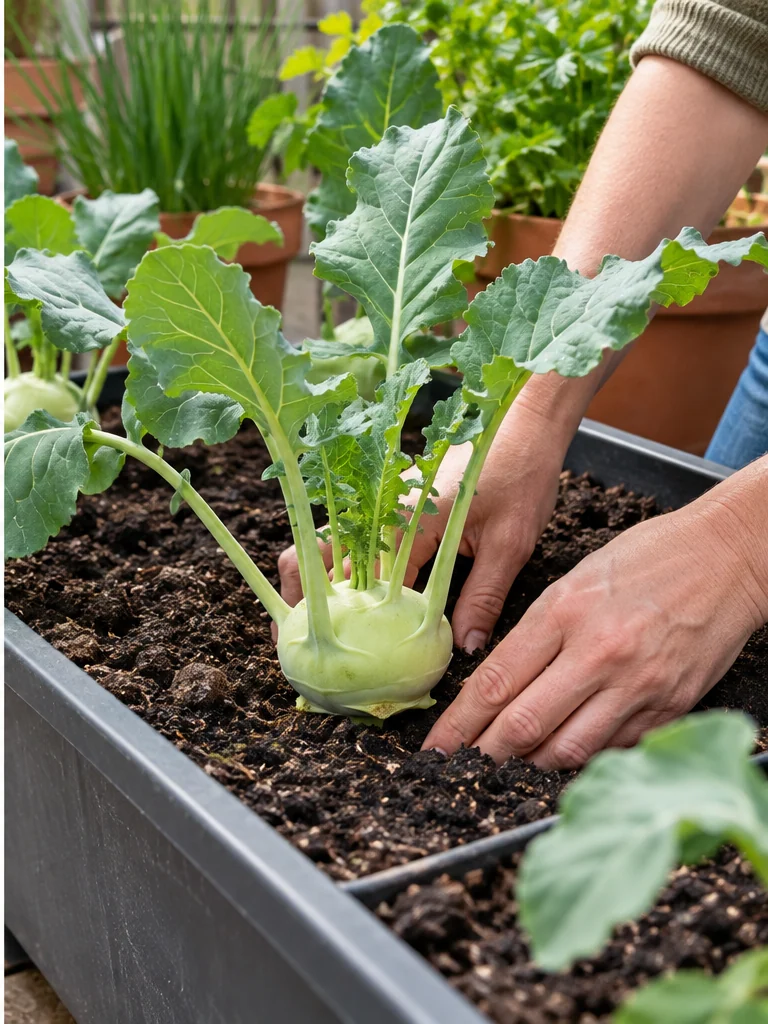
This image was created with AI from described plant characteristics and growing advice. It shows a possible situation and is not a photograph of a verified cultivar.
Kohlrabi in a balcony container
A large container lets you observe bulb formation closely.
- Choose a container with drainage and plant young plants with intact rootballs.
- Allow around 15 cm or suitable variety spacing for a young harvest.
- Water precisely and cut the swollen stem once it reaches the desired size.
For young harvests in a bright spot; large varieties need more space.
Tick off your supplies →Explore the varieties
See the confirmed differences. Characteristics without supporting evidence are left blank.
2 of 2 varieties
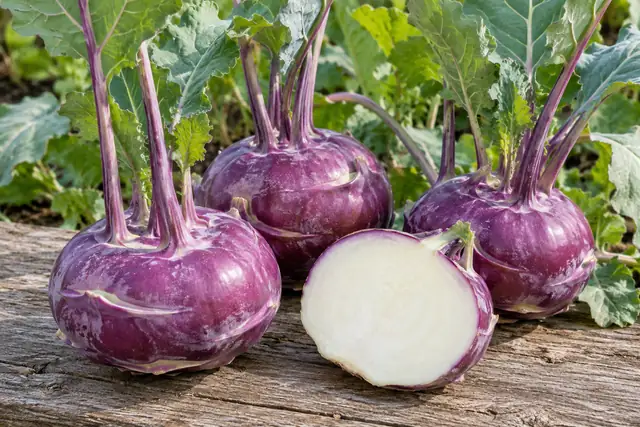
This image was created with AI from described plant characteristics and growing advice. It shows a possible situation and is not a photograph of a verified cultivar.
Kolibri
Explore this variety and use the growing guide to choose a place for your plant.
View variety →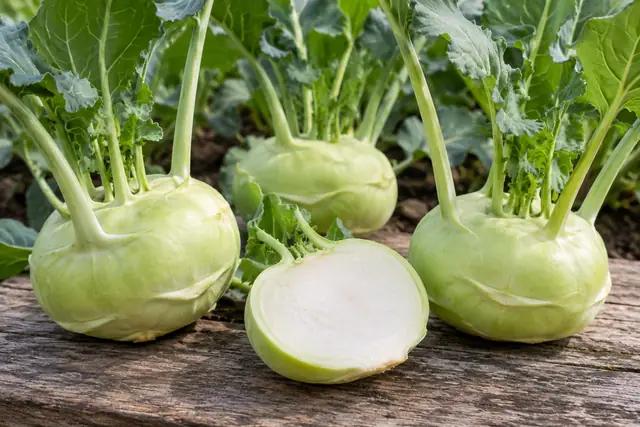
This image was created with AI from described plant characteristics and growing advice. It shows a possible situation and is not a photograph of a verified cultivar.
Korist
Explore this variety and use the growing guide to choose a place for your plant.
View variety →Choose two to four varieties to compare their source data side by side.
Choose by flavour, shape and use
Azur Star: Azur Star is early kohlrabi with a blue-purple exterior and white interior. The slightly flattened swelling grows above ground. Peel the swollen stem for raw strips or cut it into pieces for cooking. The coloured skin does not represent the whole interior.
The product source describes a mild, nutty flavour. This offers a concrete point of reference without making every growing result identical.
Delikatess blauw: Delikatess blauw has a blue swollen stem and purple-green leaves. The source describes later development than Delikatess wit. Use peeled bulbs raw in a salad or cook in small pieces. Cut into an older bulb first to assess its texture.
No separate aroma description is confirmed for this cultivar. General kohlrabi use is better supported than a distinctive flavour claim.
Delikatess wit: Pale kohlrabi with edible swelling above ground. The source emphasises tenderness. Thinly slice peeled stems raw or add cubes to stew. Young harvesting gives more preparation freedom.
The product source describes a good flavour without a specific aroma profile. Tenderness is a texture characteristic and does not prove extra sweetness.
The swollen bulb is actually a stem
Kohlrabi does not form an underground root tuber like some other vegetables. The round swelling grows above ground and carries leaves. Do not bury it or earth up the plant to get a larger bulb. Green and purple are visible variations; desired harvest size and texture also depend on cultivar.
Choose a suitable small sowing round
Kohlrabi suits moderate conditions. Follow variety timing and avoid prolonged cold for young raised plants. A meal portion needs no whole bed sown at once. A short row gives a manageable trial of growth speed and harvest size.
Sow directly or move a whole root ball
Direct sowing is easy in a ready bed. Modules make early care manageable, but do not leave plants root-bound in small cells. Harden off and transplant intact root balls at roughly their existing depth, growing point free.
Thin before the stems touch
Young harvests may allow about 15 cm between plants; large varieties need more. Match variety and desired size and thin promptly. Spacing matters especially in containers with shared limited soil and leaves hiding moisture checks.
Let growth continue steadily
Water at bases during drought. Major moisture swings can reduce quality and interrupt growth. Check below surfaces, especially during swelling. Weed shallowly. Soil preparation before growing is more useful than repeated emergency feeding during stress.
Inspect holes and distortion closely
Tiny young-leaf holes may be flea beetles; larger damage needs caterpillar checks. Use closed mesh if needed and inspect beneath. Poor growth can reflect cold, drought or roots. Whole-plant and detail photos help distinguish causes.
Harvest young kohlrabi before it turns tough
Many ordinary varieties suit eating around 5–8 cm across. Some large varieties stay tender longer; consult specific data. Cut swollen stems and remove coarse leaves. Do not let the largest plant set all timing. Compare smaller and larger kohlrabi in cooking.
Use the fresh leaves too
Cook healthy young leaves as cabbage greens. Peel the swollen stem and eat raw or cooked. Cool and use promptly for fresh texture. Note your preferred size beside the row as guidance for the next sowing.
What you need
Tick what you already have. The extras depend on how you grow.
0 of 6 ticked off
Your ticks are saved in this browser.
Discover and grow more
More background, sources and image information
SeedSteps editorial team · updated on 11 October 2026. The AI images illustrate species and practical growing situations; they do not prove an exact cultivar, observations from your own garden or yield.
Britse gewasadviezen worden gecombineerd met Nederlandse en Vlaamse informatie waar beschikbaar. Amerikaanse Extension-bronnen ondersteunen plantprincipes en herkenning; hun kalenderdata, lokale plaagdruk, bestrijdingsmiddelen en mestdoseringen worden niet rechtstreeks op Nederland of Vlaanderen toegepast. Vorst, bodemwarmte, standplaats en expliciete rasinformatie blijven de lokale controle. Commerciële bronnen onderbouwen uitsluitend benoemde ras- en plantkenmerken; zij zijn geen affiliate-aanbeveling.
- World Checklist of Vascular Plants — 4 juni 2026Royal Botanic Gardens, Kew · accessed 2026-10-07
- Koolrabi Azur Star BiologischFeggies · accessed 2026-10-11
- Koolrabi Delikatess blauw zaden biologischFeggies · accessed 2026-10-11
- Koolrabi Delikatess wit zaden biologischFeggies · accessed 2026-10-11
- Koolrabi kwekenRoyal Horticultural Society · accessed 2026-10-10
- Kohlrabi in the gardenUtah State University Extension · accessed 2026-10-10
Supporting evidence by chapter: Choose by flavour, shape and use: Feggies, Feggies, Feggies. The swollen bulb is actually a stem: Royal Horticultural Society, Utah State University Extension. Choose a suitable small sowing round: Royal Horticultural Society, Utah State University Extension. Sow directly or move a whole root ball: Royal Horticultural Society, Utah State University Extension. Thin before the stems touch: Royal Horticultural Society, Utah State University Extension. Let growth continue steadily: Royal Horticultural Society, Utah State University Extension. Inspect holes and distortion closely: Royal Horticultural Society, Utah State University Extension. Harvest young kohlrabi before it turns tough: Royal Horticultural Society, Utah State University Extension. Use the fresh leaves too: Royal Horticultural Society, Utah State University Extension.