
Sweetcorn: plant a block for full cobs
A group of sweetcorn gives the vegetable garden striking summer height. Good cobs depend mainly on the layout: grow plants in a block so pollen can reach the silks. Choose an early variety for our growing season and harvest close to cooking time.
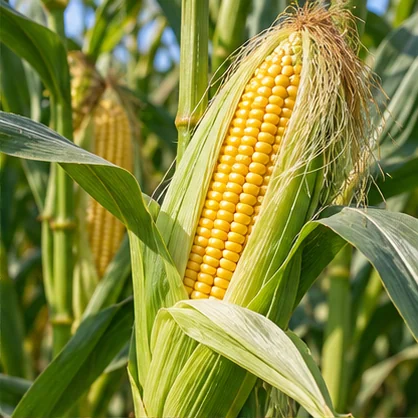
This image was created with AI from described plant characteristics and growing advice. It shows a possible situation and is not a photograph of a verified cultivar.
- Location
- Plenty of sun, warmth and shelter without stagnant air
- Arrangement
- A block with several rows, for wind pollination
- Planting outdoors
- After the local last frost, in warmed soil
- Harvest
- Brown silks and milky kernels; check several signs
This growing advice helps you choose. Your variety, growth stage, weather and conditions in your space determine the actual timing.
Sowing under cover and raising seedlings
Start under cover in warmth · Sweetcorn
April–MayStart indoors in warmth and reserve enough bright space for raising plants.
- Germination and temperature
- Warmth helps germination; use cultivar instructions for temperature.
- After emergence
- Give seedlings light immediately after emergence. A dark loft needs suitable grow lights; warmth alone is insufficient. Ventilate and keep the compost moist without saturating it.
- Pricking out and potting on
- Sow in individual pots or deep modules. Do not prick out bare-rooted; move the whole root ball before the roots become restricted.
- Hardening off and planting out
- Gradually acclimatise indoor-raised plants to sun, wind and outdoor temperatures; shelter them again on cold nights. After hardening off and the last frost, usually late May–June. Plant root balls in a block for pollination.
Do not leave young sweetcorn in small pots too long. Popcorn needs enough season for cobs to ripen and dry.
Sources and use
Royal Horticultural Society · RHS — suikermais kweken ↗Soort- of productgebonden bron; buitenlandse perioden zijn geen vaste Nederlandse zaaidatum.
University of Minnesota Extension · UMN Extension — suikermais in de moestuin ↗Soort- of productgebonden bron; buitenlandse perioden zijn geen vaste Nederlandse zaaidatum.
Guideline periods for the Netherlands and Flanders. Check the variety, available light, soil and measured temperatures. Greenhouse heating does not guarantee enough winter light.
A different flavour, a different harvest.
Choose by more than the name. Discover how these varieties and crop types taste, what you can use them for and what growing them involves.
13 of 13 choices · 11 named varieties
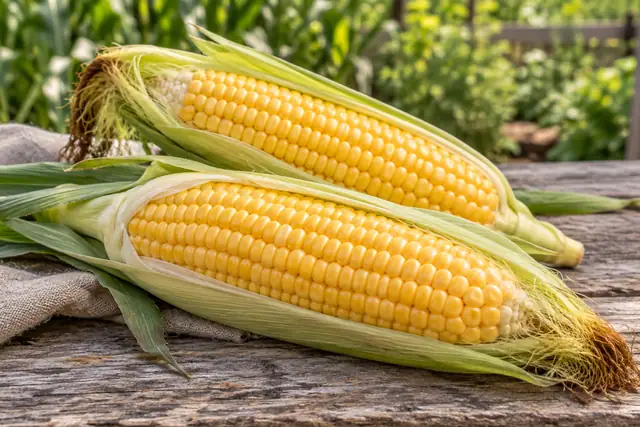
This image was created with AI from described plant characteristics and growing advice. It shows a possible situation and is not a photograph of a verified cultivar.
Golden Bantam
A classic open-pollinated yellow sweetcorn with medium cobs: especially attractive for preparing the harvest immediately fresh.
Choose Golden Bantam for an old, yellow sweetcorn and fresh summer meal rather than dry popcorn kernels.
Flavour, kitchen and growing
How does it taste?
Young kernels at the milky stage are described as meltingly tender and sweet. The best eating stage is shorter than the period during which the cob still looks attractive.
In the kitchen
Boil or grill a freshly picked cob and eat it the same day. Waiting a long time reduces the sweetness of traditional sweetcorn.
A space in the garden
Sow after frost in warmed soil and plant a block for wind pollination. Provide sun, feed and water during cob formation.
Harvesting
Harvest when a kernel releases milky juice. Do not wait until the kernels are hard and dry; that is past the sweetcorn stage.
Read the source notes →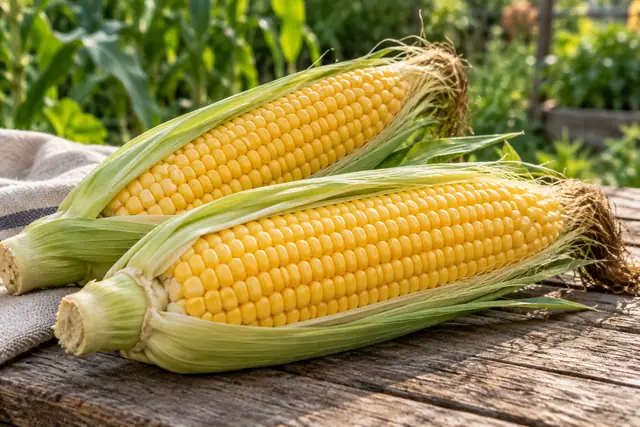
This image was created with AI from described plant characteristics and growing advice. It shows a possible situation and is not a photograph of a verified cultivar.
Mezdi
A second-early Sativa variety prioritising sweetcorn cob quality, with greater sweetness retention after harvest.
Choose Mezdi mainly for sweet eating cobs when you cannot take every cob straight from plant to pan.
Flavour, kitchen and growing
How does it taste?
The source describes very sweet kernels that retain their sweetness after picking better than other open-pollinated selections.
In the kitchen
Boil or grill the young cobs; process surplus soon after harvest for storage to preserve fresh quality.
A space in the garden
Provide a warm, sunny block with enough water. Avoid flowering maize in one long row where possible.
Harvesting
Pick at the milk stage before kernels harden. Stated ripening time is a guide depending on season and emergence.
Read the source notes →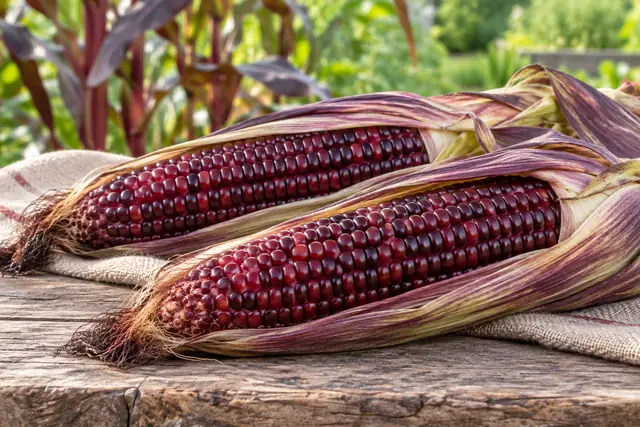
This image was created with AI from described plant characteristics and growing advice. It shows a possible situation and is not a photograph of a verified cultivar.
Martian Purple
Sweetcorn with purplish-red plants and purplish-red kernels, selected from Double Red; colour also shapes the crop's appearance.
Choose Martian Purple for colour on both plant and cob. It is a selection from Double Red, without the two therefore being proven synonyms.
Flavour, kitchen and growing
How does it taste?
No specific sweetness comparison is given. The general sweetcorn flavour belongs to harvesting at the milky stage, not to fully dried purple kernels.
This flavour description applies to the crop; there is no separate tasting result for this variety.In the kitchen
Boil or grill young cobs and taste them fresh. The striking colour makes the harvest special even before cooking.
A space in the garden
Plant in a sunny block and keep enough water available during flowering and cob formation. Decorative colour does not replace good pollination.
Harvesting
Check milk-stage ripeness with a test kernel. Do not let all cobs dry simply to admire their final purple colour.
Read the source notes →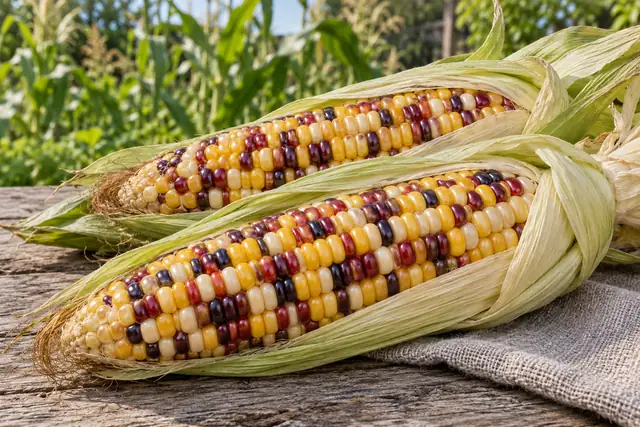
This image was created with AI from described plant characteristics and growing advice. It shows a possible situation and is not a photograph of a verified cultivar.
Inca Rainbow
A vigorous sweetcorn selection with white, yellow, red and dark kernels on plants approximately 1.5–2 metres tall.
Choose Inca Rainbow for a multicoloured harvest and tall crop. It is a named selection, not an arbitrary seed mix.
Flavour, kitchen and growing
How does it taste?
The source describes sweetcorn but gives no separate ranking of sweetness. Colour variation does not prove that every kernel tastes different.
This flavour description applies to the crop; there is no separate tasting result for this variety.In the kitchen
Boil a young cob or cut off milky-stage kernels for a cooked vegetable dish. If desired, keep a few dry cobs as a reminder of the garden.
A space in the garden
Provide a spacious, sunny block and allow for tall plants' shade. Water matters especially during flowering and cob growth.
Harvesting
Harvest at the milk stage for eating. The source's long development needs a sufficiently warm, timely start in the Netherlands.
Read the source notes →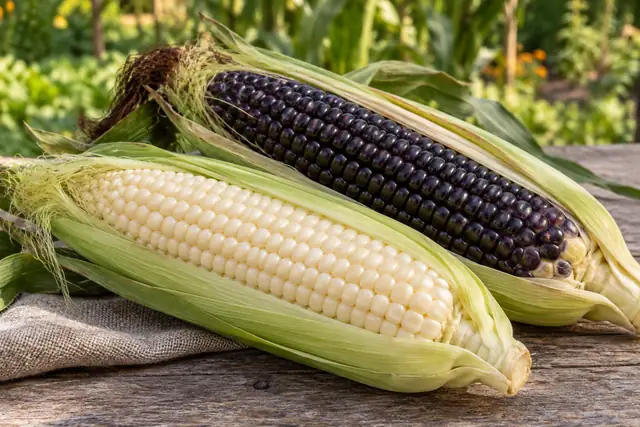
This image was created with AI from described plant characteristics and growing advice. It shows a possible situation and is not a photograph of a verified cultivar.
Black Mexican
An old, early sweetcorn whose kernels are white when young and turn black at full maturity.
Choose Black Mexican for an early heirloom and white-to-black transition, with clearly separate eating and seed maturity.
Flavour, kitchen and growing
How does it taste?
The sweetcorn quality belongs to the white, milky stage. The final black colour is a different stage, not a reason to wait longer for fresh cobs.
This flavour description applies to the crop; there is no separate tasting result for this variety.In the kitchen
Cook young, white cobs straight after picking. Let a separate cob ripen further to follow the unusual colour change.
A space in the garden
Sow after frost and plant in a block. If necessary, separate different maize types by flowering time or distance to limit unwanted crossing.
Harvesting
Check kernels while still white and at the milk stage. Do not wait for fully black, hard kernels for fresh sweetcorn.
Also listed as: Black Aztec, Mexican Sweet, Black Iroquois.
Read the source notes →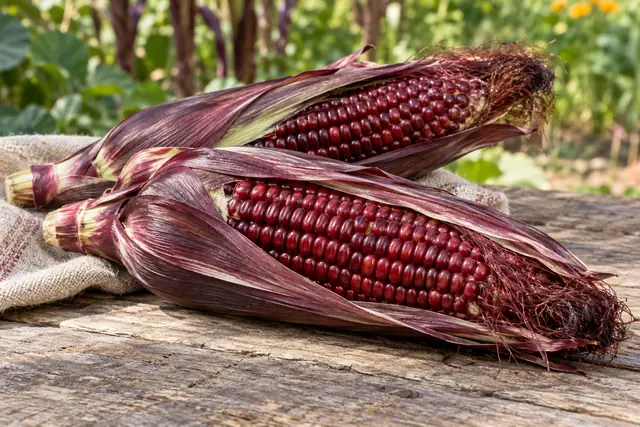
This image was created with AI from described plant characteristics and growing advice. It shows a possible situation and is not a photograph of a verified cultivar.
Double Red
Red-purple stems, leaves and cobs make Double Red a sweetcorn variety that also colours the garden.
Choose Double Red if the entire maize crop should be a feature rather than colour only in the kernels.
Flavour, kitchen and growing
How does it taste?
A distinct sweetness profile is not described. Eat the cobs as sweetcorn at the young, milky stage, when the usual crop flavour is most pleasant.
This flavour description applies to the crop; there is no separate tasting result for this variety.In the kitchen
Boil or grill young cobs, or cut off fresh kernels for a meal. Dry red kernels are a different product from fresh sweetcorn.
A space in the garden
Provide a sunny block and sufficient feed. Position lower vegetables so they do not disappear completely beneath the maize.
Harvesting
Assess milk-stage ripeness independently of red colour. Harvest for eating before kernels dry and harden.
Read the source notes →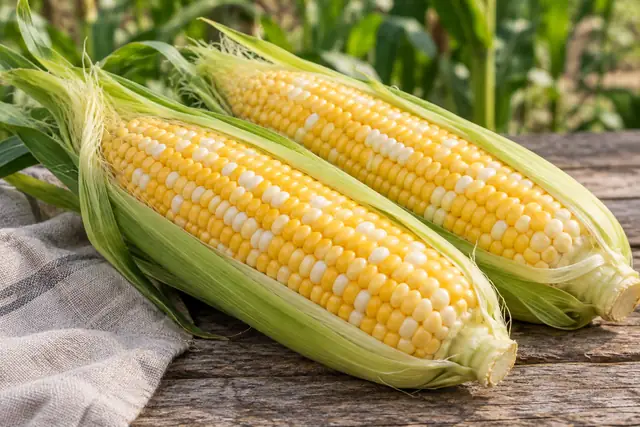
This image was created with AI from described plant characteristics and growing advice. It shows a possible situation and is not a photograph of a verified cultivar.
Double Standard
A very early, bicoloured sweetcorn with white and yellow kernels on cobs approximately 15 cm long.
Choose Double Standard for early development and two-coloured cobs. The recommendation for cooler areas is relevant, but no guarantee in cold soil.
Flavour, kitchen and growing
How does it taste?
A separate aroma profile is missing. The usual sweet corn flavour depends on picking at the milky stage; white and yellow mainly create a visible pattern.
This flavour description applies to the crop; there is no separate tasting result for this variety.In the kitchen
Serve small, boiled or grilled cobs as individual portions. The described size is manageable on a plate.
A space in the garden
Sow after frost in warm soil in a block of several rows. Early development benefits from an even start.
Harvesting
Check cobs in good time for kernels at the milky stage. An early variety can pass its best eating stage while a later one is not yet ready.
Read the source notes →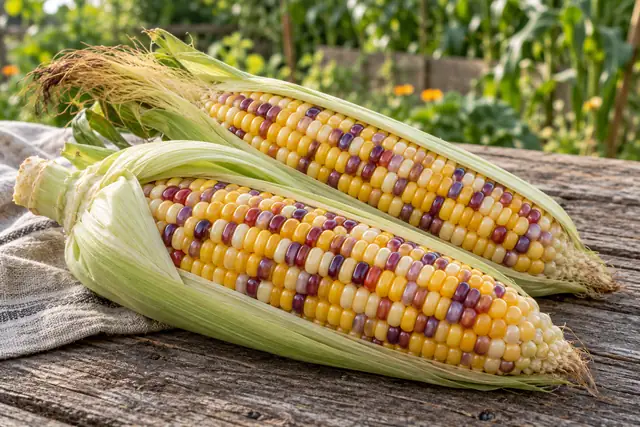
This image was created with AI from described plant characteristics and growing advice. It shows a possible situation and is not a photograph of a verified cultivar.
Painted Hills
Multicoloured sweetcorn on plants potentially around two metres tall, developed through a targeted American cross.
Choose Painted Hills for multicoloured cobs and a slightly sweet profile. It is a named selection whose colours can vary between cobs.
Flavour, kitchen and growing
How does it taste?
The source states a lightly sweet flavour. This differs from the distinctly very sweet profile described for Mezdi.
In the kitchen
Use young cobs for a simple boiled meal or cut kernels into a vegetable dish. Let the mild sweetness be part of the dish.
A space in the garden
Provide sun and a spacious block. Good germination in cooler soil does not remove the need for a frost-free start.
Harvesting
Harvest at the milky stage for fresh eating. Dry, coloured cobs are attractive to look at, but have a different texture from sweetcorn ready to eat.
Read the source notes →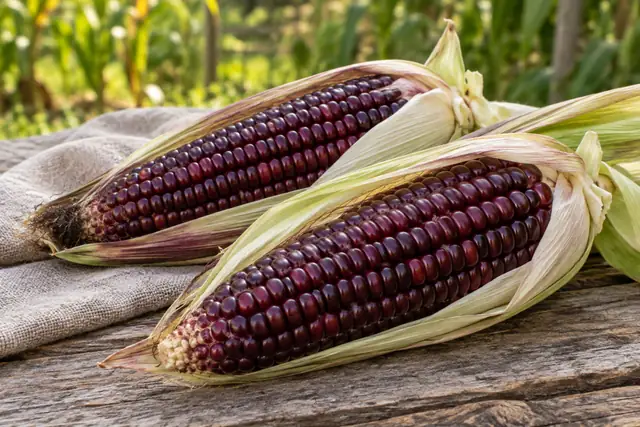
This image was created with AI from described plant characteristics and growing advice. It shows a possible situation and is not a photograph of a verified cultivar.
Martian Purple Red
A selection with deep reddish-purple to purple cobs, listed separately as Martian Purple Red alongside Martian Purple.
Choose this offering for the red-purple cob appearance. The similar name to Martian Purple does not prove an identical selection without further documentation.
Flavour, kitchen and growing
How does it taste?
A separate flavour comparison is not described. The usual sweetcorn flavour needs young, milky kernels; colour alone does not tell you how sweet a cob is.
This flavour description applies to the crop; there is no separate tasting result for this variety.In the kitchen
Boil or grill young cobs fresh. Leave a separate cob to ripen if you also want to see final purple colour.
A space in the garden
Plant in a warm, sunny block and keep soil sufficiently moist during flowering.
Harvesting
Check kernels for milky juice and pick for fresh eating before they dry completely. Note in your garden when this selection ripens.
Read the source notes →Discover all 13 choices
This image was created with AI from described plant characteristics and growing advice. It shows a possible situation and is not a photograph of a verified cultivar.
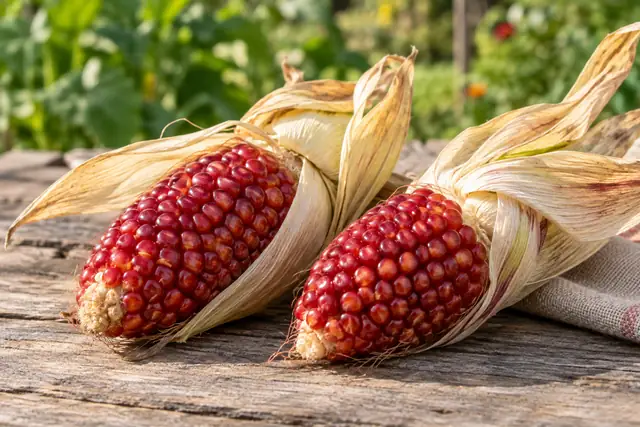
Aardbei-popcornmaïs
Small red cobs the size of a large strawberry: a popcorn offering looking little like a long sweetcorn cob.
Choose this type for small decorative cobs and the pleasure of home-grown popcorn. Its harvest has a different purpose from sweet, fresh corn.
Flavour, kitchen and growing
How does it taste?
A separate aroma is not described. The eating result is popcorn; the kernels must dry for this rather than being eaten at the milky stage.
This flavour description applies to the crop; there is no separate tasting result for this variety.In the kitchen
Dry cobs well and test a few kernels in a pan with oil. Popping results partly depend on moisture content.
A space in the garden
Grow in a warm block and water sufficiently during cob formation. Separate popcorn and sweetcorn by flowering time or distance if needed.
Harvesting
Let kernels ripen on the plant and dry further under shelter. Test only after drying; milk-stage kernels do not make popcorn.
Read the source notes →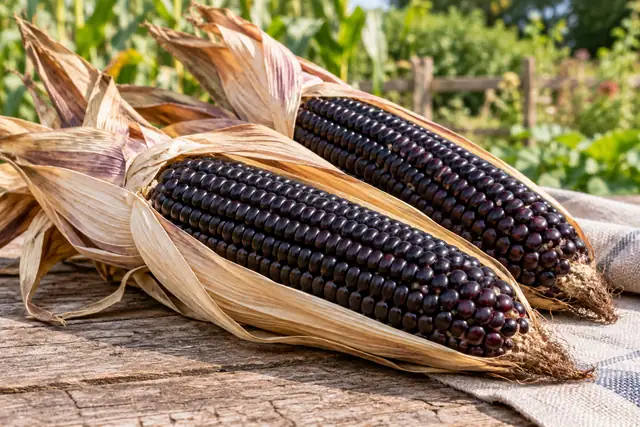
This image was created with AI from described plant characteristics and growing advice. It shows a possible situation and is not a photograph of a verified cultivar.
Zwart uit Ticino
Traditional grain maize from Switzerland's Ticino region, with very dark, almost black kernels and sturdy plants.
Choose this type if you want to try growing a dry grain crop. A named sweetcorn variety makes more sense for sweet cobs to cook straight away.
Flavour, kitchen and growing
How does it taste?
No distinctive flavour is established. This is maize for ripe, dry kernels, not guaranteed sweet, fresh table corn.
This flavour description applies to the crop; there is no separate tasting result for this variety.In the kitchen
Have dry kernels milled appropriately for a maize use. The colour makes the result unusual, but does not replace a suitable flour or cooking recipe.
A space in the garden
Provide a spacious, sunny block and a season long enough for grain ripening. Swiss origin is not evidence of a guaranteed harvest in every Dutch garden.
Harvesting
Harvest when kernels ripen and harden, then dry cobs further with airflow. Store only completely dry, undamaged produce.
Also listed as: korrelmaïs “Zwart uit Ticino”.
Read the source notes →
This image was created with AI from described plant characteristics and growing advice. It shows a possible situation and is not a photograph of a verified cultivar.
Glass Gem
Each cob has its own mosaic of glossy, coloured kernels: this maize is mainly a dry grain and popcorn selection.
Choose Glass Gem for surprising cob colours and a harvest lasting beyond summer. It does not replace sweetcorn.
Flavour, kitchen and growing
How does it taste?
The custodian describes maize flavour, not a sweetcorn profile. Glass Gem is usually popped or processed into maize meal.
In the kitchen
Pop a small trial batch of well-dried kernels or have them suitably ground for maize meal. Do not automatically serve it as a fresh sweet cob.
A space in the garden
Provide a warm, sunny block and plenty of space: the plants can grow tall. American maturity days are not a fixed Dutch harvest date.
Harvesting
Wait for dry, brown cob leaves for full colour, then continue drying the cobs in airy conditions. Popcorn quality also depends on drying.
Read the source notes →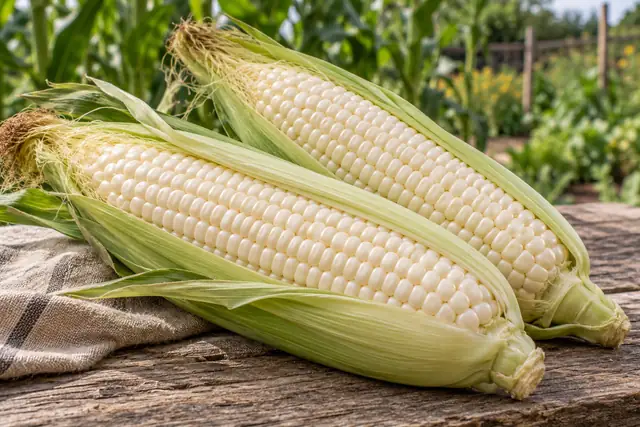
This image was created with AI from described plant characteristics and growing advice. It shows a possible situation and is not a photograph of a verified cultivar.
Stowells Evergreen
A very old, white sweetcorn with cobs around 20 cm long on tall plants: a pale counterpart to Golden Bantam.
Choose Stowells Evergreen for white sweetcorn and large plants. It needs more vertical space than low vegetables alongside it.
Flavour, kitchen and growing
How does it taste?
The grower describes juicy white kernels with a fine flavour. A fixed sweetness ranking against other varieties is not given.
In the kitchen
Boil or grill young cobs and taste the white kernels fresh. Cut kernels off for a simple warm vegetable dish.
A space in the garden
Provide a spacious, sunny block; the producer states approximately 2.5–3 metres in height. Position the crop so its shade does not deprive smaller crops of light.
Harvesting
Pick milk-stage cobs for fresh eating. Keep this separate from fully dry kernels and prevent tall plants falling over.
Read the source notes →Choose your way to grow
From a garden bed to a suitable pot or support: give your plant a place that suits your garden and the care you can provide.
This image was created with AI from described plant characteristics and growing advice. It shows a possible situation and is not a photograph of a verified cultivar.
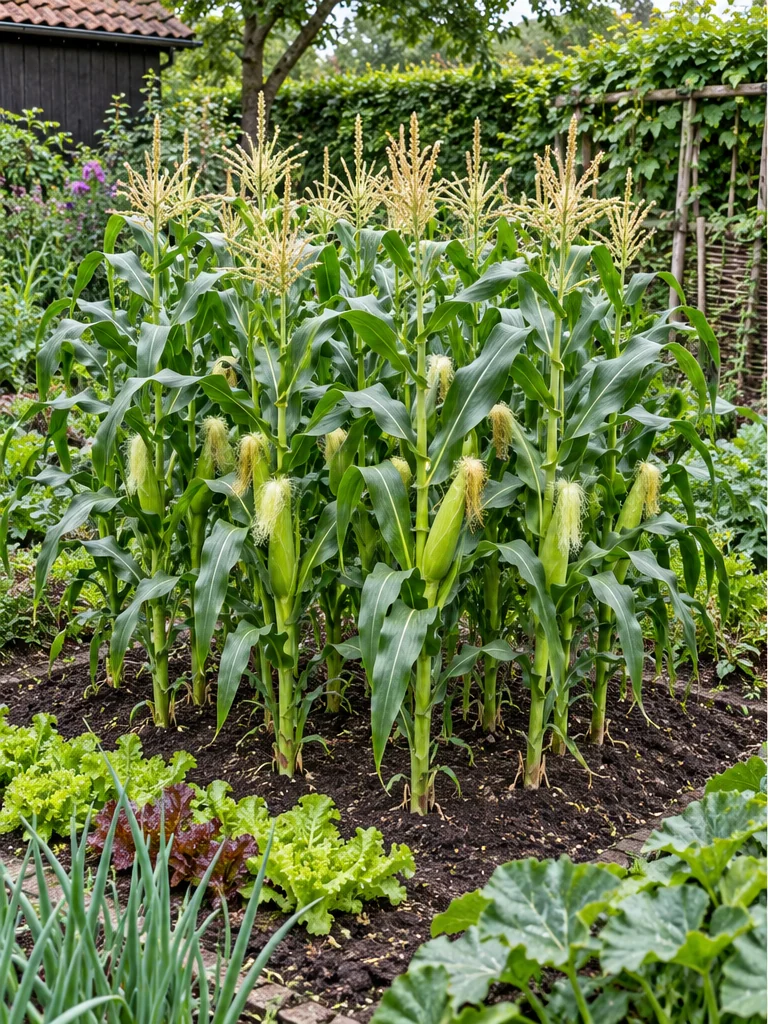
A block of sweetcorn in open ground
A square or rectangular group generally pollinates better than one narrow, long row. Reserve enough sun for every plant.
- Choose an early sweetcorn variety and optionally start individually in deep pots.
- Acclimatise plants outdoors and plant in warm soil only after frost risk.
- Plant in several short rows, usually approximately 35–45 cm apart according to variety.
- Water during flowering and cob formation and leave male tassels intact.
For the best chance of well-filled cobs in a sunny vegetable garden.
Tick off your supplies →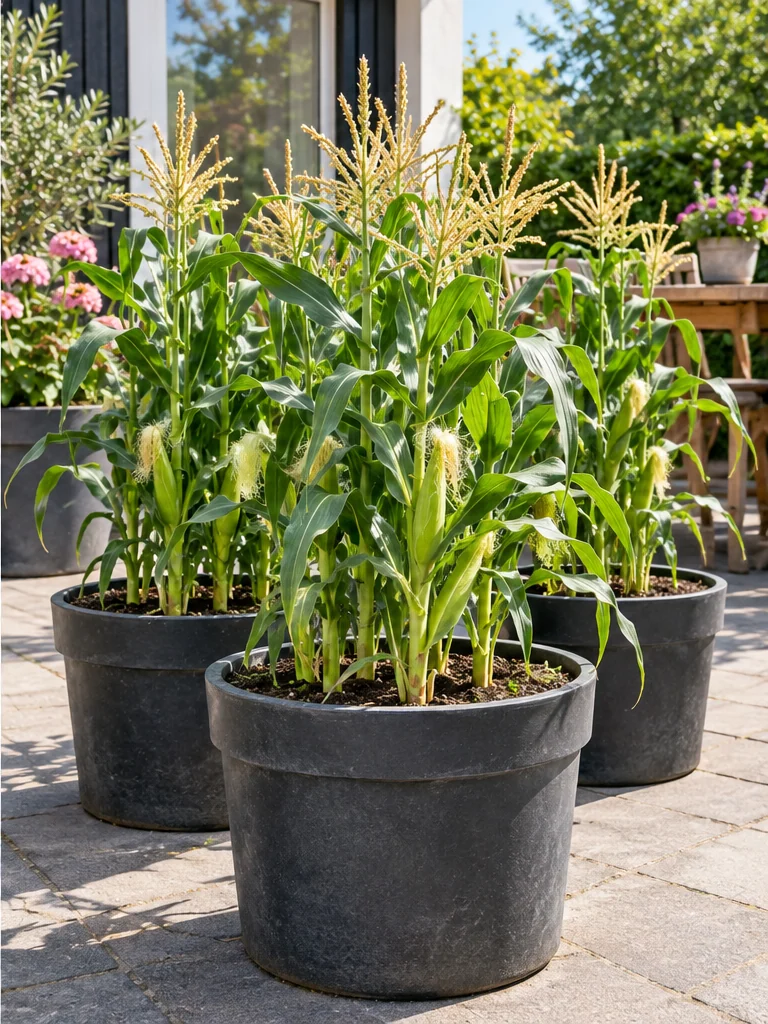
This image was created with AI from described plant characteristics and growing advice. It shows a possible situation and is not a photograph of a verified cultivar.
Compact sweetcorn in a group of large pots
A compact variety can grow in very large containers, but one isolated plant pollinates poorly. Group several generously planted pots into a small block.
- Choose large, deep containers with drainage and fertile compost.
- Choose a compact, early variety and give each plant sufficient root space.
- Group containers close enough for pollination without crowding foliage tightly together.
- Check moisture and feed regularly; expect a more modest yield.
For a spacious, sunny patio, not a single small balcony pot.
Tick off your supplies →Explore the varieties
See the confirmed differences. Characteristics without supporting evidence are left blank.
3 of 3 varieties
This image was created with AI from described plant characteristics and growing advice. It shows a possible situation and is not a photograph of a verified cultivar.
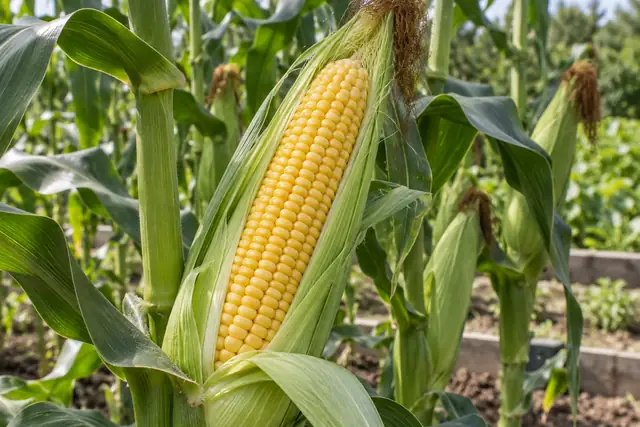
Conqueror
Explore this variety and use the growing guide to choose a place for your plant.
View variety →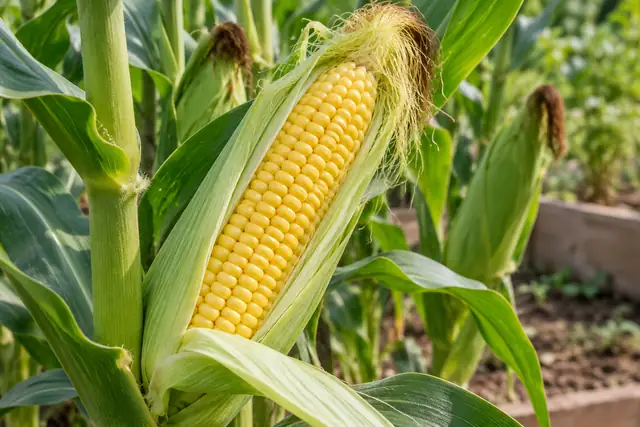
This image was created with AI from described plant characteristics and growing advice. It shows a possible situation and is not a photograph of a verified cultivar.
Earlibird
Explore this variety and use the growing guide to choose a place for your plant.
View variety →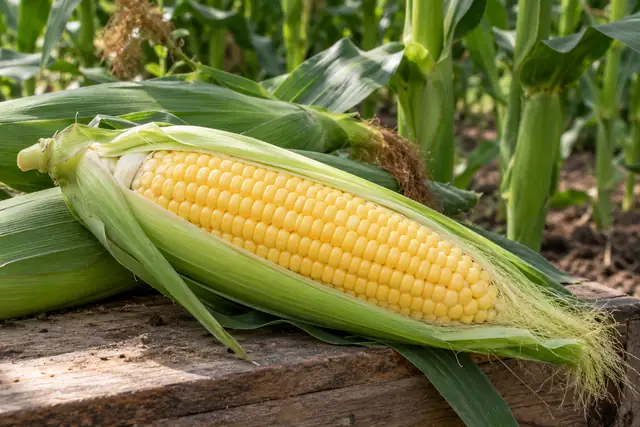
This image was created with AI from described plant characteristics and growing advice. It shows a possible situation and is not a photograph of a verified cultivar.
Goldcrest
Explore this variety and use the growing guide to choose a place for your plant.
View variety →Choose two to four varieties to compare their source data side by side.
Choose by flavour, shape and use
Golden Bantam: A classic open-pollinated yellow sweetcorn with medium-sized cobs: particularly appealing if you prepare the harvest fresh straight away. Boil or grill a freshly picked cob and eat it the same day. Waiting a long time reduces the sweetness of traditional sweetcorn.
Young kernels at the milky stage are described as meltingly tender and sweet. The best eating stage is shorter than the period during which the cob still looks attractive.
Mezdi: A mid-early Sativa cultivar focused on sweetcorn cob quality, with better retention of sweetness after harvest. Boil or grill the young cobs; process surplus soon after harvest for storage to preserve fresh quality.
The source describes very sweet kernels that retain their sweetness after picking better than other open-pollinated selections.
Martian Purple: Sweetcorn with purplish-red plants and reddish-purple kernels, selected from Double Red; colour is part of the crop's appearance here too. Boil or grill young cobs and taste them fresh. The striking colour makes the harvest special even before cooking.
No specific sweetness comparison is given. The general sweetcorn flavour belongs to harvesting at the milky stage, not to fully dried purple kernels.
Inca Rainbow: A vigorous sweetcorn selection with white, yellow, red and dark kernels on plants about 1.5–2 metres tall. Boil a young cob or cut off milky-stage kernels for a cooked vegetable dish. If desired, keep a few dry cobs as a reminder of the garden.
The source describes sweetcorn but gives no separate ranking of sweetness. Colour variation does not prove that every kernel tastes different.
Not all maize is sweetcorn
Fodder maize, popcorn and sweetcorn are grown for different harvests. Choose a cultivar offered as sweetcorn for fresh use. Earliness matters in a Dutch garden: an impressively tall, late plant may still fail to produce ripe cobs before cool autumn weather.
Provide warmth without starting too early
Start indoors in spring when you can move the plants outside in good time later. Individual deep pots limit root disturbance. A sowing depth of about 2–3 cm is usual; follow the packet. Provide plenty of light after emergence and avoid plants growing on for weeks until pot-bound.
Frost-free also means warm soil
Maize does not tolerate frost. Alongside calendar advice, wait for warmed soil and a favourable forecast. Harden plants off and set the rootball at about the same depth. Water straight away; temporary cold protection needs daytime checks for overheating.
The tassel and silks work together
The tassel at the top produces pollen. Each silk by the cob leads to a developing kernel. Wind carries the pollen. This makes several short rows useful, and missing kernels may fit incomplete pollination or unfavourable weather during flowering.
Take care when growing different maize types
With some sweet maize types, cross-pollination with other maize can affect the quality of the current kernels. Check the seed guidance for recommendations on isolation. In a small garden, preferably sow one suitable type rather than several alongside one another without growing information.
Do not let cob formation dry out
Provide enough water, particularly during flowering and cob filling. Check below the surface before watering and avoid prolonged waterlogging. Root space dries out faster in containers. Mature compost or suitable feed supports growth; extra fertiliser does not replace good pollination.
Investigating leaning plants and empty cobs
Wind can tip plants over; a sheltered spot and light support around the outside may help. If cobs fill poorly, assess layout, simultaneous flowering and drought. Do not remove tassels during flowering. Diseased or rotting cobs do not belong in the edible harvest.
Check the cob, not just the calendar
Browning silks are a clue, not complete proof. Check a cob: the kernels are well filled and release milky sap when lightly damaged. Clear liquid indicates an earlier stage; a doughy content indicates a later one. Hold the plant while twisting the cob off.
Plan the meal around the harvest
Harvest just before preparing when possible; sweetness changes after picking. Store cobs briefly in cool conditions if you cannot eat them straight away. Record which plants were ripe: next year you can see whether the cultivar and sowing time suit your space.
What you need
Tick what you already have. The extras depend on how you grow.
0 of 6 ticked off
Your ticks are saved in this browser.
Discover and grow more
More background, sources and image information
SeedSteps editorial team · updated on 11 October 2026. The AI images illustrate species and practical growing situations; they do not prove an exact cultivar, observations from your own garden or yield.
Britse gewasadviezen worden gecombineerd met Nederlandse en Vlaamse informatie waar beschikbaar. Amerikaanse Extension-bronnen ondersteunen plantprincipes en herkenning; hun kalenderdata, lokale plaagdruk, bestrijdingsmiddelen en mestdoseringen worden niet rechtstreeks op Nederland of Vlaanderen toegepast. Vorst, bodemwarmte, standplaats en expliciete rasinformatie blijven de lokale controle. Commerciële bronnen onderbouwen uitsluitend benoemde ras- en plantkenmerken; zij zijn geen affiliate-aanbeveling.
- World Checklist of Vascular Plants — 4 juni 2026Royal Botanic Gardens, Kew · accessed 2026-10-07
- Maïs Aardbei-popcornmaïs — ras- en teeltbeschrijvingFeggies · accessed 2026-10-11
- Maïs Black Mexican — ras- en teeltbeschrijvingFeggies · accessed 2026-10-11
- Maïs Double Red — ras- en teeltbeschrijvingFeggies · accessed 2026-10-11
- Maïs Double Standard — ras- en teeltbeschrijvingFeggies · accessed 2026-10-11
- Maïs Golden Bantam — ras- en teeltbeschrijvingFeggies · accessed 2026-10-11
- Maïs Inca Rainbow — ras- en teeltbeschrijvingFeggies · accessed 2026-10-11
- Maïs Martian Purple — ras- en teeltbeschrijvingFeggies · accessed 2026-10-11
- Maïs Martian Purple Red — ras- en teeltbeschrijvingFeggies · accessed 2026-10-11
- Maïs Mezdi — ras- en teeltbeschrijvingFeggies · accessed 2026-10-11
- Maïs Painted Hills — ras- en teeltbeschrijvingFeggies · accessed 2026-10-11
- Maïs Zwart uit Ticino — ras- en teeltbeschrijvingFeggies · accessed 2026-10-11
- Double Standard — botanische soort en blokteeltJohnny’s Selected Seeds · accessed 2026-10-11
- Black Mexican — botanische soort en synoniemenKokopelli · accessed 2026-10-11
- Double Red — botanische soortKokopelli · accessed 2026-10-11
- Sweet Painted Hills — botanische soortKokopelli · accessed 2026-10-11
- Stowells Evergreen — witte suikermaïsAssociation Kokopelli · accessed 2026-10-11
- Glass Gem — beheerder en kolfgebruikNative Seeds/SEARCH · accessed 2026-10-11
- RHS — suikermais kwekenRoyal Horticultural Society · accessed 2026-10-10
- UMN Extension — suikermais in de moestuinUniversity of Minnesota Extension · accessed 2026-10-10
Supporting evidence by chapter: Choose by flavour, shape and use: Feggies, Feggies, Feggies, Feggies. Not all maize is sweetcorn: Royal Horticultural Society, University of Minnesota Extension. Provide warmth without starting too early: Royal Horticultural Society, University of Minnesota Extension. Frost-free also means warm soil: Royal Horticultural Society, University of Minnesota Extension. The tassel and silks work together: Royal Horticultural Society, University of Minnesota Extension. Take care when growing different maize types: Royal Horticultural Society, University of Minnesota Extension. Do not let cob formation dry out: Royal Horticultural Society, University of Minnesota Extension. Investigating leaning plants and empty cobs: Royal Horticultural Society, University of Minnesota Extension. Check the cob, not just the calendar: Royal Horticultural Society, University of Minnesota Extension. Plan the meal around the harvest: Royal Horticultural Society, University of Minnesota Extension.